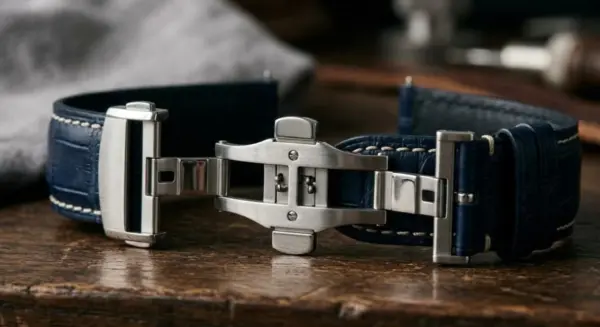
What Is a Watch Clasp?
A watch clasp is the fastening mechanism that secures a strap or bracelet around your wrist. It is one of the most important parts of a watch because it directly affects how secure, comfortable, and visually finished your timepiece feels during everyday wear.
Watch clasps serve three core functions:
- Security: prevents the watch from slipping off or opening accidentally during daily activities or active movement
- Comfort: determines how easily you can put on and take off your watch, and how the closure feels against your skin
- Aesthetics: contributes to the overall look and refinement of the watch, from understated elegance to rugged functionality
Because watches come with different strap and bracelet materials, and because different lifestyles demand different levels of security and adjustability, clasp designs vary widely. A leather strap, for example, requires a different closure mechanism than a metal bracelet. Similarly, a formal dress watch prioritizes a seamless appearance, while a diving watch needs secure, tool-free sizing adjustments over a wetsuit.
Clasp quality also affects how long your strap lasts and how comfortable your watch remains over time. A well-made clasp operates smoothly, resists corrosion, and places minimal stress on the strap material. Understanding the main clasp types, their strengths, and their best uses will help you choose a watch that fits your wrist, your lifestyle, and your preferences. The sections below explore each major clasp type with real-world examples and a practical decision guide to match your needs.
Pin Buckle (Tang/Ardillon Buckle): The Classic Choice
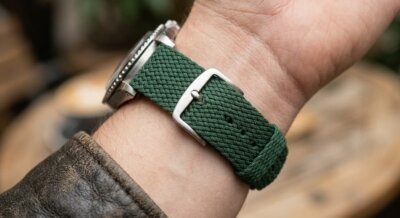
The pin buckle—also called a tang buckle or ardillon buckle—is the simplest and most common watch clasp type. It works exactly like a belt buckle: a metal pin (called the tang) slides through a series of holes in the strap material to hold it in place. This straightforward mechanism has remained the standard for leather, rubber, nylon, and fabric straps because it is reliable, affordable, and easy to manufacture.
How It Works
A pin buckle consists of three main components. The tang is the metal pin or tongue that passes through the adjustment holes. The frame (or mandrel) is the U-shaped bracket that houses the tang and is typically signed with the watch brand’s logo on premium versions. The spring bar is the hardware that attaches the clasp to the strap itself. To adjust the fit, you simply move the tang to a different hole along the strap—each hole represents a slightly different wrist circumference. This hole-based system means your options are limited to the exact sizing holes drilled into the strap, rather than infinite adjustability.
Best For
Pin buckles are the go-to clasp for leather straps, rubber straps, NATO-style nylon straps, canvas, and other textile or fabric materials. Because they remain thin and flexible, they don’t compromise the natural drape or feel of these strap types. You’ll find them on everything from affordable everyday watches to luxury dress pieces.
Pros and Cons
Pin buckles excel in simplicity and comfort. Their main strengths are:
- Easy to use with minimal learning curve—even first-time watch owners understand how they work immediately (Beginner-Friendly).
- Comfortable wearing profile: minimal bulky metal presses against the underside of your wrist compared to folding or deployant styles.
- Affordable to manufacture and widely compatible across strap brands and styles.
- Straightforward construction means fewer moving parts and generally reliable, long-term operation.
The main drawbacks are:
- Repeated fastening and unfastening can stress the strap holes, causing them to enlarge or tear over time, especially on leather straps.
- Securing or removing the watch requires bending the strap back and forth, which can eventually weaken or crease delicate leather.
- Less elegant aesthetic compared to folding or deployant solutions—the clasp is more visually obvious when worn.
- Fixed adjustment points mean you cannot fine-tune the fit between holes if needed.
Durability and Wear
Pin buckles tend to show their age because all the stress concentrates at the adjustment holes. Each time you fasten or unfasten, the tang pulls and flexes the material around that single hole, gradually weakening it. Leather straps experience this wear most noticeably, while NATO straps (made from tougher nylon) tolerate it better. Premium pin buckles use heavier-gauge metal and polished finishes that slow corrosion, but the fundamental wear pattern remains the same.
Real-World Examples
Pin buckles appear across the price spectrum. A Hamilton Khaki Field watch typically uses a simple signed pin buckle on its leather strap, offering classic functionality at an accessible price point. Timex field watches, Seiko 5 models, and many entry-level Seiko divers on leather straps also rely on pin buckles. Even luxury brands like Cartier use elegant signed pin buckles on their leather strap options, though premium versions feature polished steel, logos, and refined finishing that matches the watch case.
Folding Clasp: Streamlined Elegance for Metal Bracelets
The folding clasp is the default fastening mechanism for metal bracelets. Unlike the pin buckle, which relies on a single pin threading through holes, a folding clasp uses hinged metal sections that fold over themselves to create a secure, integrated closure. This design has become synonymous with polished, professional timepieces because it sits flush with the bracelet and distributes closing force across multiple contact points rather than concentrating it at one spot.
How It Works
A typical folding clasp consists of two hinged metal sections that fold over a top cover plate, which is often branded or engraved with the watch manufacturer’s logo. The bracelet ends attach to these hinged sections using spring bars, the same hardware used in pin buckles. When closed, the clasp creates a seamless line with the bracelet, making it visually indistinct from the surrounding links.
Folding clasps close via one of two main methods: a simple push-button release that unlocks the hinge, or a traditional latch that requires manual pressure to lift before opening. Many higher-end folding clasps also feature a safety catch or safety flap—an extra locking mechanism that prevents accidental opening during active wear. This extra layer of security makes the clasp especially popular on tool watches and sports models, even though folding clasps are primarily found on metal bracelets.
The stress-distribution advantage deserves emphasis: because the clasp spreads closing force across its hinged sections rather than concentrating it at a single pin-and-hole junction, the mechanism often feels more durable and the bracelet more secure on the wrist. This is particularly noticeable during daily wear or when adjusting the bracelet.
Best For
Folding clasps are designed exclusively for metal bracelets made from stainless steel, titanium, ceramic, or precious metals. They suit wearers who prioritize a refined, integrated look and prefer the security and convenience of one-handed fastening. Folding clasps are ideal for dress watches, sports watches, and everyday pieces where the clasp should visually disappear into the bracelet design.
Pros and Cons
Folding clasps offer several advantages that explain their popularity on mid-range and luxury watches.
- Integrated, seamless appearance that feels polished and professional on the wrist.
- Easier one-handed fastening than a pin buckle; closing and opening require minimal effort.
- Stress distribution across hinged sections often contributes to a more secure, durable feel during everyday wear.
- Excellent for metal bracelets, where the clasp naturally matches the material and aesthetic.
However, folding clasps come with trade-offs.
- Hinges and moving parts may require periodic cleaning to prevent dirt or debris accumulation, which can eventually affect smooth operation.
- Without a safety catch or double-locking feature, some folding designs are more prone to accidental opening during vigorous activity or if bumped.
- More complex than a pin buckle, with more moving parts; repair or replacement is typically more expensive and may require professional service.
- The hinge mechanism can wear over time with heavy use, though modern finishes and materials have made this less common than in older designs.
Complexity Level
Folding clasps are rated as Beginner to Intermediate in terms of user friendliness. Opening and closing requires no special skill, but understanding whether your clasp includes a safety catch or push-button variant helps you use it confidently and maintain it properly.
What to Look For
When evaluating a folding clasp, pay attention to three things: smooth hinge action without grinding or stiffness, a secure closure that feels solid when fastened without play or rattle, and a comfortable underside profile that does not dig into your wrist. Test the clasp in person if possible, and check that any push-button release engages cleanly and that safety catches (if present) lock audibly or with a tactile click.
Real-World Example
The Rado Captain Cook features a folding clasp integrated into its metal bracelet, exemplifying how this mechanism disappears visually while providing secure, one-handed fastening. The clasp’s smooth operation and comfortable fit have made this model a benchmark for folding clasp design in the mid-luxury category.
Deployant Clasp: The Best of Both Worlds
A deployant clasp is a hybrid fastening system that combines the sizing flexibility of a pin buckle with the hinged, folding sections of a metal bracelet clasp. Unlike a simple pin buckle, which requires you to thread the pin through a new hole every time you adjust, a deployant opens in sections so you can slip your wrist in and out without resizing the strap. This design is particularly popular on leather and rubber straps on mid-range to luxury watches, and it has become a common aftermarket upgrade for watches originally fitted with traditional pin buckles.
How It Works
The deployant clasp combines three key components: a pin-buckle section on one end (with adjustment holes for sizing), one or two hinged metal sections in the middle, and a spring bar attachment on the opposite end. When you open the hinged sections using a push-button or manual release, the clasp unfolds like a book, allowing you to slide your wrist into the gap without changing the strap length. Once your wrist is through, you fold the sections back together, and they lock in place. The pin buckle remains inserted into the same hole you selected during initial fitting, so no re-adjustment is needed for daily wear.
Why Deployant Clasps Protect Your Strap
One of the biggest advantages of a deployant over a standard pin buckle is strap preservation. With a pin buckle, repeated insertion and removal of the pin through the same hole—or cycling through adjacent holes—can cause fatigue, enlargement, and cracking around those holes, especially on leather. A deployant reduces this stress because you open the clasp itself rather than constantly adjusting the pin position. This means the strap material experiences less flexing and wear over time, which is why luxury watchmakers and aftermarket strap specialists often recommend deployants for leather straps.
A Brief History: The Cartier Connection
The deployant clasp was patented by Cartier in 1909 and became iconic on the Cartier Santos, the brand’s legendary pilot’s watch introduced in 1911. This heritage underscores the clasp’s association with refinement and practical design—it was engineered to solve real comfort and durability issues while maintaining an elegant appearance.
Pros and Cons
Pros:
- Combines a refined, sophisticated appearance with practical on-and-off convenience.
- Significantly reduces strap wear by minimizing repeated hole stress and bending.
- Once fitted to your wrist size, you rarely need to readjust, further extending strap life.
- Feels premium in hand due to smooth, hinged operation and quality materials.
Cons:
- Introduces metal-on-skin contact where the hinged sections fold against your wrist, which some find uncomfortable compared to a simple cloth or leather strap.
- Push-button releases can create pressure points if the button sits directly on your skin.
- Significantly more expensive than a pin buckle, especially on leather straps.
- Requires a small learning curve to operate smoothly; the first few uses may feel awkward if you are unfamiliar with hinged clasps.
Complexity level: Intermediate. The mechanism is straightforward once understood, but it requires a bit of practice to open and close smoothly.
Real-World Examples
The Omega Seamaster frequently uses a deployant clasp on its leather and rubber strap options, balancing luxury aesthetics with practical durability. Many leather strap versions of dress watches and sports watches from brands like Tudor and Hamilton also feature deployant clasps as a standard or upgrade option. Because deployants are increasingly common as aftermarket replacements, many watch enthusiasts also install them on watches that originally came with pin buckles, particularly when upgrading to premium leather straps.
Deployant vs. Folding: What’s the Difference?
It is important to distinguish the deployant clasp from the folding clasp. A folding clasp is found on metal bracelets and uses two hinged sections that fold flat against the bracelet without any pin-buckle mechanism. A deployant, by contrast, is a strap-oriented hybrid that retains the adjustment-hole system of a pin buckle on one end while adding hinged folding sections in the middle. This makes deployants ideal for leather and rubber straps that require sizing flexibility, whereas folding clasps work best on metal bracelets where sizing is typically fixed. Understanding this distinction helps you recognize which clasp is right for your strap material and lifestyle.
Butterfly Clasp (Double Deployant): Hidden Design for Seamless Style
The butterfly clasp represents a refinement of the deployant design, featuring two hinged sections that fold symmetrically outward from a central point, much like wings opening. This double deployant mechanism creates an elegant, almost invisible closure when fastened, as the working parts sit underneath the bracelet or strap surface. The name “butterfly” comes directly from this symmetrical, winged appearance. While the mechanism itself is called a “double deployant,” the two terms are often used interchangeably in watch literature; the key distinction is that “butterfly” emphasizes the aesthetic symmetry, while “double deployant” describes the mechanical function of having two folding sections rather than one.
The butterfly clasp typically includes spring bar attachments at both ends of the strap or bracelet, with push-button releases built into each hinged wing. When you press both buttons simultaneously, the wings unlock and open wide, creating generous space to slip your wrist through comfortably. Once your wrist is positioned, releasing the buttons allows the wings to fold back symmetrically, cinching the bracelet or strap snugly around your wrist. This dual-action design distributes locking force more evenly than a single-fold system, which can enhance both security and the sense of a balanced fit.
Butterfly clasps are especially common on premium leather straps and select metal bracelets, where the hidden mechanism contributes to a refined, minimalist look. Luxury brands have long favored this design for dress watches and higher-end everyday timepieces. A classic example is the Cartier Santos de Cartier, which uses a butterfly-style clasp that exemplifies the seamless, understated elegance this mechanism delivers.
Pros
- Minimalist, seamless appearance due to the hidden mechanism underneath the bracelet or strap, creating an unbroken line on the wrist.
- Symmetrical design distributes pressure evenly and often feels more secure than a single-fold deployant.
- Wide opening range makes it easier and more comfortable to slip your wrist in and out compared to some other clasp types.
- Strong strap preservation because the mechanism allows less sharp bending of the strap material during fastening and unfastening.
Cons
- Bulk and thickness can feel uncomfortable or oversized on smaller wrists or those sensitive to bracelet weight.
- Higher complexity and manufacturing precision required, which typically translates to higher cost compared to pin buckles or simple folding clasps.
- Less intuitive to operate at first; the push-button action and simultaneous two-hand release require a brief learning curve.
- More moving parts, such as two push-button mechanisms, mean more potential failure points over time if they wear or corrode.
Best for those prioritizing aesthetics, strap preservation, and a refined, understated look. Not ideal if you have a small wrist, are sensitive to bracelet bulk, or prefer a clasp you can operate instantly without practice. Complexity level: Intermediate.
Safety Deployment Clasp: Double-Lock Security for Peace of Mind
A safety deployment clasp is not a standalone clasp type, but rather an additional security feature layered onto a standard folding or deployant clasp. It combines a primary locking mechanism with an extra safety catch or metal plate that must be released separately, requiring two distinct actions to open the clasp fully. This double-lock design significantly reduces the risk of accidental opening during vigorous movement, water activities, or daily jostling.
How It Works
When you wear a safety deployment clasp, you first encounter the main hinged sections that fold open like a standard deployant or folding clasp. However, before those wings can separate, you must also release or press a secondary safety flap or catch—a metal plate or lever positioned on the outer side of the bracelet or strap. Only after both elements are disengaged can the clasp open fully. This two-step process ensures that even if the primary lock is bumped or partially released, the watch remains securely fastened to your wrist.
Rolex’s signature Oysterlock clasp exemplifies this principle. It combines a triple-fold design with an additional safety catch mechanism and fine micro-adjustment capabilities, making it one of the most secure clasps in watchmaking. The clasp is iconic on professional-grade Rolex models like the Submariner and GMT-Master II, cementing its role in tool-watch excellence.
Best For
Safety deployment clasps are ideal for active wearers, divers, swimmers, and anyone who frequently subjects their watch to demanding environments. They are also common on high-value timepieces where loss prevention is a priority. If you wear your watch during contact sports, water activities, or work involving heavy machinery or movement, this clasp type offers meaningful peace of mind.
Pros and Cons
Pros:
- Superior security and accidental-opening prevention, even during intense activity
- Peace of mind for divers, athletes, and active professionals
- Robust, professional-grade construction that signals quality
- Proven design on iconic dive watches and sports chronographs
Cons:
- Added bulk and weight due to layered metal parts and extra locking mechanism
- Slightly less convenient than single-lock designs; requires two actions to open
- Generally found on higher-priced watches or premium bracelet options
- Can feel overengineered for purely dress, formal, or casual everyday wear
Comfort and Durability
The layered metal construction means safety deployment clasps tend to be chunkier on the wrist, which may be noticeable on smaller wrists or under fitted sleeves. However, the multi-part design also means minimal wear and tear on the strap itself, as the clasp distributes force across multiple engagement points rather than relying on a single hinge or pin. This durability benefit makes the added bulk a worthwhile trade-off for many active wearers.
When you move on to explore specialty clasp designs—such as hidden, Velcro, and sliding mechanisms—you will encounter even more specialized solutions for particular watch styles and use cases.
Diver’s Extension / Diver Clasp
A diver clasp is a fastening system engineered for active use, diving, and changing wrist conditions. Unlike standard clasps that rely on fixed adjustment holes or simple hinged sections, diver clasps incorporate a mechanism that allows tool-free sizing adjustments without removing the watch from your wrist. This feature is essential for divers wearing wetsuits, which compress and release as water temperature and depth change, and equally valuable for anyone whose wrist size fluctuates due to temperature, activity level, or swelling.
How Diver Clasps Work
Most diver clasps use a ratcheting system with tooth-like notches or detents inside the clasp mechanism. When you press buttons or manipulate the clasp, these notches allow the bracelet or strap to extend or retract in small, precise increments. The extension feature typically adds several millimeters of length beyond what a standard clasp would allow, creating room for a wetsuit sleeve without the need to swap straps or tools.
The key advantage over adjustment holes is speed and convenience: you can resize your watch in seconds while wearing it, even over a diving suit or in wet conditions. This is why diver clasps are standard equipment on professional-grade dive watches and increasingly common on sports watches across all price points.
Security and Durability
Because diver clasps are designed for demanding environments, they typically include robust safety features. Many incorporate double-lock or safety catch mechanisms similar to those found in safety deployment clasps, ensuring the watch stays secure even if the main clasp is jarred open. The materials are almost always high-grade stainless steel or better, chosen to resist saltwater corrosion and repeated mechanical use.
The Glidelock Question: Rolex’s Branded System
One source of confusion in watch communities is the term “Glidelock,” which many assume refers to all modern diver micro-adjustment systems. In reality, Glidelock is Rolex’s proprietary brand name for its patented micro-adjustment diver clasp. While Glidelock exemplifies the diver clasp concept, it is not the same as a generic diver clasp, and other brands manufacture diver extensions with their own names and slightly different mechanisms.
Rolex uses Glidelock on its professional dive watches, such as the Submariner and Sea-Dweller, where the system has become iconic. However, brands like Citizen, Seiko, Tudor, and others offer their own diver-style extensions with comparable functionality. The principle is the same: tool-free, incremental adjustment via ratcheting notches. The specific engineering and terminology differ by brand.
Pros and Cons
Diver clasps excel in active and professional contexts but come with trade-offs:
- Fast, tool-free resizing ideal for wetsuits and changing wrist conditions during activity.
- Strong security design built to handle demanding environments, with proven durability in saltwater and extreme conditions.
- Comfort advantage when wrist size changes due to temperature, swelling, or physical exertion.
- Sophisticated engineering that conveys professional-grade quality and reliability.
Drawbacks include:
- Bulkier appearance and feel compared to streamlined clasps like butterfly or deployants, making them less suited to dress watches or minimalist designs.
- Increased mechanical complexity means more moving parts, which can raise manufacturing costs and introduce more potential wear points over extended use.
- Often brand-specific or model-specific, limiting availability if you need a replacement or want to swap clasps across different watches.
- Overkill for casual wearers who rarely dive or engage in water sports, adding unnecessary heft and cost.
Real-World Examples
The Citizen Promaster series is an accessible entry point into diver clasp design. Models like the Citizen Promaster Ref. NY0125-83E use a diver-style ratcheting clasp that allows quick extension via push-buttons, making the watch practical for diving and snorkeling without premium pricing.
At the luxury level, Rolex’s Submariner and Sea-Dweller models showcase the Glidelock system. The Rolex Submariner Ref. 116610LN, for example, features a Glidelock clasp with adjustment notches in the middle section that snap out and slide forward or backward to resize the bracelet—a smooth, intuitive system that has become the gold standard in professional diving watches.
Complexity Level: Intermediate
Diver clasps are more complex than pin buckles or simple folding clasps but simpler to understand and use than they appear. Once you understand the ratcheting principle, operation is straightforward, though the internal mechanism itself requires precise manufacturing. Most users master adjustment within one or two tries.
Specialty Clasps (Hidden, Velcro, Sliding, Jewelry)
Beyond the core clasp types, several specialty variants and alternative fastening systems exist for specific use cases and aesthetic preferences. These options are less common but valuable for certain strap styles, professions, and design philosophies. Understanding where and why these clasps appear will help you recognize them when shopping and choose the right watch for your needs.
Hidden Clasp: Minimalist Elegance
A hidden clasp is a variant often paired with deployant or folding mechanisms where the fastening hardware sits on the inner side of the strap or bracelet rather than the outer face. This design creates a seamless, minimalist appearance on the wrist—the watch looks almost like it has no visible clasp at all. Hidden clasps are particularly common on dress watches and formal timepieces where visual simplicity is prized.
Best for: Dress watches, formal occasions, and wearers who prioritize an understated aesthetic over quick adjustability.
Watch out for: Hidden clasps can be slightly less intuitive to operate if you are unfamiliar with the mechanism, and the inner positioning means less protection from dirt or corrosion compared to outer-facing designs.
Pros and cons:
- Pros: Invisible or nearly invisible when fastened; elegant and minimalist look; pairs well with jewelry-style bracelets and leather straps.
- Cons: Less intuitive operation; inner positioning may accumulate more dirt; typically found on higher-end watches; can be harder to adjust quickly if needed.
Velcro / Hook-and-Loop Clasp: Rapid Adjustment and Tactical Heritage
Hook-and-loop (commonly known as Velcro) fasteners use soft fabric strips that adhere to one another, allowing rapid, tool-free adjustment even over flight suits, dive skins, or thick sleeves. The system is infinitely adjustable within the bounds of the strap material and requires only a pull-apart motion to remove or loosen the watch. Velcro is favored in military, aviation, and diving communities for its practicality and speed.
Best for: Tool watches, military and tactical applications, emergency responders, divers, and anyone who needs rapid sizing adjustment over protective gear.
Watch out for: Velcro wears out over time and may need replacement every 1–2 years of active use. The strap has a casual appearance and may not suit formal settings.
Pros and cons:
- Pros: Infinitely adjustable without tools; extremely fast to put on and remove; comfortable over thick clothing; lightweight and flexible.
- Cons: Velcro degrades with use and washes; requires periodic replacement; informal aesthetic not suitable for dress watches; less secure than mechanical clasps if not fastened carefully.
Sliding Buckle: Infinite Adjustment for Mesh Bracelets
A sliding buckle (sometimes called a mesh clasp) is a friction-based fastening system designed specifically for mesh bracelets. The clasp slides along the mesh material itself, allowing infinite micro-adjustments without relying on predefined holes or notches. The bracelet and clasp form a unified, continuous loop that can be tightened or loosened by moving the clasp along the woven metal structure. This design is elegant and offers exceptional comfort customization.
Best for: Mesh bracelet wearers who want infinite adjustability and a polished, integrated look; wearers with variable wrist sizes or those who adjust frequently throughout the day.
Watch out for: The friction-based system depends on proper clasp positioning; if not fully tightened, the clasp can slip. Mesh bracelets themselves require occasional cleaning to prevent dirt buildup under the clasp.
Pros and cons:
- Pros: Infinite adjustability without holes or notches; seamless, integrated appearance; comfortable for variable wrist sizes; no tools required.
- Cons: Requires practice to position securely; friction-based design can slip if overtightened or left loose; limited to mesh bracelets; may feel fragile if the mesh is thin.
Jewelry Clasp: Niche Option for Dress and Women’s Watches
A jewelry clasp (also called a box clasp or slide clasp) resembles a jeweler’s safety clasp found on bracelets and necklaces. It typically consists of a box-shaped mechanism with a push-button or sliding release, designed to look elegant and blend with precious-metal bracelets. These clasps are most common on women’s watches and dress watches made from gold, platinum, or other jewelry metals.
Best for: Women’s dress watches, precious-metal bracelets, and formal/evening wear.
Watch out for: Jewelry clasps are less secure than tool watch clasps and can accidentally open if struck or subjected to heavy pressure. They are not designed for active use and may be delicate to operate.
Pros and cons:
- Pros: Elegant, jewelry-like appearance; seamlessly integrated into precious-metal bracelets; lightweight and refined.
- Cons: Lower security than mechanical clasps; delicate and not suitable for active wear; less adjustability; can accidentally open if bumped; less common and harder to replace if damaged.
Each of these specialty clasps serves a specific purpose and aesthetic. Hidden clasps appeal to minimalists and formal wear enthusiasts, Velcro straps serve tactical and mission-critical applications, sliding buckles offer unmatched adjustability for mesh lovers, and jewelry clasps cater to the formal and feminine watch market. Understanding where they fit helps you make informed choices when selecting or upgrading a watch.
How to Choose Your Clasp
Choosing the right watch clasp depends on three core factors: the type of strap or bracelet you have, your lifestyle and wear patterns, and which qualities matter most to you—security, comfort, adjustability, or aesthetics. This section walks you through a practical decision framework and provides the tools to match your needs to the best clasp type.
Decision Framework: A Simple Starting Point
Begin by answering these two foundational questions:
- Do you have a metal bracelet or a strap (leather, rubber, fabric, or NATO)?
- What is your primary use case: formal/dress wear, everyday casual, active/diving, or mixed?
Once you know these, the following guidance will narrow your options:
- Metal Bracelet + Formal or Everyday Wear: Folding clasp or butterfly clasp (streamlined, secure, minimal adjustment needed).
- Metal Bracelet + Active or Diving: Diver clasp with ratchet or micro-adjustment (Glidelock if Rolex is your brand).
- Metal Bracelet + Maximum Security Priority: Safety deployment clasp or Oysterlock (double-lock feature for peace of mind).
- Leather or Rubber Strap + Formal or Aesthetic Priority: Butterfly clasp or hidden clasp (seamless, elegant look).
- Leather or Rubber Strap + Everyday Casual: Deployant clasp or pin buckle (simple, practical, affordable).
- Leather or Rubber Strap + Active Wear or Frequent Adjustment: Deployant clasp with safety catch (strap protection, tool-free sizing).
- Leather or Rubber Strap + Budget or Simplicity: Pin buckle (classic, inexpensive, easy to understand).
- Mesh Bracelet: Sliding buckle with infinite adjustment (designed specifically for mesh).
Strap Material and Clasp Pairing Guide
Different materials pair naturally with different clasp types:
- Leather straps: Pin buckles are the standard because they keep the strap thin and flexible. Deployant clasps are a premium upgrade that reduces wear on adjustment holes. Butterfly clasps are less common on leather but available on high-end dress watches.
- Rubber or silicone straps: Pin buckles are typical for sport watches. Deployant clasps work well if the strap is thick enough. Diver clasps are common on professional dive watch straps.
- Fabric or NATO straps: Pin buckles are almost universal. Deployant clasps are rare on fabric. Hook-and-loop (Velcro) is an option for rapid, tool-free adjustment over wetsuits or heavy clothing.
- Metal bracelets: Folding, butterfly, and diver clasps are the only options because they integrate directly into the bracelet links. Pin buckles do not work on metal.
- Mesh bracelets: Sliding buckles with infinite micro-adjustment are purpose-built for this material.
Watch Clasp Types at a Glance
Use this table to compare all major clasp types across key dimensions:
| Clasp Type | Primary Use | Key Feature | Best For | Typical Brands or Examples |
|---|---|---|---|---|
| Pin Buckle (Tang) | Leather, rubber, fabric straps | Metal pin through strap holes | Budget-conscious buyers; everyday casual wear; simple operation | Timex, Seiko, most affordable watches |
| Folding Clasp | Metal bracelets | Hinged bracelet clasp with latch or push-button | Formal wear; everyday metal bracelets; streamlined look | Cartier, Hamilton, most dress watches |
| Deployant Clasp | Leather, rubber, fabric straps | Hybrid: pin-buckle sizing plus hinged folding sections | Premium comfort and strap protection; everyday wear; reduced hole wear | Omega, Tudor, luxury leather strap watches |
| Butterfly Clasp (Double Deployant) | Leather or metal (bracelet or strap) | Symmetrical hinged wings with hidden closure | Dress watches; aesthetic priority; seamless integrated look | Patek Philippe Calatrava, Cartier tank straps |
| Safety Deployment Clasp | Metal bracelets (occasionally straps) | Folding or deployant with extra safety catch or lock | Professional or active users; security priority; insurance against accidental opening | Rolex Oysterlock, Rolex Submariner |
| Diver Clasp (Ratchet / Extension) | Metal bracelets and rubber straps | Ratchet notches or tooth-like increments for tool-free sizing over wetsuits | Diving, active sports, wetsuit wear, frequent temperature changes | Rolex Sea-Dweller, Seiko Prospex, Citizen Promaster |
| Glidelock (Rolex-exclusive micro-adjustment) | Metal bracelets | Internal rail-and-tooth system with smooth incremental sizing | Rolex dive watch owners; precision fit without visible adjustment points | Rolex Submariner, Rolex GMT-Master II |
| Sliding Buckle (Mesh) | Mesh bracelets only | Infinite micro-adjustment; no fixed notches | Mesh bracelet wearers; customizable fit; seamless adjustment | Seiko Presage mesh, TIMEX mesh models |
| Hook-and-Loop (Velcro) | Fabric or strap (occasionally leather) | Adhesive fabric fasteners; rapid adjustment without tools | Mission-critical or tool watches; rapid sizing over bulky clothing; NASA/professional use | Omega Speedmaster Velcro NATO, military chronographs |
Clasp Comparison: Key Dimensions
This table compares four major clasp types side-by-side on operation, security, comfort, and adjustment:
| Clasp Type | Operation / Opening | Security Level | Comfort (Wrist Feel) | Adjustment Ease | Typical Price Range |
|---|---|---|---|---|---|
| Pin Buckle | Pull pin out of holes, reinsert to desired hole | Moderate; depends on fit tightness | Soft (leather or strap material against skin) | Manual; requires strap bending; frequent hole wear | Budget-friendly |
| Folding Clasp | Hinged sections fold open symmetrically or via push-button | High; latch and spring-loaded closure prevent accidental opening | Moderate to high; hinged metal against skin if wrist is large | Pre-adjusted at purchase; rarely re-sized | Mid to premium |
| Deployant Clasp | Hinged sections fold open; pin reinserts into pre-drilled holes | High; hinged sections and pin provide redundant security | High; hinged protection reduces metal contact; softer overall feel | Tool-free; pin moves between preset holes with less strap bending | Mid to premium |
| Butterfly Clasp | Two wings fold open symmetrically via push-button | High; dual-wing action and spring locks | High; hidden design minimizes bulge; elegant seamless feel | Pre-adjusted; rarely re-sized; hidden adjustment points | Premium |
| Safety Deployment Clasp (Oysterlock) | Folding or deployant sections open; secondary safety catch must be disengaged | Highest; double-lock prevents accidental opening even if first lock fails | Moderate; extra metal and moving parts; slightly bulkier | Varies; Oysterlock includes micro-adjust; most safety clasps are fixed | Premium to luxury |
| Diver Clasp (Ratchet) | Push-button release; clasp slides forward/backward on ratchet notches | High; ratchet teeth lock in place; designed for active use | Moderate; bulky; designed for tool watches and wetsuits, not comfort-focused | Quick and tool-free over wetsuits; incremental notches | Mid to premium |
Security and Safety Guidance
If your priority is maximum security, consider these factors:
- Double-lock or safety-catch features: Safety deployment clasps add an extra locking layer that prevents the watch from opening even if the primary clasp mechanism is jarred open. This is ideal for professional divers, tool-watch users, or anyone in high-impact environments.
- Push-button releases: Butterfly and deployant clasps often feature spring-loaded push buttons that require intentional action to open. This reduces accidental opening compared to simple pin buckles that rely solely on friction.
- Ratcheting systems: Diver clasps with tooth-like notches lock incrementally, preventing drift or accidental loosening during active wear or temperature changes.
- Material integrity: Look for non-corrosive metals like stainless steel or titanium. A clasp that corrodes will lose its secure hold over time.
Comfort and Wrist Size Considerations
Clasp bulk and wrist contact matter, especially for smaller wrists or users who prioritize comfort:
- Streamlined clasps: Butterfly, hidden, and pin buckles minimize the metal surface against your skin. Butterfly and hidden clasps are especially elegant for dress watches because they integrate seamlessly into the strap or bracelet line.
- Bulkier clasps: Safety deployment clasps, diver clasps, and Oysterlock systems use extra metal and moving parts for security and functionality. On small wrists, these can feel prominent or uncomfortable. Always try the watch on before committing if bulk is a concern.
- Folding vs deployant on leather: Folding clasps on metal bracelets are fine for all wrists. Deployant clasps on straps reduce strap flex and metal contact, making them more comfortable for extended wear.
- Micro-adjust systems: Diver clasps and Glidelock allow small sizing increments without tools, which is helpful if your wrist size fluctuates with temperature or activity. Pin buckles offer the same hole-based flexibility but require manual adjustment.
Adjustment Frequency and Tool Requirements
How often and how easily you resize your watch should influence your choice:
- Hole-based adjustment (pin buckles, deployants): Requires selecting a new hole. Simple and effective but involves some strap bending and eventual hole wear if you resize frequently.
- Ratchet or notch-based adjustment (diver clasps): Allows incremental tool-free sizing. Ideal if your wrist size changes with temperature, activity level, or clothing layers. Rolex Glidelock is the premium version of this concept.
- Infinite micro-adjustment (sliding buckle for mesh): No fixed positions; slide to exact fit. Best for mesh bracelets where a fixed clasp cannot attach.
- Fixed adjustment (folding, butterfly, safety clasps): Typically adjusted once at purchase and rarely changed. If you need frequent sizing, these are less convenient.
- Hook-and-loop (Velcro): Infinitely adjustable and fastest to re-size. Designed for rapid deployment over wetsuits or bulky sleeves. Velcro wears out over time and requires eventual replacement.
Aesthetics and Watch Style
The clasp contributes significantly to the overall aesthetic:
- Formal and dress watches: Butterfly, hidden, and polished folding clasps create a seamless, refined look. These clasps are often integrated into the bracelet line or hidden under the strap, maintaining visual continuity.
- Casual and everyday: Pin buckles, basic folding clasps, and deployant clasps are practical and visible. They add visual interest without claiming attention.
- Tool watches and diving: Diver clasps, ratcheting systems, and Oysterlock emphasize function over form. Bulkier profiles signal durability and capability.
- Finishing and materials: Premium clasps feature polished or brushed finishing that matches the watch case. Signed buckles with brand logos elevate the perception of quality on leather strap watches.
Brand-Specific Options and Availability
Some clasp innovations are brand-exclusive, while others are industry-standard. Understanding this affects your options:
- Rolex-exclusive systems: Glidelock (incremental micro-adjustment for dive watches) and Oysterlock (safety deployment with micro-adjust) are patented to Rolex and found only on Rolex bracelets. If Rolex is your brand, these offer unmatched convenience for active use.
- Tudor innovations: The T-fit clasp (Black Bay) features an internal pull-to-slide mechanism with several fixed detents for quick sizing without tools. It bridges the gap between fixed and incremental adjustment.
- Omega systems: The Omega comfort-release clasp uses a push-button to bump the bracelet out one notch for temporary relief (useful in heat or over heavy clothing), then snaps back when you cool down. It’s an elegant solution for temperature-driven sizing changes.
- Accessible brands: Seiko (Prospex, Presage), Citizen (Promaster), and Hamilton offer reliable, affordable clasps including deployant, diver, and mesh options. These brands prove that premium functionality does not require a luxury price tag.
Complexity and Learning Curve
Some clasps are intuitive; others require a moment to understand. Categorizing by complexity helps beginners:
- Beginner-Friendly: Pin buckle (like a belt), simple folding clasp with push-button, basic hook-and-loop Velcro. These require no instruction to operate.
- Intermediate: Deployant clasp (hybrid of pin buckle and folding), butterfly clasp with dual push-buttons, diver clasp with ratchet (once you understand the ratchet notches, it’s straightforward). A brief tutorial or video accelerates understanding.
- Advanced: Glidelock (requires understanding the internal rail-and-tooth system and how to snap the removable side to adjust), Oysterlock (two-step operation with fine micro-adjustments), hidden clasp variants. These benefit from a manual or instructional video, but become second nature with practice.
Durability and Longevity
Some clasp types are more durable than others. Understanding wear patterns helps you make a long-term investment decision:
- High durability: Folding, butterfly, safety deployment, and diver clasps use hinged mechanisms and spring-loaded components that are built for heavy use. Moving parts require smooth operation but, if well-manufactured, last decades. Metal construction resists corrosion if made from stainless steel or better.
- Moderate durability with wear points: Pin buckles last a long time, but the holes in the strap can enlarge or tear with frequent adjustment. Leather straps around the holes may crack over years of strap bending. Deployant clasps reduce this wear by protecting the strap.
- Shorter lifespan: Hook-and-loop (Velcro) fasteners degrade with repeated use and exposure to salt water or dirt. They may eventually wear and the clasp must be replaced. This is acceptable for tool watches where Velcro is expected to be utilitarian.
- Metal corrosion risk: Low-quality or plated clasps corrode faster than solid stainless steel or titanium. A corroded clasp becomes stiff, unreliable, and unsafe. Always inspect the material and finish when evaluating a clasp.
Budget-Friendly Alternatives and Upgrade Paths
If cost matters, or if you are considering an upgrade, here is a practical view:
- Budget option: Pin buckle on a leather strap. This is the most affordable combination and requires no compromise on function if you wear casually and resize infrequently. Entry-level watches from Timex, Seiko, and Citizen pair pin buckles with quality straps and reliable cases.
- Mid-range upgrade: Deployant clasp on a leather strap. Costs more than a pin buckle but reduces strap wear and improves comfort. Many Seiko and Citizen watches offer this as a step up from basic models. You gain tool-free adjustment and strap protection without the premium price of a butterfly clasp.
- Premium upgrade: Butterfly or hidden clasp. Typically found on dress watches and luxury brands (Patek Philippe, Cartier, high-end Omegas). The aesthetic payoff is significant if formal wear is your priority.
- Professional investment: Diver clasp, Glidelock, or Oysterlock. If you dive, work in active environments, or want maximum security and adjustment capability, a watch with one of these systems justifies the premium cost. Rolex Submariner or Sea-Dweller examples are iconic, but brands like Seiko and Citizen also offer excellent diver clasps at lower price points.
- Rolex-exclusive systems: Glidelock and Oysterlock add significant cost because they are Rolex-only. If a Rolex is beyond your budget, look for ratchet diver clasps on Seiko, Citizen, or Tudor watches as a capable alternative with similar functionality at a lower price.
Common Clasp Mistakes to Avoid
These pitfalls are easy to stumble into but worth sidestepping:
- Mismatching strap and clasp type: Never use a pin buckle on a metal bracelet, or a folding clasp on a leather strap. Always verify that the clasp type matches the strap or bracelet material before purchasing or replacing a clasp.
- Assuming Glidelock applies to all diver clasps: Glidelock is Rolex-exclusive. Other brands use ratchet or notch-based diver clasps that function similarly but are not identical. Understand the specific system your watch uses.
- Confusing butterfly with all symmetrical clasps: Butterfly refers to a specific double-wing deployant design with a seamless closed look. Not all metal bracelet clasps are butterflies. Check the description if the hidden aesthetic is important to you.
- Ignoring wrist size and clasp bulk: Large, multi-part clasps (Oysterlock, diver clasps, triple deployants) can feel heavy or intrusive on smaller wrists. Try the watch on or review photos from similar wrist sizes before committing.
- Respecting adjustment limits: Diver clasps and ratchet systems have a maximum range. Forcing the clasp beyond the final notch may damage the mechanism and void warranty.
- Overlooking clasp material quality: A clasp made from lower-grade steel or cheap plating will corrode, stiffen, or fail much sooner than one made from solid stainless steel or titanium. Check specifications when evaluating value.
Clasp Selection Checklist
Use this checklist to evaluate a watch clasp for your needs:
- Does the strap or bracelet type match the clasp type? (Metal bracelet requires folding, butterfly, diver, or safety clasp; strap requires pin buckle, deployant, or specialty clasp.)
- What is your primary use case? (Formal, casual, active, diving, mixed.)
- How often do you need to resize? (Rarely = pre-adjusted clasp fine; frequently = hole-based or ratchet adjustment needed.)
- Is security your top priority? (Yes = safety deployment, double-lock, or ratchet diver clasp; no = standard folding or deployant acceptable.)
- Is comfort or streamlined aesthetics important? (Yes = butterfly, hidden, or deployant; no = security and function can dominate.)
- Does the clasp bulk suit your wrist size? (Try on or check reviews from similar wrist sizes.)
- Is the clasp material non-corrosive stainless steel or better? (Avoid plated or low-grade steel.)
- Is the brand available to you? (Glidelock = Rolex only; most other types = multiple brands.)
- Does your budget align with the clasp type? (Pin buckle = budget; deployant/butterfly = mid-premium; diver/Glidelock = premium-luxury.)
What to Look for in a Quality Clasp
Not all clasps are made equally. When evaluating a watch, inspect these markers of quality:
- Non-corrosive material: Solid stainless steel, titanium, or precious metals (platinum, white gold) resist rust and discoloration. Avoid watches with plated or low-grade steel clasps, as these corrode over time and lose integrity.
- Smooth operation: Open and close the clasp several times. It should move without grinding, sticking, or excessive play. Spring-loaded mechanisms should return to position reliably.
- Secure locking: Once closed, the clasp should not rattle or flex. Press on it; if it pops open easily, the locking mechanism is weak. Safety catches should require deliberate action to disengage.
- Comfortable positioning: The clasp should not dig into your wrist or create a bulge under a sleeve. If you have a smaller wrist, hold the watch against your arm to ensure the clasp bulk is acceptable.
- Minimal strap wear: On pin buckles, inspect the strap holes near the clasp. If they are enlarged or torn, the watch has been heavily adjusted and may not hold a good fit. On all clasps, check that the strap material is intact and not creased by the mechanism.
- Solid spring bar attachment: The spring bar (the small bar connecting the strap or bracelet to the case lug) should be springy and secure. A loose or bent spring bar will cause the strap to slip off.
- Finishing match: Premium watches feature clasps with finishing (polished, brushed, or satin) that matches the case material. Mismatched or dull finishing suggests lower quality assembly or aftermarket replacement.
- Signed or branded details: High-end clasps often carry the brand logo or signature. This adds perceived quality and makes counterfeits easier to spot.
Basic Maintenance and Care
A well-maintained clasp lasts longer and operates smoothly:
- Keep it clean: Rinse the clasp with fresh water after exposure to salt water, chlorine, or dirt. Use a soft brush (like a toothbrush) and mild soap to remove grime from hinges and crevices. Dry thoroughly to prevent water spots.
- Avoid harsh chemicals: Do not use strong solvents, bleach, or abrasive cleaners on the clasp. These can damage the finish, strip protective coatings, and accelerate metal corrosion.
- Dry after swimming: Salt water and chlorine corrode metal faster than fresh water. Rinse and dry your watch immediately after swimming or diving.
- Check for stiffness: If a clasp becomes stiff or grinding, it may need professional cleaning. Do not force it; this can damage the mechanism. A watchmaker can disassemble, clean, and lubricate the clasp safely.
- Inspect spring bars periodically: A loose or corroded spring bar allows the strap to slip. If it cannot be tightened, it should be replaced by a professional.
- Velcro replacement: Hook-and-loop (Velcro) straps lose grip over time. When Velcro no longer holds, replace the strap or apply a fresh adhesive-backed Velcro patch (available from watch part suppliers).
- Professional service: Every five to ten years, consider having a watchmaker inspect and service the clasp, especially on high-end watches or those worn heavily. Professional cleaning and lubrication extend the life and smooth operation significantly.
FAQ
What clasp does Rolex use?
Rolex primarily uses two proprietary clasp systems: the Oysterlock and the Glidelock. The Oysterlock is a folding clasp with a triple-fold design and an additional safety catch, found on models like the Submariner and GMT-Master II. The Glidelock is Rolex’s branded micro-adjustment system exclusive to certain dive watches, allowing tool-free incremental sizing adjustments via internal ratchet notches. Both systems prioritize security and durability, though Glidelock is specifically engineered for professional diving and active conditions.
Is butterfly clasp better?
Not universally—it depends on your priorities. Butterfly clasps excel at aesthetics (symmetrical, hidden look) and strap preservation (no hinges stress the strap ends), making them ideal for dress watches and higher-end timepieces. However, they offer less adjustability than pin buckles and may feel less intuitive to fasten compared to traditional designs. For everyday wear or sports watches, a diver clasp or deployant might be more practical.
Are watch clasps universal?
No, watch clasps are not universal. Lug width (typically 18mm, 20mm, 22mm, or 24mm), strap thickness, and proprietary mounting systems vary significantly between brands and even different models from the same manufacturer. A clasp designed for one watch will not fit another without matching lug width and attachment hardware. Always verify compatibility with your specific watch before attempting a replacement.
What’s the difference between a deployant and a butterfly clasp?
A deployant clasp is a hybrid mechanism designed for straps: it combines a pin-buckle sizing system (with adjustment holes) with hinged folding sections that protect the strap ends from wear. A butterfly clasp is also called a “double deployant” because it has two hinged wings that fold symmetrically (as opposed to a single-fold deployant). The terms are often used interchangeably, though “butterfly” emphasizes the aesthetic look and “double deployant” describes the mechanical function. Both offer strap protection, but butterfly clasps prioritize aesthetics while deployants prioritize practical sizing adjustment.
Why do dive watches have special clasps?
Dive watches need special clasps because they must fit securely over wetsuits and allow sizing adjustment in wet conditions without tools. Diver clasps feature ratchet systems or tooth-like notches that allow incremental adjustments, and many include extended safety locks to prevent accidental opening during active use. Rolex’s Glidelock is the most sophisticated example, offering tool-free micro-adjustments ideal for diving and high-intensity activities.
How do I know which clasp is right for me?
Start by identifying your strap material (leather, NATO, fabric, or metal bracelet), your lifestyle (casual, active, professional diving), and your comfort priorities (adjustability, security, or seamless appearance). Leather straps typically use pin buckles; metal bracelets use folding or deployant clasps; active pursuits benefit from diver clasps; and dress watches often feature butterfly clasps. The selection checklist and decision framework in the “How to Choose Your Clasp” section provide a step-by-step approach to narrow down your options.
Can I replace my watch clasp?
Yes, you can replace a watch clasp, but compatibility is critical. The replacement must match your lug width, strap material, and the watch manufacturer’s mounting system. For many luxury watches, manufacturers offer official replacement clasps; for others, third-party aftermarket options may be available. If unsure, consult a professional watchmaker or contact the brand directly to confirm compatibility and avoid damaging your strap or watch.
Do clasps wear out? Which last longest?
Yes, clasps can wear out over time, though the rate varies by design. Pin buckles tend to show wear on the strap holes (which weaken with repeated bending); hook-and-loop (Velcro) clasps deteriorate faster due to fabric breakdown; and clasps with many moving parts (push-buttons, ratchets) can eventually loosen or stick. Generally, solid folding and deployant clasps with minimal moving parts tend to last longest, especially when made from non-corrosive stainless steel or precious metals. For instance, a leather strap with a pin buckle may show enlargement around the adjustment holes after several years of frequent resizing, while a deployant clasp reduces this wear by distributing stress across hinged sections. Periodic cleaning and avoiding excessive strap bending help extend clasp lifespan.