Early Timekeeping Before Portable Watches
When were watches invented? The answer depends on what you mean by “watch.” Before personal timepieces existed, people relied on larger, stationary devices to measure time. Understanding this distinction is key to tracing how watches evolved from fixed installations into the wearable instruments we know today.
For thousands of years, timekeeping was communal and immobile. Ancient civilizations used several methods to track the passage of time:
- Sundials, which cast shadows to mark hours during daylight
- Water clocks (clepsydras), which measured time by the flow of water from one vessel to another
- Sand timers and hourglasses, simple but less precise
These methods worked adequately for calendars, religious rituals, and public schedules. But they shared a critical limitation: they were fixed in place. A sundial required sunlight; a water clock needed a permanent installation. No one carried these devices.
The breakthrough came in the 13th century with the invention of mechanical clocks—devices powered by falling weights and regulated by gears. A famous example is the Salisbury Cathedral clock, documented in 1275, which represented the pinnacle of precision engineering for its time. Mechanical clocks proved that precise timekeeping was possible, but their size and cost made them impractical for personal carry—the real problem watchmakers had to solve.
The real innovation was miniaturization. Watchmakers needed to shrink these mechanisms—and find a power source small enough to fit in a pocket or wear on the wrist. That problem drove the next leap forward.
Peter Henlein and the First Watches (~1510)
When was the first watch invented? The answer begins with Peter Henlein, a Nuremberg locksmith, who around 1510 created early portable timepieces that fundamentally changed how people could carry and access time. Before Henlein’s innovation, timekeeping was tied to large, stationary mechanical clocks in town squares and churches. Henlein’s breakthrough was the mainspring—a tightly wound metal ribbon that could store and release energy gradually—which made it possible to power a clock mechanism small enough to wear or carry.
These early portable watches became known as Nuremberg eggs—named for their distinctive oval or egg-shaped brass or silver cases, which protected delicate mechanisms while fitting comfortably in a pocket or hanging from a chain. Inside, the mainspring worked alongside other innovations to keep time reliably, despite the movement and vibration of being carried or worn. This was no small feat for the era, and these devices were expensive luxury items, typically owned by wealthy merchants, nobles, and royalty.
It is important to note what this milestone means and does not mean. Henlein’s portable watches represent the invention of the first watches as personal, wearable devices—answering the “who invented the watch” question for early timekeeping. However, these were not wristwatches in the modern sense. Most were worn on chains or kept in pockets, and they represent a separate chapter from the rise of wristwatches, which came much later. If you want to learn more about early watch innovations and the engineering challenges Henlein solved, the journey from mechanical clocks to miniaturized portable mechanisms reveals why the mainspring was so revolutionary for its time.
The Nuremberg egg set the stage for watch miniaturization and sparked a broader interest in personal timekeeping across Europe during the 16th century and beyond. This period established the foundation for Swiss and European watchmaking industries that would eventually produce the refined pocket watches and, centuries later, the wristwatches we recognize today.
From Pocket Watches to Wearable Timepieces (16th Century)
By the 16th century, watchmaking advanced from early portable designs into more refined pocket watches, establishing the foundation for both pocket-watch refinement and the later emergence of wrist-worn designs.
Swiss watchmaking origins in the mid-1500s established a strong industry foundation, as skilled craftsmen from regions like Geneva began producing higher-quality timepieces that improved accuracy and durability for personal use.
These pocket watches gained popularity among the aristocracy, who carried them in waistcoats or on chains. For example, in the late 1600s, King Charles II of England popularized wearing pocket watches tucked into waistcoats, making them a fashionable accessory rather than just a tool.
Watchmakers also experimented with early wrist versions for women, attaching small pocket-watch movements to bracelets as jewelry-like pieces. These remained rare novelties, not yet practical for everyday wear.
Here are the key traits that defined pocket watches during this era:
- Carried in pockets or on chains, suited to clothing like waistcoats and doublets.
- Oval or round cases, often ornate with engraving or enamel for status display.
- Larger than modern wristwatches, prioritizing durability over constant visibility.
- Required frequent winding and had limited accuracy due to early mechanisms.
- Impractical for quick glances, especially during activity, leading to later wrist adaptations.
The First Wristwatch: Breguet in 1810
Abraham-Louis Breguet, a Swiss-French master watchmaker, is credited with creating the first widely recognized wristwatch in 1810. He crafted a delicate bracelet watch as a custom commission for Caroline Murat, Queen of Naples and the sister of Napoleon Bonaparte.
Breguet’s 1810 creation was fundamentally different from later wristwatches. It was a bespoke, jewelry-style piece—a small dial embedded in an ornate bracelet, designed more as an accessory than a practical tool. The watch was meant to be worn by royalty and aristocrats who valued elegance and novelty over durability. This bespoke, luxury approach explains why early wristwatches remained rare and were often associated with women’s fashion and special commissions rather than everyday wear.
To understand why Breguet’s 1810 commission matters, consider the context: a royal patron requests a portable timepiece that can be worn on the wrist like jewelry, rather than carried in a pocket or on a chain. Breguet’s solution combined precision watchmaking with decorative metalwork, creating a status symbol that also told time. This model—bespoke, luxury, wrist-worn—became the template for early wristwatch development throughout the 19th century.
Breguet was not alone in pursuing this idea for long. Patek Philippe, founded in 1839, followed with their own bracelet watches. A notable example is their 1868 bracelet watch created for Countess Koscowicz, which further established the category of custom wrist-worn timepieces for wealthy clients. These milestones show that the wristwatch concept, once proven by Breguet, gradually gained acceptance among European watchmakers as a legitimate format.
It is important to clarify a common source of confusion: Peter Henlein’s portable watches from around 1510 were early wearable clocks, but they were not wristwatches in the modern sense. Abraham-Louis Breguet’s 1810 commission is the widely cited first wristwatch milestone because it was purpose-built for the wrist, not merely adapted from pocket-watch designs. However, even Breguet’s creation remained a luxury curiosity; mass adoption of the wristwatch would not occur until the pressures of World War I transformed military timekeeping needs and made wrist-worn watches practical and essential for soldiers, pilots, and explorers. To explore wristwatch origins further and understand how these early bespoke pieces eventually became mainstream, the next section traces how wartime demands accelerated the wristwatch revolution.
Mass Adoption During World War I
While Breguet’s bracelet watch in 1810 and Cartier’s pilot watch in 1904 demonstrated the appeal of wrist-worn timekeeping, wristwatches remained largely a niche or luxury item until World War I transformed them into an everyday necessity. The shift from pocket watches to wristwatches happened not through invention alone, but through practical military need and cultural momentum that began around 1916.
Why Soldiers Needed Wristwatches
In the trenches of World War I, soldiers faced conditions that made pocket watches impractical. A soldier holding a rifle, climbing over obstacles, or coordinating an attack needed to read the time without fumbling in a pocket or using both hands. Trench watches—wristwatches fitted with protective guards and luminous dials so they could be read in dim light—became essential tools for synchronizing movements and managing operations. Officers required precise timing for coordinated assaults, and enlisted men needed quick, reliable glances at the time without breaking their grip on weapons or equipment.
A soldier on night watch needed to check the time frequently without breaking focus or setting down tools. A wristwatch glance took seconds; a pocket watch required both hands and full attention—a dangerous delay in combat. Military quartermasters recognized this practicality and began issuing wristwatches as standard kit.
From Niche to Mainstream: The 1916 Turning Point
By 1916, wristwatches transitioned from luxury items to practical military hardware. Millions of soldiers returned home after the war wearing wristwatches, and the social stigma that had once attached to men wearing wrist-worn timepieces (they had been considered feminine or impractical) evaporated. Civilians adopted wristwatches because they had seen them work in the harshest conditions. The wristwatch history of the early twentieth century pivots decisively at this moment: before 1916, wristwatches were rare and often bespoke; after 1916, they became the default choice for men and mainstream society.
A Pre-War Example: Pilots and the Cartier Santos (1904)
Before the trenches proved the case, aviation had already demonstrated the value of wrist-worn watches. In 1904, Louis Cartier created a watch for the Brazilian aviator Alberto Santos-Dumont, who needed to check flight time without releasing the aircraft’s controls. The Cartier Santos, with its square case and leather strap, became famous among pilots precisely because it solved a hands-busy problem. Aviators faced the same challenge as soldiers: they could not afford to fumble for a pocket watch mid-flight. Santos-Dumont’s public use of the watch popularized the concept among professionals who worked with their hands, laying cultural groundwork that WWI would amplify exponentially.
The Step-by-Step Adoption Process
- Early practicality recognition (1900s-1910s): Military strategists and equipment officers identify that wristwatches solve synchronization and accessibility problems in field operations.
- Military procurement (1914-1916): Armed forces begin ordering wristwatches in bulk for officers and soldiers, replacing or supplementing pocket watches in issued kit.
- Trench normalization (1916-1918): Millions of soldiers wear wristwatches daily in combat conditions, proving durability and reliability under stress.
- Cultural shift post-war (1918-1920s): Veterans return home with wristwatches; the association of wrist-worn timekeeping with military service and practical competence makes it socially acceptable for all men.
- Commercial scaling (1920s onward): Watch manufacturers expand production to meet civilian demand, driving prices down and accessibility up.
- Industry standardization (1920s-1930s): Innovations like waterproofing (Rolex Oyster, 1926) and self-winding mechanisms make wristwatches more reliable and convenient, cementing their dominance over pocket watches.
Timeline of Watch Evolution Checklist
The following checklist summarizes the major milestones in the evolution of watches from portable devices to mainstream wristwatches:
- Peter Henlein introduces portable watches (around 1510): Mainspring technology enables timepieces small enough to wear or carry.
- Swiss watchmaking industry emerges (mid-1500s onward): Craftsmanship and innovation establish Switzerland as a watch-making hub.
- Pocket watches dominate (1600s-1900s): Portable watches become status symbols and practical tools for centuries, worn in waistcoats and pockets.
- Abraham-Louis Breguet creates the first wristwatch (1810): A bracelet watch commissioned for the Queen of Naples demonstrates the wrist as a viable timepiece location.
- Pilots adopt wrist-worn watches for practicality (early 1900s): Aviators like Alberto Santos-Dumont popularize wristwatches for hands-busy professions.
- World War I drives mass adoption (1916-1920s): Soldiers wear trench watches; veterans bring wristwatches home; wristwatches become culturally mainstream.
- Mechanical and quartz innovations strengthen dominance (1920s-1970s onward): Waterproofing, self-winding, and later quartz movements establish wristwatches as the standard personal timepiece.
Pocket Era vs. Wrist Era: A Simple Decision Tree
To avoid confusion between early portable watches and modern wristwatches, use this simple guide:
- Is the watch pre-1900?
- Yes: Pocket watch or rare bespoke bracelet. Wristwatches not mainstream.
- Is the watch from 1900–1916?
- Emerging among pilots and military; not yet cultural norm for everyday men.
- Is the date 1916 or later?
- Wristwatches mainstream and dominant personal timepiece for most people.
This timeline explains why the question “when was the first wristwatch made?” has a complicated answer: Breguet created one in 1810, but wristwatches did not achieve widespread adoption until World War I shifted practical and cultural attitudes.
Understanding this distinction prevents the common mistake of treating Henlein’s 1510 portable watches as the start of wristwatch history—they were not. Instead, wristwatch history begins with rare bespoke items (Breguet 1810), accelerates through specialized professions (Cartier and pilots, early 1900s), and reaches mainstream status through military necessity and post-war cultural momentum (1916 onward). Explore more on military watch history details by researching how different armed forces adapted timekeeping for trench and field operations.
The Quartz Revolution and Beyond (1969 Onward)
The question of when watches were invented reveals itself not as a single moment but as a series of transformative milestones. The final major shift arrived in 1969, when the Seiko Astron introduced quartz timekeeping to the world, fundamentally changing how watches were made and used.
Before 1969, mechanical watches dominated the market. Watchmakers wound mainsprings by hand or relied on automatic rotors, methods that had remained largely unchanged since Henlein’s era. The Seiko Astron changed everything. Using a quartz crystal to regulate timekeeping, quartz watches offered unprecedented accuracy and required far less maintenance than their mechanical counterparts. Quartz watches use a vibrating crystal to regulate time with far greater accuracy and less maintenance than mechanical watches. Where a mechanical watch might lose or gain several minutes per month, a quartz watch might only gain or lose seconds.
This innovation sparked what became known as the quartz crisis. Swiss and European watchmakers, who had dominated the industry for centuries, suddenly faced competition from Japanese manufacturers who could produce affordable, accurate quartz watches at scale. Entire workshops closed, and the traditional watchmaking industry contracted sharply. What had once seemed like the inevitable future—a world where everyone wore a quartz watch—nearly eliminated the mechanical watch altogether.
Yet mechanical watches did not disappear. Instead, they evolved into a different category: luxury items and mechanical revival pieces valued for their craftsmanship and heritage. Enthusiasts and collectors developed a renewed appreciation for hand-wound and automatic movements, recognizing them as expressions of horological artistry rather than mere timekeeping tools. The modern mechanical era emerged as a conscious choice rather than a practical necessity.
Today, both quartz and mechanical watches coexist. Quartz watches remain the dominant choice for everyday timekeeping due to their affordability, accuracy, and low maintenance. Mechanical watches, however, have carved out a space as heirloom pieces and expressions of watchmaking tradition. Understanding this evolution—from Henlein’s portable clock to Breguet’s bracelet watch, through the trench watch necessity of World War I, to the quartz revolution and the mechanical renaissance—provides context for why the answer to when watches were invented is really an answer about how timekeeping technology evolved to meet human needs across five centuries.
The following table summarizes the key milestones in watch history that brought us from early portability to the modern era:
| Year | Event | Inventor/Brand | Impact |
|---|---|---|---|
| Around 1510 | Invention of the portable watch with mainspring | Peter Henlein (Nuremberg locksmith) | Enabled personal timekeeping independent of mechanical clocks; established the foundation for all portable timepieces. |
| 1810 | First widely cited wristwatch (bracelet watch) | Abraham-Louis Breguet | Demonstrated that wristwatches could be crafted for everyday wear, not just jewelry; set the stage for wristwatch acceptance. |
| 1868 | Patek Philippe bracelet watch | Patek Philippe | Further established wristwatch viability among European watchmakers as the wrist format gained recognition. |
| 1904 | Wristwatch designed for pilot Alberto Santos-Dumont | Louis Cartier | Proved the wristwatch practical for professional use; popularized wristwatches among men as functional tools. |
| 1916 | Mass adoption of wristwatches during World War I | Various manufacturers (military orders) | Trench watches became essential for synchronizing military operations; permanently shifted mainstream preference from pocket to wrist. |
| 1969 | Introduction of quartz movement | Seiko Astron | Revolutionized accuracy and manufacturing efficiency; sparked the quartz crisis and reshaped the entire watch industry. |
The contrast between quartz and mechanical approaches illustrates how technology shaped consumer choice. While you can dive deeper into the quartz vs mechanical comparison through horological communities and specialist resources, the key takeaway is that the watch’s evolution was driven by practicality, innovation, and changing cultural values. What began as a locksmith’s experiment in miniaturization became an indispensable companion, then a soldier’s tool, then a symbol of precision, and finally a split between everyday accuracy and mechanical artistry.
This multi-century arc—from 1510 to 1969 and beyond—shows that asking when the watch was invented is really asking how humans have continually reimagined timekeeping to fit their lives.
Key Milestones in Watch History
The story of watches spans nearly a thousand years, beginning with mechanical clocks like the Salisbury Cathedral example (1275). The real revolution came around 1510 when Peter Henlein invented the mainspring, making watches portable for the first time.
The 16th century saw watchmaking develop as a serious craft across Europe, particularly in Switzerland, laying the foundation for an industry that would dominate timekeeping for centuries. Pocket watches became fashionable among the wealthy and remained the dominant form of personal timekeeping through the 18th and 19th centuries. However, a separate thread of wristwatch development was quietly emerging among European jewelers, who crafted small timepieces set into bracelets primarily for women.
The widely cited first wristwatch milestone dates to 1810, when Abraham-Louis Breguet created a bracelet watch for Caroline Murat, the Queen of Naples and Napoleon’s sister. This elegant, jewelry-inspired piece demonstrated that a watch could be worn on the wrist. Later, Patek Philippe produced a documented bracelet watch in 1868, further establishing the wristwatch as a viable format. Yet these remained luxury novelties, not everyday tools.
The transformation from curiosity to necessity occurred during World War I. Soldiers in the trenches needed synchronized timekeeping, and wristwatches proved far more practical than pocket watches in combat conditions. By 1916, the military shift toward wristwatches was well underway, and manufacturers began producing rugged, legible trench watches by the thousands. This mass adoption fundamentally changed the watch industry and established the wristwatch as the standard personal timepiece.
In 1969, the quartz revolution arrived with the Seiko Astron, the world’s first commercial quartz watch. This innovation delivered unmatched accuracy and low maintenance at an unprecedented price point, disrupting the mechanical watch industry and triggering what became known as the quartz crisis. Many traditional Swiss watchmakers struggled to compete. However, mechanical watches experienced a revival in recent decades, with enthusiasts and collectors valuing the craftsmanship and tradition of mechanical movements.
Today, the modern mechanical era coexists with quartz and digital timekeeping, each serving different needs and preferences. The question “when were watches invented” now has a nuanced answer: portable watches emerged around 1510, wristwatches appeared in the early 1800s, but the wristwatch became mainstream only during World War I.
Condensed Timeline Table
| Year | Event | Inventor/Brand | Impact |
|---|---|---|---|
| circa 1510 | First portable watch (Nuremberg egg) | Peter Henlein | Mainspring invention enabled personal, wearable timekeeping |
| 1810 | First documented wristwatch (bracelet watch) | Abraham-Louis Breguet | Demonstrated wristwatch viability; remained luxury novelty |
| 1916 | Military adoption of wristwatches (WWI trench watches) | Various manufacturers | Wristwatches became practical necessity; mass production began |
| 1969 | Quartz revolution (Seiko Astron) | Seiko | Disrupted mechanical industry; introduced affordable accuracy |
Glossary of Key Terms
Mainspring: A tightly coiled metal ribbon that stores mechanical energy when wound; powers mechanical watches by slowly unwinding and driving the watch movement.
Trench watch: A wristwatch designed and used by soldiers during World War I, characterized by durability, large readable dials, and luminous hands for visibility in dim conditions.
Quartz crisis: A period beginning in the 1970s when affordable quartz watches disrupted the traditional mechanical watch industry, causing many manufacturers to struggle or exit the market.
Nuremberg egg: An early portable watch from the 16th century, named for its distinctive oval or egg-like shape; worn on a chain or carried in a pocket.
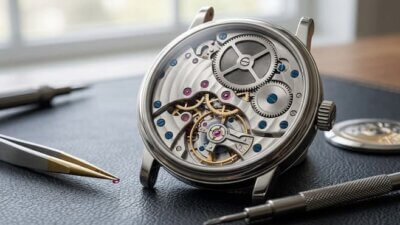
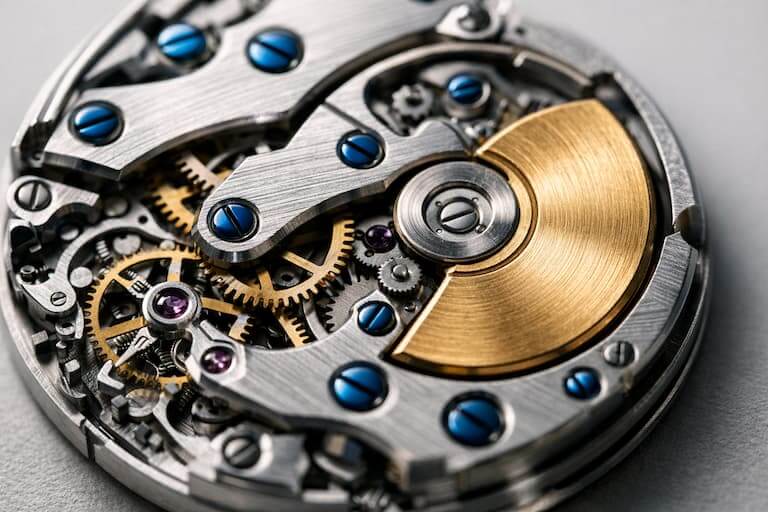
Mechanical movement: The system of gears and springs that measure and display time in a mechanical watch, powered by the mainspring rather than a battery.
Frequently Asked Questions
When were watches invented?
Portable watches emerged around 1510 with Peter Henlein’s invention of the mainspring. However, mechanical clocks existed as early as 1275. If you are asking about wristwatches, the first documented example dates to 1810 (Breguet), but they did not become mainstream until World War I, around 1916.
Who invented the watch?
There is no single inventor of “the watch” because watches evolved over centuries. Peter Henlein is credited with the first portable watches around 1510. Later, Abraham-Louis Breguet is recognized for creating the first documented wristwatch in 1810. The wristwatch as we know it today was refined through contributions by countless manufacturers, especially during World War I.
When was the first wristwatch made?
The first widely cited wristwatch was created by Abraham-Louis Breguet in 1810 for the Queen of Naples, Caroline Murat. However, wristwatches only became common personal items during World War I, starting around 1916, when soldiers needed synchronized timekeeping in the trenches.
Why did wristwatches become popular?
Wristwatches became popular due to practical necessity during World War I. Soldiers found wristwatches far more convenient and reliable than pocket watches in combat conditions. The military demand drove manufacturers to produce them in large quantities, established the wristwatch as a standard format, and shifted public perception from jewelry novelty to essential tool.
What role did World War I play in wristwatch history?
World War I was transformative. Before the war, pocket watches dominated, and wristwatches were primarily jewelry for the wealthy. During the war, particularly by 1916, military forces recognized that wristwatches enabled better coordination and synchronization. This military adoption triggered mass production, standardization, and a cultural shift that made wristwatches the default personal timepiece.
When did quartz watches change the industry?
The quartz revolution began in 1969 with the introduction of the Seiko Astron, the first commercial quartz wristwatch. Quartz watches delivered superior accuracy, required minimal maintenance, and were inexpensive to produce compared to mechanical watches. This disrupted the mechanical watch industry significantly, leading to what is now called the quartz crisis. Many traditional watchmakers struggled during this period, though mechanical watches have since experienced a revival among enthusiasts.
What is the difference between a portable watch and a wristwatch?
A portable watch is a small, mechanical timepiece that can be carried or worn, such as Peter Henlein’s designs from the 1500s, which were typically worn on chains around the neck or placed in pockets. A wristwatch is specifically designed to be worn on the wrist, either as jewelry (as in early examples) or as a functional tool (as with military and modern designs). The two terms describe different eras and purposes rather than entirely different devices.
Why is Breguet 1810 cited for wristwatches if Henlein invented watches around 1510?
Henlein’s 1510 invention was a portable clock that could be worn or carried, but it was not a wristwatch. Breguet’s 1810 bracelet watch is specifically recognized as the first documented wristwatch because it was designed to be worn on the wrist from the outset. The two milestones represent different innovations: Henlein made watches portable, while Breguet made them wrist-worn. Wristwatches did not become common until World War I, nearly a century after Breguet.
Were wristwatches invented before pocket watches became outdated?
Yes. Wristwatches appeared around 1810 (Breguet), but pocket watches remained dominant for over a century. The shift to wristwatches happened gradually during World War I, not because pocket watches were inferior, but because wristwatches proved more practical for active, modern life.
Did all early wristwatches look like jewelry?
Many early wristwatches, including Breguet’s 1810 commission for the Queen of Naples, were designed as jewelry with precious metals and gemstones. However, military wristwatches during World War I and the early 1900s were more utilitarian, featuring larger dials, luminous hands, and durable cases. By the early 20th century, two distinct wristwatch styles had emerged: ornamental designs for wealthy civilians and practical designs for soldiers and workers.
Key Takeaways
Understanding when watches were invented requires recognizing three major milestones: the portable watch era (starting circa 1510 with Peter Henlein), the wristwatch innovation era (1810 with Breguet), and the wristwatch adoption era (1916 onward during World War I). Each milestone represents a different question—when watches became portable, when they became wrist-worn, and when they became mainstream. Today, watches continue to evolve, with mechanical, quartz, and digital designs coexisting to serve different needs and preferences. For additional context, explore related watch guides on the broader history of timekeeping, mechanical watch movements, and how quartz technology transformed the industry.