No, Automatic Watches Don’t Use Batteries (Except Rare Hybrids)
Do automatic watches have batteries? No, pure automatic (mechanical self-winding) watches do not use batteries. They rely on your wrist motion to wind a mechanical spring that powers the watch.
Many people wonder, do automatic watches need batteries, especially when comparing automatic vs quartz options. The common belief that all watches require batteries stems from the popularity of quartz (battery-powered) watches, which dominate the market. Automatic watches, however, are purely mechanical and battery-free.
- Direct statement: Automatic watches run on mechanical energy from motion, with no batteries required.
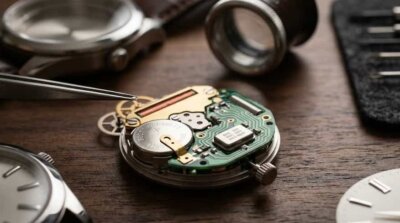
A rare hybrid (automatic + quartz regulation/power) exception exists in some models that incorporate a battery for added precision, but these are not standard automatic watches.
How Do Automatic Watches Actually Work?
Automatic (mechanical self-winding) watches power themselves through your wrist movements, converting everyday motion into energy without needing batteries like battery-powered quartz watches do.
Here’s how the process unfolds in four simple steps:
- Your arm swings or rotates during daily activities, creating motion.
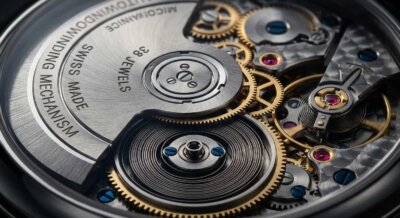
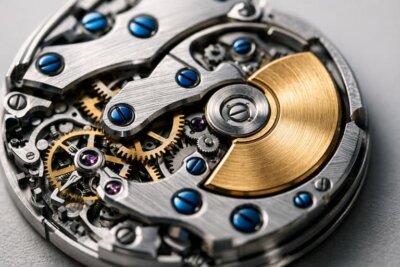
- This motion spins the rotor (oscillating weight), a half-moon shaped piece inside the watch case that freely pivots.
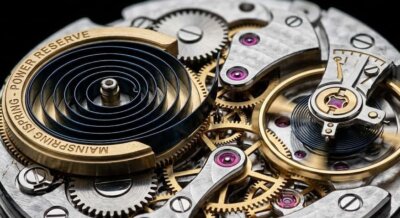
- The rotor’s spin winds the mainspring (coiled spring that stores energy), tightening it to build up power.
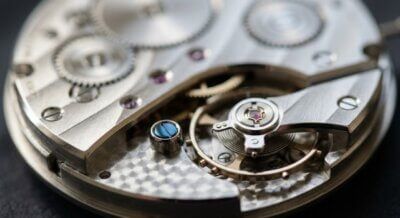
- As the mainspring slowly unwinds, it drives the gear train to move the hands, with the balance wheel and escapement regulating the release for steady timekeeping.
Picture the flow: your wrist motion spins the rotor (half-moon weight), which winds the coiled mainspring barrel. As the mainspring unwinds, it drives the gear train and balance wheel, ticking out the seconds.
For example, swinging your arm while walking rotates the rotor like a half-moon weight, steadily winding the mainspring. But in a low-motion scenario like a desk job with minimal arm swings, the rotor moves less, so the watch may slow or stop—we’ll cover practical fixes like manual winding next.
Automatic vs Quartz (Battery) Watches: Key Differences
When comparing automatic vs quartz watches, the core distinction lies in their power sources and how they keep time. Automatic watches rely on wrist motion to power a spring, while quartz (battery-powered) watches use electricity from a battery to drive timekeeping.
Quartz watches work by sending an electric current from the battery through a quartz crystal, causing it to vibrate precisely at 32,000 times per second. This steady vibration regulates the gear train for accurate time display. In contrast, automatic watches draw energy from the mainspring wound by motion, which releases power steadily through mechanical components to regulate timekeeping. Automatic watches often give a smoother sweeping perception due to their continuous release, while battery-powered quartz watches typically show a distinct ticking step every second. Maintenance also differs: quartz watches need battery replacements every 2-5 years on average, whereas automatic watches require mechanical servicing to oil and adjust components.
To help visualize these contrasts, here is the Automatic vs Quartz Comparison table:
| Power Source | Accuracy | Maintenance | Cost | Second Hand Motion |
|---|---|---|---|---|
| Automatic: Wrist motion winds spring | Typically +/-45 sec/day (varies) | Service every 3-5 years | Higher initial and service costs | Smoother sweep perception |
| Quartz: Battery | Very high, often seconds/month | Battery change every 2-5 years | Lower initial cost | Ticking steps |
Decision tree: Choose automatic if you value craftsmanship; quartz if accuracy first.
For more details, you can compare quartz options to see specific models in action. Next, we’ll look at power reserve and winding habits.
Understanding Power Reserve and Winding
Power reserve refers to how long an automatic watch runs off-wrist after its mainspring fully stores energy, typically lasting 24–72 hours depending on the model.
For example, if you take off your watch for a weekend, its power reserve might run out after about 2 days, causing it to stop until motion or manual winding restarts it.
If your automatic watch stops, you can give it a gentle shake to start the rotor, or perform manual winding via the crown, often with 30–40 turns clockwise to build up energy—though results vary by model.
To keep it running consistently, wear it daily for natural winding from arm motion, or use a watch winder for periods when it’s not worn. Wearing the watch regularly ensures consistent motion-based winding, and a comfortable fit helps the rotor move freely.
Starting a Stopped Automatic checklist:
- Gently shake the watch side-to-side for 20–30 seconds to engage the rotor.
- Perform manual winding via the crown with 30–40 turns clockwise.
- Wear it daily to maintain consistent motion-based winding.
- Check and reset the time after it restarts.
- Store the watch in a horizontal position (dial up) when resting, as this orientation may help maintain the movement.
- Use a watch winder if low daily motion is an issue, such as with a desk job.
Common real-world scenarios include a desk job with low motion, where insufficient arm swings may not fully wind the watch; address this by adding manual winding each morning, wearing it more actively, or considering a watch winder.
Next, we’ll look at accuracy, maintenance, and care tips.
Pros and Cons of Automatic Watches
Automatic watches offer distinct advantages over battery-powered quartz watches, but they also come with tradeoffs that suit certain lifestyles better than others. This balanced view helps beginners weigh the automatic watch vs battery option based on priorities like craftsmanship or convenience.
| Pros | Cons |
|---|---|
| No batteries needed, avoiding routine openings for replacements | Generally less accurate than quartz watches |
| Appeal of craftsmanship in mechanical self-winding design | Requires regular motion or manual winding to keep running |
| Reduces waste from battery changes | Higher maintenance and servicing needs |
Explore craftsmanship examples to see how this appeal translates to real models. Next, we’ll look at accuracy, maintenance, and care tips.
Accuracy, Maintenance, and Care Tips
Automatic watches offer a mechanical charm, but their accuracy can vary compared to quartz (battery-powered) watches, typically ranging around +/-45 seconds per day depending on the model and conditions. Several factors—temperature, position, magnetism, and shock—can affect timekeeping accuracy by influencing the balance wheel, the component that regulates the watch’s rhythm.
The following table outlines key factors affecting accuracy and practical tips to minimize issues.
| Factor | Impact | Tips |
|---|---|---|
| Temperature | Extreme heat or cold can cause the watch to gain or lose time as parts expand or contract. | Store and wear between 40°F–90°F when possible; avoid saunas or freezers. |
| Position | Different orientations (dial up/down, side) affect gravity on the balance wheel, leading to gain/loss. | Test storage positions by noting time changes over days in various orientations. |
| Magnetism | Magnetic fields disrupt the balance wheel, speeding up or slowing the watch. | Keep away from phones, speakers, and MRI machines; demagnetize if needed. |
| Shock | Hard impacts jar the movement, potentially misaligning parts. | Avoid dropping or high-impact sports without a shock-resistant model. |
To maintain optimal performance, adopt these care habits: service every 3–5 years depending on model and usage; explore more service tips for detailed guidance; wear regularly or use a winder; avoid chemicals like lotions or solvents; and store in a cool, dry place with the crown up if testing positions. Next, we’ll look at common myths and mistakes beginners make.
Common Myths and Mistakes Beginners Make
Beginners often encounter confusion around watch types, leading to avoidable errors. Here are the most common myths, with simple corrections.
Myth: Kinetic and Solar Watches Are Battery-Free Like Pure Automatics
Kinetic (uses a battery/capacitor) and solar (uses a battery/capacitor) watches generate power from motion or light but store it in a battery or capacitor for their quartz movements. They differ from pure automatic (mechanical self-winding) watches, which rely solely on a mainspring without any battery.
Myth: All Self-Winding Watches Avoid Batteries Completely
While pure automatic watches do not need batteries, a very small number of hybrid models exist that add a battery to assist quartz regulation for extra precision—but these are not standard automatics and remain exceptions.
Mistake: Expecting Quartz-Level Accuracy from an Automatic Watch
Quartz (battery-powered) watches typically gain or lose just seconds per month, while automatic watches vary more, often around +/-45 seconds per day depending on the model. Set realistic expectations for the mechanical nature instead of assuming battery-like precision.
Mistake: Ignoring a Stopped Automatic Watch
A stopped automatic needs manual action to restart, such as the steps in our earlier “Starting a Stopped Automatic” checklist. Skipping this leaves it unworn and inaccurate.
Here is a practical “Beginner mistakes” checklist to avoid these issues and answer questions like “does automatic watch need battery.”
- Confirm it’s a pure automatic (mechanical self-winding) watch before assuming no battery maintenance—check specs to rule out kinetic, solar, or hybrids.
- Start a stopped watch right away using shake, manual winding via the crown (30–40 turns), and daily wear instead of letting it sit.
- Adjust expectations for accuracy; track gains/losses over days and recalibrate via the crown rather than demanding quartz precision.
- Wear or use a winder daily to keep power reserve active, avoiding the “does automatic watch need battery” confusion by embracing mechanical winding.
- Test storage position effects on timekeeping periodically instead of blaming the movement for drift.
- Plan service every 3–5 years rather than waiting for total failure, preventing overlooked maintenance buildup.
Next, we’ll look at frequently asked questions to cover more ground.
FAQ: Automatic Watches Answered
Do automatic watches ever need batteries?
No, pure automatic (mechanical self-winding) watches do not need batteries. They rely on wrist motion to power the rotor (oscillating weight) that winds the mainspring (coiled spring that stores energy).
How long does the power reserve last?
The power reserve (how long it runs off-wrist) typically lasts 24–72 hours, depending on the model. After that, the watch stops until worn or manually wound again.
What’s the difference between automatic and quartz?
Automatic watches are mechanical self-winding timepieces powered by a mainspring, while quartz (battery-powered) watches use a battery to make a crystal vibrate at 32,000 times per second for timekeeping. Automatics offer a smoother second-hand sweep, but quartz provides higher accuracy.
Can I wear an automatic watch every day without winding?
Yes, daily wear usually keeps an automatic running without manual winding, as arm motion turns the rotor to wind the mainspring. If your activity is low, manual winding via the crown may be needed occasionally.
Why does my automatic watch lose time?
Automatic watches can lose or gain time due to factors like temperature, position, magnetism, or shock affecting the balance wheel and escapement. Accuracy typically varies by +/-45 seconds per day, and regular servicing helps maintain performance.
Are there any exceptions (hybrid watches) where an “automatic” might have a battery?
Yes, rare hybrid (automatic + quartz regulation/power) exceptions exist that combine a mechanical mainspring with battery assistance for better accuracy. These are not pure automatics and represent a small minority.
What if I don’t move much (desk job) and my automatic keeps stopping—what should I do?
For low-motion scenarios like a desk job, manually wind via the crown 30–40 turns or use a watch winder to simulate motion and keep the power reserve charged. Daily wear with some activity usually suffices for most people.