TL;DR: What you’re paying for (the biggest Rolex price drivers)
Rolex watches command premium prices because of six interconnected factors: the use of proprietary materials like Oystersteel/904L and custom precious-metal alloys that resist corrosion and wear far better than industry standards; a vertically integrated manufacturing model where Rolex produces nearly all components in-house rather than outsourcing; labor-intensive hand assembly and micro-adjustments by skilled specialists rather than full automation; rigorous dual-layer testing that exceeds industry certification standards; intentionally controlled production volumes that keep supply below global demand; and deep brand heritage amplified by cultural prestige, iconic design language, and secondary-market dynamics. Together, these factors create a watch that is genuinely difficult and costly to produce, and one that many buyers view as worth preserving or purchasing second-hand.
The Core Price Drivers at a Glance
- Premium materials (Oystersteel/904L, Everose, platinum, sapphire crystal)
- In-house manufacturing of movements, cases, bracelets, and bezels
- Hand assembly and calibration by trained specialists
- Testing standards stricter than industry baseline (Superlative Chronometer vs COSC)
- Long product development cycles (2–3 years for new movements or materials)
- Controlled production and intentional scarcity (no deep discounting)
- Brand heritage, cultural recognition, and secondary-market value retention
Illustrative Cost Breakdown: A Steel Sports Watch Example
Rolex does not publicly disclose its manufacturing costs, so the following is a purely conceptual model to help you understand how retail price relates to production expenses. This breakdown represents rough proportional categories, not Rolex’s actual internal figures. Using a representative steel sports watch (e.g., Submariner or GMT-Master II) with a retail price around $9,000–$10,000 USD as an example:
| Cost Category | Estimated Share (Illustrative) | What This Includes |
|---|---|---|
| Materials (case, bracelet, dial, crystal) | 15–20% | Oystersteel/904L, sapphire, Cerachrom bezel, precious-metal indices |
| Movement (caliber production and assembly) | 10–15% | In-house caliber components, testing, micro-adjustments, hairspring, balance wheel |
| Labor and assembly | 10–15% | Hand assembly, specialist training, quality gates, final calibration |
| Facility, R&D, and overhead | 15–20% | Plan-les-Ouates metallurgy center, tooling, movement development, employee wages, building costs |
| Brand, marketing, and distribution | 15–20% | Advertising, authorized dealer network, brand preservation, selective availability |
| Profit margin | 15–30% | Operating profit after all expenses; allows reinvestment in R&D and capacity |
This breakdown is illustrative and approximate. Actual cost distribution varies by material (gold and platinum watches carry materially higher materials costs), complexity (Moon-phase calibers and dual time-zone movements cost more to develop and assemble), and production volume (limited-edition models spread fixed costs across fewer units).
What This Means for Price
When you buy a Rolex, you are paying for engineering, materials science, labor discipline, and brand cachet that competitors either do not match or do not invest in at the same level. This is not pure markup; it reflects real upstream costs in sourcing, testing, and talent. The secondary market—where pre-owned Rolex watches often sell for 70–90% of retail or even above retail for certain models—signals that buyers perceive genuine value in that craftsmanship and heritage. The scarcity of new Rolex watches at retail prices further pushes demand into the pre-owned market, which in turn reinforces the brand’s perceived durability and collectibility.
The sections that follow will unpack each of these drivers in detail: the materials and metallurgy, the manufacturing process and why automation is not the solution, the testing standards that set Rolex apart, the iconic innovations that anchor the brand, the production constraints that create scarcity, and the real-world resale dynamics that shape what you actually pay when you buy or sell a Rolex.
Brand history, heritage, and cultural prestige (why the name carries a premium)
Rolex’s pricing power rests partly on over a century of brand building and proven reliability. Heritage and controlled supply interact to sustain higher retail and secondary-market prices. When you buy a Rolex, you are investing not just in metal and mechanics, but in a name that has become synonymous with precision, durability, and success.
From London to Geneva: The founding and early innovation
Rolex was founded in 1905 in London by Hans Wilsdorf, a visionary watchmaker who believed wristwatches could be as accurate and reliable as pocket watches—a radical idea at the time. In 1919, Wilsdorf moved the company to Geneva, Switzerland, positioning it at the heart of global watchmaking tradition. This Swiss heritage became part of Rolex’s identity and remains a pricing anchor today. Swiss-made watches command higher prices globally, and Rolex’s century-long presence in Geneva reinforces that positioning.
Wilsdorf’s philosophy—that a watch should be built to last, tested rigorously, and prove itself in the real world—shaped every decision the company made. That commitment to evidence-based durability, rather than marketing hype, became Rolex’s calling card and continues to influence how the brand justifies its price premium.
The Everest expedition and proof of durability
In 1953, Edmund Hillary and Tenzing Norgay summited Mount Everest wearing Rolex Oyster Perpetual watches. This was not a paid sponsorship in the modern sense; it was a test. Hillary and Norgay needed a watch that would function flawlessly in extreme cold, altitude, and physical stress. The Rolex succeeded where others might have failed, and the company documented this proof of durability in its marketing.
That single expedition created a lasting narrative: Rolex watches are built for extremes and can be trusted when it matters most. Explorers, mountaineers, and divers adopted the brand, and each success story reinforced the perception that Rolex watches are professional-grade instruments, not mere luxury accessories. This mythology translates into willingness to pay a premium, because buyers feel they are purchasing proven reliability, not just a name.
Pop culture, sports sponsorship, and universal recognition
Over the decades, Rolex embedded itself in cultural touchstones. James Bond wore a Rolex Submariner in early films, cementing the watch as a symbol of sophistication and espionage cool. Wimbledon, the world’s most prestigious tennis tournament, has used Rolex as its official timekeeper since 1966. Formula 1 racing, mountaineering expeditions, and Olympic athletes have all worn Rolex watches, either by sponsorship or preference.
What makes this different from generic celebrity endorsement is consistency and credibility. Rolex sponsors events (like Wimbledon and Formula 1) where timing and precision matter, reinforcing the idea that the brand is trusted by professionals and institutions, not just wealthy consumers. High-profile individuals—from presidents to astronauts—have worn Rolex watches, and these associations accrue value to the brand.
The result is near-universal recognition. In most countries, if you ask a non-watch person to name a luxury watch brand, “Rolex” is the first answer. This is not accidental. Over 100 years, Rolex has built a brand presence so dominant that it anchors the entire luxury watch market. That recognition translates into demand that far exceeds supply, giving Rolex pricing power it would not have if it were merely one option among many.
Market dominance and pricing leverage
Industry estimates often place Rolex’s share of Swiss luxury watch revenue at roughly 29 percent—a significant market share for a single brand in a competitive field. This position is not a consequence of aggressive marketing alone; it reflects decades of consistent quality, strategic positioning, and cultural embedding. Rolex has become the default luxury watch for people who do not consider themselves watch enthusiasts.
This dominant position has a direct pricing effect. When demand consistently exceeds supply (a pattern Rolex has maintained through controlled production), the brand can sustain prices at levels competitors cannot. Rolex does not compete on price; it competes on heritage, recognition, and scarcity. A first-time luxury watch buyer will often choose Rolex precisely because the name carries such weight and because resale value is believed to be strong—assumptions grounded in decades of brand building.
Premium materials and metallurgy (904L/Oystersteel, Everose, Cerachrom, sapphire)
Material choice is one of the most tangible reasons Rolex watches cost more to produce and retail for higher prices. Rolex does not simply use whatever steel or gold is cheapest; instead, it selects materials that perform better, last longer, and demand specialized manufacturing processes. This section breaks down the key materials and explains why each one affects the final price you pay.
Oystersteel/904L: The corrosion-resistant foundation
Rolex’s signature steel is Oystersteel, a proprietary name for 904L stainless steel. Since 1985, this alloy has been the backbone of most steel Rolex sports watches. Compared to the more common 316L steel used by many competitors, 904L offers superior corrosion resistance—it resists salt spray, chlorine, and acidic environments far more effectively. This matters for watches that may spend time in the ocean, near swimming pools, or simply exposed to sweat and daily moisture.
The catch: 904L is significantly harder to machine and finish than 316L steel. Rolex’s suppliers and in-house teams must use specialized tools, slower cutting speeds, and more frequent tool changes to shape and polish 904L components. The steel also requires careful quality control at microscopic levels; Rolex inspects and controls the steel’s microstructure throughout preparation to ensure consistency. These extra steps add measurable cost to every piece of Oystersteel Rolex that leaves the factory, compared to using more standard alloys.
Sidebar: The Materials Science of Oystersteel/904L
Why is 904L harder to work with than standard steel? The answer lies in metallurgy. 904L contains higher proportions of nickel and molybdenum, which give it superior corrosion resistance but also make it mechanically harder and more abrasive to machining tools. When CNC machines cut 904L, tool wear happens faster, requiring more frequent replacements and tool adjustments. Additionally, the material can generate more heat during machining, demanding precise coolant systems and slower feed rates to prevent overheating and tool breakage. All of this translates to longer production time and higher labor and tool costs per component. This is why Rolex’s commitment to 904L, while delivering better long-term durability, raises the per-unit manufacturing expense.
Plan-les-Ouates and in-house metallurgical control
Rolex owns and operates a metallurgical center in Plan-les-Ouates, Switzerland, where much of its precious metal casting and alloy blending happens. By controlling alloy composition in-house rather than buying pre-made ingots from external suppliers, Rolex ensures purity, consistency, and proprietary formulations that competitors cannot replicate. This vertical integration in materials science costs more upfront—dedicated staff, specialized equipment, and rigorous testing—but gives Rolex a competitive moat and justifies premium pricing.
Precious metals: Everose, 18K gold, and platinum
Rolex watches come in multiple metal options, each with different cost implications:
- Everose gold is Rolex’s proprietary rose-gold alloy, introduced to address a common problem: standard rose gold fades over time as its copper content oxidizes and loses luster. Everose uses a specialized blend that resists fading and maintains color for decades. This proprietary formulation costs more to develop and refine than standard gold alloys, and the metal commands a premium at resale because collectors recognize its longevity.
- 18K gold (yellow, white, or rose) contains 75% gold and 25% other metals (copper, silver, palladium). The material itself represents a substantial portion of production cost. Precious-metal watches demand significantly higher manufacturing investment than steel models due to the cost and weight of the metal, plus specialized finishing and quality control.
- Platinum is the rarest and most durable precious metal Rolex uses. It is heavier, more resistant to wear, and more difficult to machine than gold. Manufacturing platinum watches requires specialized techniques and equipment. Platinum Rolex watches are produced in far smaller quantities than steel or gold models, making them collectible.
Cerachrom bezels and sapphire crystals
The bezel (rotating ring) on many Rolex sports watches is made from Cerachrom, a composite ceramic material proprietary to Rolex. Cerachrom is scratch-proof, fade-resistant, and UV-stable—it will not discolor or lose its printed numbers and markings even after decades of sun exposure and wear. Machining and coating Cerachrom requires specialized equipment and processes that add to production cost, but the result is a bezel that looks pristine for the life of the watch.
Similarly, Rolex uses sapphire crystal (synthetic sapphire, not the gemstone) for the watch face. Sapphire is exceptionally hard—second only to diamond on the Mohs hardness scale. It is virtually scratch-proof, meaning the face of a Rolex will remain clear and transparent for decades, even with daily wear. Cutting and polishing sapphire crystal requires precision machinery and trained technicians. The sapphire also receives an anti-reflective coating on the underside, which further improves readability and adds another manufacturing step.
Titanium (RLX) and Oysterflex bracelet
Rolex also produces watches in RLX titanium, a proprietary titanium alloy. Titanium is lightweight, hypoallergenic, and extremely durable—useful for active wearers or those with metal sensitivities. Like 904L steel, titanium requires specialized machining and finishing. Production volumes are far lower than steel, so per-unit costs remain higher despite the lighter weight.
The Oysterflex bracelet—a hybrid of metal (titanium-nickel alloy links) and elastomer (a rubber-like material)—is engineered for both durability and comfort. The elastomer resists UV damage and does not degrade easily, and the metal links provide structural integrity. Developing and manufacturing Oysterflex requires proprietary tooling and quality controls, adding to the overall cost of watches equipped with this bracelet.
The following table summarizes how each major material choice impacts durability, weight, cost relative to others, and typical usage:
| Material | Corrosion Resistance | Durability and Scratch Resistance | Weight and Feel | Price Impact (Relative) | Example Models |
|---|---|---|---|---|---|
| Oystersteel/904L | Excellent; superior to 316L steel | Very durable; requires maintenance (polishing restores finish) | Standard weight; substantial feel | Baseline (higher than 316L) | Submariner, GMT-Master II, Sea-Dweller, Daytona (steel) |
| 18K Yellow, White, or Rose Gold | Good (gold is inert) | Durable; softer than steel (shows polish wear faster) | Heavier and warmer than steel | High (material cost is substantial) | Day-Date, Datejust, Sky-Dweller (gold versions) |
| Everose Gold (proprietary rose-gold alloy) | Excellent; resists fading | Durable; maintains color and luster long-term | Heavy; warm rose tone | High (proprietary alloy premium) | Submariner Date, GMT-Master II, Daytona (Everose) |
| Platinum | Excellent (platinum is inert) | Extremely durable; denser and heavier than gold | Very heavy; substantial, luxurious feel | Very high (precious metal and rarity) | Day-Date, Sky-Dweller, Sea-Dweller (platinum versions) |
| RLX Titanium | Excellent; hypoallergenic | Extremely durable; lightweight | Very light; comfortable for extended wear | Moderate to high (specialized alloy) | Yacht-Master, select sports models |
Why material science adds up
Each material demands specialized machinery, slower production rates, higher labor skill, and stricter quality control. A worker machining 904L steel spends more time and care than someone machining softer steel. Cerachrom and sapphire require trained technicians and precision equipment. Everose gold demands proprietary alloy blending and rigorous testing.
These accumulated manufacturing difficulties—not just the raw cost of metal—are why Rolex’s material choices push prices higher throughout the product line. Next, we’ll explore how Rolex’s decision to manufacture almost everything in-house, rather than outsourcing to cheaper suppliers, multiplies these material and labor costs even further.
In-house manufacturing and vertical integration (why making everything yourself costs more)
When people say Rolex is “so expensive,” a big piece of the answer is that the brand does far more in-house manufacturing than most watch companies. Instead of buying many parts from outside suppliers, Rolex designs, makes, finishes, and tests most core components itself, then bears all the overhead that comes with that choice.
What in-house manufacturing means in practice
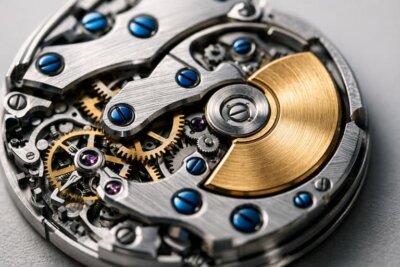
An in-house movement is a mechanical engine for the watch that is designed, produced, and assembled by the brand inside its own facilities, using its own machinery, staff, and processes. An outsourced movement is a ready-made or partially finished movement bought from a specialist supplier, then cased and sometimes lightly modified by the brand that sells the final watch.
Rolex leans hard into in-house manufacturing.
- Movements: designed, prototyped, and produced internally rather than purchased as finished units.
- Cases and bracelets: cut, machined, hardened, and finished in Rolex facilities instead of generic steel cases from external factories.
- Dials and hands: manufactured and finished under one roof, including applied markers, lume, and surface treatments.
- Metallurgy: the brand operates its own foundry and metallurgical labs to control alloys like Oystersteel/904L, Everose gold, and others.
- Testing and quality control: accuracy, water resistance, and durability tests happen in dedicated Rolex facilities.
Other brands often outsource at least one of these elements, especially movements, cases, or dials, which keeps their fixed costs lower.
Why vertical integration pushes prices up
Doing so much internally sounds like it should “cut out the middleman,” but in luxury watchmaking it usually raises per-unit cost, especially when volumes are controlled.
Key reasons this approach makes each Rolex more expensive:
- High fixed overhead: Rolex must build and maintain factories, labs, and equipment for everything from alloy production to microscopic finishing. Those fixed costs are spread across the watches produced.
- Specialized tooling: machining and finishing hard alloys like Oystersteel/904L require custom cutting tools, coatings, fixtures, and machines tuned for very tight tolerances. These tools are costly and wear out faster than tools used for softer steels.
- Skilled labor: instead of hiring only basic assembly staff, Rolex needs metallurgists, engineers, toolmakers, CNC programmers, and experienced watchmakers to run and maintain in-house processes.
- Research and development: designing in-house movements, new alloys, and new case technologies means years of R&D investment before a single watch is sold.
- Quality control and rejection: the stricter the internal standards, the more components are reworked or scrapped. All of that wasted machining time, material, and labor is built into the cost of the pieces that do pass.
- Less flexibility: if demand shifts suddenly, a vertically integrated brand cannot easily drop a supplier or renegotiate terms; it has to carry its own capacity and staff through cycles.
Put simply, in-house manufacturing gives Rolex tight control over quality and consistency, but it also concentrates all the expensive parts of the process inside the company.
Inside the Plan-les-Ouates metallurgical center
A major example of this philosophy is the Plan-les-Ouates metallurgical center in Geneva, where much of the brand’s metal work is centered. Here is what happens there and how each step adds cost.
- Alloy formulation: base metals and alloying elements for Oystersteel/904L, Everose gold, and other proprietary blends are measured and combined to precise recipes. This demands dedicated furnace systems, automated dosing and weighing equipment, and metallurgists to design and monitor those recipes.
- Melting and casting: the metals are melted, refined, and cast into ingots or bars suitable for later machining, using vacuum or controlled-atmosphere furnaces to avoid contamination.
- Purity and microstructure control: samples from each batch are examined using lab-grade equipment to confirm composition and internal structure. Rejected batches must be re-melted or scrapped, wasting energy and time.
- Specialized tooling for Oystersteel/904L: CNC machines run at carefully tuned speeds and feeds to prevent tool breakage. Cutting tools require harder materials and specialized coatings, which are more expensive and wear out quickly.
- Case and bracelet blank production: the alloy is turned into rough shapes that will later be finished into cases and bracelets, under strict dimensional tolerances. Blanks that do not meet specs get reworked or discarded, absorbing extra machine time.
- Surface preparation and finishing readiness: before cases and bracelets go to final finishing, surfaces may be heat-treated, hardened, or pre-polished, requiring additional ovens, baths, and safety systems.
Every layer of equipment, testing, and rework at the Plan-les-Ouates metallurgical center adds to the cost of each finished watch, but it also explains the consistency and feel that many owners notice when handling a Rolex case or bracelet.
The often-quoted “about 1 year to make a Rolex”
Many discussions reference that it takes roughly a year for a single Rolex watch to go from raw materials to a finished, tested piece. This is an illustrative, competitor-referenced model rather than an official Rolex schedule. The watch does not sit on a bench for 12 months; rather, it moves through a long pipeline of parallel steps, with inventory waiting between stages. This extended timeline ties up capital and labor throughout the production cycle, directly raising the per-unit cost of production.
Quarter-by-quarter production timeline (illustrative)
This is a simplified conceptual model to show how time adds cost, not an official internal schedule.
- Q1: design lock and planning — Design refinements are frozen for production; engineering teams finalize tolerances and production methods; tooling and fixtures are created or updated; supplies are planned and ordered.
- Q2: material preparation and component production begins — Metals are melted and alloyed at the Plan-les-Ouates metallurgical center, then cast into ingots or bars; bars are forged and rolled into feedstock; movement blanks and other small components start coming off machines.
- Q2–Q3: intensive machining and finishing — Case and bracelet blanks are milled, drilled, and shaped to final dimensions; movement components are refined; surface treatments and decorative elements are applied.
- Q3–Q4: assembly and regulation — Watchmakers assemble movements from dozens to hundreds of individual parts; movements are tested and adjusted for accuracy; movements are cased up with dials and hands; parts that do not meet performance goals are reworked or replaced.
- Q4: testing, certification, and final QC — Completed watches go through formal accuracy checks, water-resistance tests, and other performance evaluations; fine adjustments are made; final cosmetic inspection checks quality; watches are prepared for shipping.
In reality, hundreds of small steps are nested inside each of these phases, but this overview shows why the process can span many months from start to finish. The longer timeline means capital is tied up and inventory builds, all contributing to the final retail price.
Why this manufacturing choice matters for buyers
For someone new to watches, in-house manufacturing is not automatically “better,” but it does help explain why Rolex sits at its particular price level.
- More control over quality and consistency across models and generations.
- Ability to set and enforce its own standards for materials, finishing, and performance.
- Less reliance on outside suppliers, which supports long-term service and parts availability.
- A real cost burden that must be recouped through higher prices than brands that outsource more of the work.
Next, other sections explore how hand assembly, testing, and design history layer on top of this manufacturing base to create the full price picture for a Rolex.
Hand assembly, craftsmanship, and the “why not automate?” question
Rolex’s commitment to hand assembly and skilled labor is one of the most visible—and expensive—aspects of its production process. Unlike many competitors who rely heavily on automated machinery, Rolex employs thousands of master watchmakers and technicians who perform intricate assembly, adjustment, and finishing work by hand. This labor-intensive approach directly increases manufacturing costs but is central to both the quality outcome and Rolex’s brand identity.
The role of skilled labor and training
Becoming a Rolex watchmaker is not a quick process. The company invests heavily in training, with skilled technicians typically undergoing three to five years of rigorous apprenticeship before they master the craft. This extended training period ensures that every person handling a movement or case understands the precision required and can make real-time decisions about micro-adjustments that machines cannot.
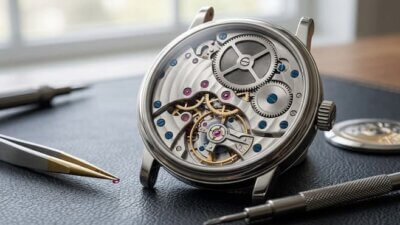
Once trained, these craftspeople become specialists. A single movement may pass through five to ten different specialists during assembly—one for the balance wheel, another for the escapement, a third for regulation and timing. Each handoff acts as a quality gate. If a specialist detects an issue, they address it immediately rather than allowing a flawed component to move forward. This human-centered approach means that labor costs accumulate across the entire production timeline, but it also means that quality is embedded at every stage rather than checked only at the end.
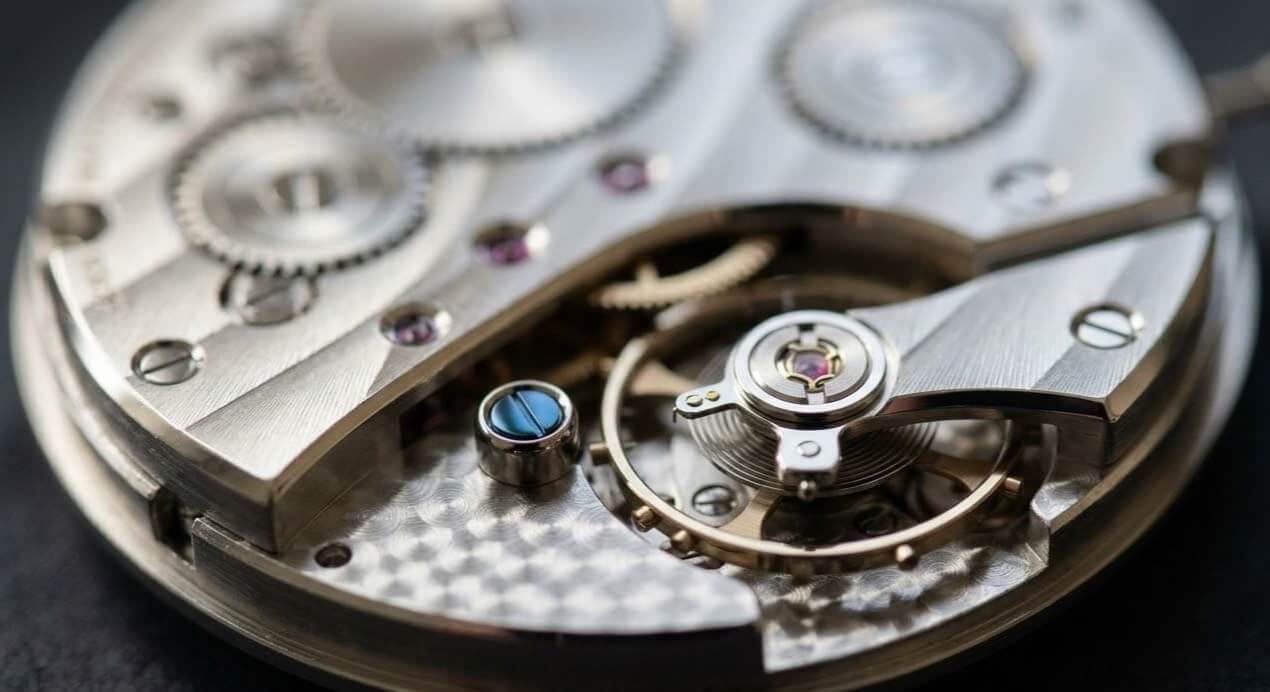
The meticulous hand-finishing of components—polishing, chamfering edges, and decorating surfaces—also falls to skilled artisans. These finishes are not merely cosmetic; they reflect the care taken during assembly and signal to owners that their watch was crafted, not simply assembled. This aesthetic attention reinforces the perception of luxury and justifies the premium retail price.
Why Rolex refuses to fully automate
A natural question arises: why doesn’t Rolex simply invest in more machines and fewer people to reduce labor costs? The answer reveals how brand identity and manufacturing philosophy are inseparable from pricing.
Hand assembly enables micro-adjustments. A machine follows a preset program; a skilled watchmaker can sense resistance, feel vibrations, and make thousandths-of-a-millimeter corrections in real time. These adjustments are what allow uncased movements to consistently meet the Rolex Superlative Chronometer standard of ±2 seconds per day—a level of precision that cannot be guaranteed by automation alone.
Automation requires enormous capital investment in bespoke tooling and machinery tuned to one design. For a company that values flexibility and quality control, maintaining a skilled workforce that can adapt to new designs, materials, and production volumes is often more cost-effective. The one-year production timeline is partly the result of this deliberate, human-paced approach.
Additionally, hand assembly allows watchmakers to catch and correct outliers, preventing systemic defects from propagating across thousands of units. If every movement were assembled identically by machine, any flaw in the design or tooling would affect large batches. This quality assurance benefit justifies the labor expense. The “master watchmaker” narrative is also central to Rolex’s premium positioning. Buyers are paying for the idea that a highly trained human being spent months crafting their specific timepiece. This narrative would collapse if Rolex pivoted to a fully automated assembly line.
Fake versus real: why craftsmanship prevents counterfeits
One often-overlooked benefit of Rolex’s labor-intensive approach is that it creates a formidable barrier to counterfeiting. Counterfeiters can mimic a case shape, copy a dial design, or even source similar steel. What they cannot easily replicate is the combination of material science, movement precision, and rigorous testing that defines a genuine Rolex.
A counterfeit movement may look similar under a loupe, but it will not have been regulated by a master watchmaker, tested through the Superlative Chronometer certification process, or adjusted to perform consistently across five positions and three temperatures. The internal components may be cut from inferior steel, hardened improperly, or assembled without the micro-adjustments that take years of skill to perform correctly. When a fake watch is opened for service, these deficiencies become immediately apparent to any trained technician.
Similarly, the finishing work on genuine Rolex components—the hand-polished surfaces, the precisely chamfered edges, the consistent decoration—requires knowledge and experience that cannot be acquired without years of practice. Counterfeiters operating in high-speed, low-cost environments cannot afford to invest in this training or to tolerate the slow pace it entails. The result is that counterfeit movements often show telltale signs of machine finishing, uneven surfaces, or crude assembly when examined closely.
This is not a perfect barrier. High-end counterfeits have improved significantly. But the fundamental truth remains: the more labor-intensive and skill-dependent the manufacturing process, the harder it is to fake convincingly. Rolex’s refusal to automate, paradoxically, makes its watches harder to counterfeit and thus more valuable to own.
Quality markers of a Rolex
When evaluating a Rolex—whether new or pre-owned—certain markers reflect the quality embedded by skilled labor and rigorous processes. The following checklist highlights what genuine ownership and value retention depend on:
- Movement finishing: Polished surfaces, beveled edges, and consistent decoration visible through the caseback or in service records
- Case finishing: Brushed and polished surfaces in proper proportions; sharp, even edges; no tool marks or rough transitions
- Dial and hands: Printing clarity; consistent lume application; no misalignment or bubbling on applied indices
- Bezel action: Smooth, consistent clicking; no grinding, binding, or play
- Bracelet fit: Even endlinks; consistent gaps; solid end-link connections without rattle
- Original box and papers: Presence of warranty card, instruction manual, and original packaging increases resale value significantly
- Service history: Records of regular maintenance (typically every 5–10 years) and authorized service work
- Movement serial number: Consistent with case serial; production year can be confirmed through trained service centers or specialist references
- Water resistance markings: Clearly printed; depth rating consistent with model specification
- Cyclops lens: Magnification of the date should be approximately 2.5 times; imperfectly magnified dates are a red flag
- Lume aging: On vintage watches, aged lume should show a warm patina consistent with age; on modern pieces, bright lume without burning or discoloration
- Thread patterns and inscriptions: Engravings should be sharp and consistent; caseback threads should be clean and correctly torqued
These markers exist because of the skilled labor involved in every stage of production. A watch that has been hand-assembled, regulated, and tested by master watchmakers will exhibit these qualities consistently. Conversely, shortcuts or inferior labor will show up in rough finishing, misalignments, or inconsistencies—signs that warn potential buyers and justify lower secondary-market prices.
Testing, certification, and quality control (COSC vs Superlative Chronometer made simple)
Every Rolex movement undergoes a rigorous two-layer testing process that sets the brand apart from most competitors. This dual certification system—industry-standard COSC testing followed by Rolex’s own stricter Superlative Chronometer standard—ensures exceptional accuracy and reliability but also significantly increases production costs.
COSC Certification: The Industry Baseline
COSC (Contrôle Officiel Suisse des Chronomètres) is an independent Swiss testing laboratory that certifies mechanical watch movements. When a Rolex movement enters COSC testing, it undergoes 15 consecutive days and nights of rigorous evaluation. The movement is tested in five different positions and across three temperature ranges to simulate real-world conditions. COSC checks seven elimination criteria to ensure the movement meets minimum accuracy standards.
For a movement to pass COSC certification, it must maintain accuracy within a range of negative 4 to positive 6 seconds per day (written as ±4/+6 seconds/day). This baseline standard has become the industry benchmark for fine watchmaking and is recognized globally as a mark of quality.
Rolex Superlative Chronometer: The Stricter Internal Standard
After COSC certification, each Rolex movement faces a second, more demanding test: Rolex’s proprietary Superlative Chronometer certification. This internal standard requires accuracy within negative 2 to positive 2 seconds per day (±2/+2 seconds/day)—twice as strict as COSC’s tolerance. In other words, a Rolex Superlative movement must be four times more accurate than the industry baseline to pass.
The Superlative testing happens after the movement is cased, which is crucial. Casing a movement can affect its precision because the case adds structural constraints and changes how vibrations travel through the mechanism. By testing after casing, Rolex ensures the finished watch—not just the bare movement—meets its exacting standards.
COSC vs Superlative Chronometer Comparison
The following table breaks down how these two certification layers differ:
| Test Component | COSC Standard | Rolex Superlative Chronometer Standard | Purpose and Cost Impact |
|---|---|---|---|
| Accuracy tolerance | ±4/+6 seconds per day (industry baseline) | ±2/+2 seconds per day (twice as strict) | Rolex’s tighter range requires superior component precision and additional calibration labor, directly raising manufacturing cost. |
| Testing duration | 15 consecutive days and nights | 15+ days (same baseline, but may extend for specialized tests) | Longer testing ties up inventory and capital; extended timelines increase per-unit overhead. |
| Testing positions | Five positions (dial up, dial down, three sides) | Five positions (same as COSC) | Multiple positions test how the balance wheel and escapement perform in different orientations, critical for wrist-wear reliability. |
| Temperature ranges | Three temperatures (typically 8°C, 23°C, 38°C) | Three temperatures (same as COSC) | Temperature variation tests how changes in metal expansion and oil viscosity affect accuracy, ensuring year-round performance. |
| Testing stage | Uncased movement only | After casing (final assembly) | Post-casing testing reflects real-world conditions but is more expensive; casing can introduce micro-stresses that affect performance. |
| Dive model pressure test | Not applicable | Hyperbaric and thermal shock testing for Submariner, Sea-Dweller, and similar models | Extreme pressure and temperature cycling validate water-tightness and movement integrity; requires specialized laboratory equipment. |
| Self-winding efficiency | Not explicitly tested | Rotor winding mechanism verified | Ensures the Perpetual rotor winds reliably and stores full power reserve, adding value assurance. |
| Industry recognition | Globally recognized independent standard | Rolex proprietary; exceeds all external benchmarks | Rolex’s internal certification requires in-house expertise and proprietary testing infrastructure. |
What Happens Beyond Accuracy Testing
The complete Superlative Chronometer certification process includes specialized tests tailored to a watch’s intended use. For all models, this includes water-tightness verification and self-winding rotor efficiency checks. For dive models such as the Submariner and Sea-Dweller, Rolex adds extreme testing categories:
- Hyperbaric tank testing: simulates extreme underwater pressure at depths exceeding normal recreational diving limits.
- Thermal shock tests: rapid temperature transitions to verify the case and movement remain sealed and functional.
- Condensation resistance: ensures no internal moisture enters the case under temperature fluctuations.
- Power reserve measurement: confirms the movement stores enough energy to maintain accuracy over its specified time span.
These specialized tests are expensive to conduct and require dedicated equipment and expertise. A single watch may spend weeks in environmental chambers or pressure tanks, tying up production capacity and incurring facility overhead costs.
Why This Two-Layer Approach Costs More
Most watch manufacturers stop at COSC certification or use a single in-house standard. Rolex’s dual-layer system means every movement is tested twice—once externally and once internally—and some models undergo additional environmental stress tests. This redundancy seems inefficient, but it serves a clear purpose: it guarantees that every watch leaving the Rolex facility meets an exceptionally high standard.
The cost implications are substantial. Testing infrastructure requires specialized chambers, pressure tanks, and trained technicians. Each movement’s extended testing time delays production and ties up capital. The labor cost of running redundant certifications and reviewing test results adds to the per-unit manufacturing expense.
Furthermore, Rolex’s refusal to compromise accuracy standards means that movements failing the Superlative standard must be reworked or scrapped. This rejection rate adds an invisible cost that filters into retail pricing—the watches you buy represent only those that passed both certification layers.
Innovation and iconic design (Oyster case, Perpetual rotor, Datejust, and model icons)
Rolex’s pricing power rests partly on nearly a century of design decisions that became industry standards. These innovations—from the waterproof Oyster case to the self-winding Perpetual rotor to the date-window Datejust—were expensive to develop, required years of testing, and created demand that persists across generations. Once a design becomes iconic and trusted, people are willing to wait months or pay premiums to own it. That sustained desirability, combined with the R&D costs embedded in each watch, justifies higher prices than competitors who chase trends rather than define them.
The cost of innovation extends beyond the initial patent. Rolex invests millions in developing a new movement caliber, then spreads that cost across production runs. For example, the Caliber 3235 (introduced in 2015) involved years of research and introduced over 90% new parts and 14 patents. The Caliber 4130 chronograph movement in the Daytona required years of development and uses fewer components than its predecessor—these are illustrations of Rolex’s R&D intensity. Once released, these movements shape the brand’s reputation and justify production discipline that keeps volumes controlled.
The Oyster case, Perpetual rotor, and the foundation of trust
In 1926, Rolex introduced the Oyster case—the first waterproof wristwatch. The three-part screw-down design (case, caseback, crown) sealed the movement inside a metal cocoon, enabling divers, adventurers, and everyday wearers to use a watch without fear of water damage. That concept, now standard across the industry, was revolutionary and required precision manufacturing that drove costs up. Five years later, Rolex added the Perpetual rotor (1931), an oscillating weight that harvested energy from the wearer’s wrist, eliminating the need for manual winding. Both innovations took years to perfect and millions in tooling. Today, they’re so synonymous with Rolex that their absence would feel like a betrayal to owners.
The Datejust, introduced in 1945, brought a practical date window to the wristwatch—a seemingly small addition that fundamentally changed how people thought about daily timekeeping. These three pillars (waterproof case, self-winding mechanism, date functionality) form the DNA of almost every Rolex model and remain core to their appeal. Replicating them requires the same precision and testing that adds to manufacturing cost.
Iconic model families and functional longevity
Rolex’s core model families—Submariner, Daytona, GMT-Master II, Datejust, Explorer, Sky-Dweller, and Sea-Dweller—have been in continuous production for 50+ years, with designs that remain visually and functionally consistent. A Submariner from 1965 is still recognizable as a Submariner in 2026. A Daytona from the 1980s shares proportions and layout with today’s version. This constancy is intentional and costly: it means Rolex resists trendy proportions, bold colors, or radical redesigns that might appeal to one generation but alienate the next. Instead, refinement happens in increments—improved movements, better materials, stronger testing standards—while the silhouette endures.
This design discipline serves a practical purpose tied to pricing. A Submariner is trusted by professional divers, amateur enthusiasts, and formal-dinner wearers because it has proven itself across decades and extreme conditions. A Daytona is the racing chronograph, even if you never race. A GMT-Master II bridges two time zones for pilots and travelers. These functional narratives, backed by history, let Rolex command prices that a new brand cannot match, no matter how well-engineered. You’re paying for a century of proven performance, not just the parts in this year’s watch.
Key Innovations Timeline
- 1926: Oyster case introduced—first waterproof wristwatch case
- 1931: Perpetual rotor patented—self-winding mechanism
- 1945: Datejust launched—first practical date window on a wristwatch
- 1953: Submariner introduced—professional diving watch
- 1955: GMT-Master created—dual-time-zone watch for pilots
- 1963: Daytona introduced—racing chronograph with tachymeter scale
- 1967: Sea-Dweller released—deeper diving than Submariner, helium escape valve
- 2015: Caliber 3235 movement released—new parts and multiple patents, improved accuracy and power reserve
- 2016: Daytona Caliber 4130 refined—fewer components than predecessor, integrated chronograph
- Ongoing: Oystersteel/904L refinement, Cerachrom bezel expansion, and thermal-shock testing enhancements
The cost of maintaining these timelines—continued testing of new materials, refinement of movements, and global service infrastructure—is substantial. Every innovation is amortized across a global waiting list, not discounted to clear inventory. Rolex’s refusal to cheapen production or flood the market with new models means each innovation carries significant weight and justifies year-over-year pricing confidence.
Scarcity, controlled production, and supply–demand (why they’re hard to get)
Rolex prices reflect a deliberate strategy of controlled production and distribution choices that keep supply below demand, creating long waitlists at authorized dealers and premiums on the secondary/pre-owned market.
This approach stems from Rolex’s commitment to quality over volume expansion. Estimates of annual production are often cited as roughly 1.0–1.2 million watches per year, though this figure varies by source and estimates may not reflect current actual volumes. Demand, however, far outpaces these estimates, with popular models like the steel Daytona or GMT-Master II often requiring waitlists of months or years at authorized dealers. Allocation prioritizes long-term clients and select boutiques, reinforcing an exclusivity that strengthens brand prestige.
What this means for price: limited output ties directly to higher retail and secondary-market values, as buyers compete for available pieces.
To illustrate the supply–demand gap, consider this conceptual scarcity framework based on rough, illustrative assumptions—not official Rolex data:
- Assumed annual production (illustrative estimate): roughly 1.0–1.2 million watches.
- Assumed annual demand (illustrative, based on competitor industry analyses): significantly higher than production, suggesting hundreds of thousands of unmet annual demand.
- Result: For hot models, this imbalance compresses supply, pushing secondary-market markups and extending waiting lists.
This framework demonstrates why scarcity creates both delays and premiums; real outcomes vary by model and market conditions and are not guaranteed.
Rolex also maintains strict MSRP consistency without discounts at authorized dealers. Offering promotions would dilute the premium brand positioning and long-term value perception that buyers expect. Instead, any pricing pressure funnels to grey market channels outside Rolex’s control, preserving the core retail experience.
Next, we’ll look at secondary market, resale value, and “investment” realities (including 2025 market context).
Secondary market, resale value, and “investment” realities (including 2025 market context)
Rolex watches behave unusually in the secondary market compared to most luxury goods. While a typical luxury watch loses 30–50% of its value within the first few years, Rolex models often trade near retail or, in high-demand cases, significantly above it. However, this strength is not universal, depends heavily on model selection and market conditions, and should not be mistaken for a guaranteed investment. Outcomes are determined by the specific model, year, condition, service history, and the wider market cycle at the time of sale.
Why some Rolex models command secondary-market premiums
When retail availability is constrained and demand remains high, pre-owned Rolex watches can sell for more than their original retail price. This secondary-market markup is driven by supply–demand imbalance rather than inherent value increase. A steel Daytona with the black and white dial (nicknamed the “Panda” for its color scheme) typically retails for $15,000–$16,000 at authorized dealers but regularly trades for $30,000–$35,000 on the secondary market. Similarly, certain Submariner models and GMT-Master II variants have commanded premiums of 50–100% above retail when supply tightens.
These markups are temporary and model-specific. They reflect artificial scarcity created by Rolex’s controlled production and allocation decisions, not a permanent increase in the watch’s inherent value. When retail supply normalizes or demand softens, secondary prices often decline toward retail levels.
Value retention rates and what “70–90% retention” really means
Industry analysts and secondary-market dealers frequently cite value-retention figures of 70–90% for Rolex watches. This metric compares a pre-owned watch’s resale price to what the original buyer paid at retail. However, this framing masks important conditions:
- These percentages are averages across popular models and may not apply to niche or less-desirable references.
- They assume the watch is kept in excellent condition, includes original box and papers, has a documented service history, and is sold during favorable market conditions.
- A watch purchased in 2020 and resold in 2026 may retain 80% of its original retail price, but that percentage reflects a specific holding period and market cycle, not predictive power for future ownership.
- Condition degradation, missing documentation, and unknown provenance can reduce resale value by 20–40% or more.
In short, 70–90% retention is a historical observation for well-kept popular models in strong secondary markets, not a guarantee.
The 2021–22 peak and 2024–2025 market softening
Rolex secondary-market prices peaked during 2021–2022, driven by pandemic-era supply constraints, ultra-low interest rates, and retail scarcity that made waiting lists years long. By 2024–2025, this dynamic has shifted unevenly across the brand’s portfolio. Some observations:
- Steel sports models (Submariner, GMT-Master II, Daytona) have seen modest price softening, particularly for less iconic references or older production years.
- Entry-level models like the Oyster Perpetual and some Datejust variants have experienced more pronounced declines as retail availability has improved.
- Precious-metal models (gold, platinum, rose gold) and discontinued references have held value more stubbornly, supported by collector demand and fixed supply.
- Condition and provenance matter more in a cooler market; mint examples with full documentation command proportionally higher premiums than worn watches.
The overall picture: the 2025 market is no longer a speculative bubble, but it remains stronger than pre-pandemic levels for most models. Price outcomes vary widely by reference, year, and condition.
Vintage versus modern: why discontinuation and rarity drive different premiums
Rolex’s secondary market divides into two pricing regimes: modern watches (currently in production or recently discontinued) and vintage watches (typically 20+ years old).
Modern watches are subject to retail scarcity and production decisions. The Rolex Submariner reference 116610, discontinued in 2020, illustrates this dynamic. At discontinuation, it traded near retail (~$9,000–$11,000 depending on condition). By 2024–2025, examples in excellent condition with full boxes and papers trade for $12,000–$15,000, a premium driven by the fact that no new 116610s are being made and collectors prefer this robust model over its successor. The current Submariner 126610, despite being newer and featuring newer movements, typically retails for $9,000–$10,500 because supply is more plentiful.
Vintage watches (pre-2000s) operate on scarcity and collectability. A vintage Submariner from the 1970s or 1980s has zero retail competition; its price is set by collectors bidding for a finite artifact. These models appreciate based on production history, dial variations, historical significance, and condition—not on retail supply constraints. A pristine 1970s “Red Submariner” with original dial can sell for $30,000–$60,000, far exceeding any modern model’s resale range.
Why condition, documentation, and provenance command premiums
A Rolex watch’s secondary value is heavily sensitive to its presentation and history. The following checklist illustrates what buyers reward:
- Original box and papers (warranty card, instruction manual, hangtag): add 10–20% to resale value; their absence reduces value by 15–25%.
- Service history and Rolex-authorized service record: documents authenticity, care, and remaining warranty; watches without records trade at 10–15% discounts.
- Condition of case, bracelet, and crystal: visible scratches, polishing wear, or missing lugs reduce value; mint or near-mint examples command 20–40% premiums.
- Originality of dial and hands: refinished or replaced dials are red flags that reduce value by 20–50%; original dials are highly prized.
- Bracelet matching the case: watches sold with mismatched bracelets trade at 10–15% discounts; original matching bracelets add 5–10%.
- Box and papers completeness: a full set (outer box, inner box, warranty card, manual, hang tag) adds more than papers alone.
- Provenance and purchase documentation: watches with clear ownership history and purchase receipts trade higher than those with unknown backgrounds.
Why Pre-Owned Rolex Can Cost More Than New
In certain market conditions, a pre-owned Rolex can trade above its original retail price. This counterintuitive outcome stems from several drivers:
- Fixed supply for discontinued models: when Rolex stops producing a reference, no new units enter the market, while demand from collectors and enthusiasts continues, pushing pre-owned prices upward.
- Long waitlists for new purchases: buyers unable to secure a watch at retail—often facing months or years of waiting—turn to the secondary market, bidding up prices for immediately available pieces.
- Highly desirable configurations: certain dial colors, bezel types, or bracelet options become harder to obtain new, creating premiums for pre-owned examples in those specs.
- Collector appeal and special editions: limited-production or iconic models (e.g., Panda Daytona, tropical dials, “Mark I” Submariner) command sustained collector demand independent of retail supply.
The Paul Newman Daytona outlier: why one watch sold for $17 million
In October 2017, a Rolex Daytona reference 6239 owned by actor Paul Newman sold at auction for $17.75 million, setting a world record for a wristwatch. This example is often cited as proof of Rolex’s investment potential, but it is important to understand why it is an outlier:
- The watch was a rare 1960s reference with an exotic “exotic” dial variant unique to a small production run.
- Paul Newman’s personal ownership and his decades of public wearing added immense cultural cachet and historical significance.
- Condition was exceptional, with original dial and hands intact.
- The auction house (Christie’s) marketed it as a collectible icon, not a typical investment.
- The buyer was likely a high-net-worth collector or institution seeking a unique artifact, not an investor comparing annual returns.
A typical Daytona from the same era, even in excellent condition, trades for $100,000–$300,000. The Paul Newman premium—roughly 50–100x typical pricing—reflects celebrity provenance and rarity, not Rolex’s general resale market.
Investment framing and realistic expectations
Rolex’s strong secondary-market presence has fueled “investment watch” marketing, but this framing requires careful qualification. A Rolex can hold value better than most consumer goods and better than many luxury watches, but it is not a financial instrument. Consider:
- Historical performance is not predictive. A watch purchased at retail in 2020 and held for five years may retain 75% of its original cost, but this outcome depends on the specific model, market conditions during the holding period, condition maintenance, and the ability to find a buyer at the asking price.
- Liquidity is real but limited. Unlike stocks or bonds, selling a watch requires finding a buyer, negotiating price, and managing authentication and shipping. Secondary-market sales often incur 5–10% fees to dealers or auction houses.
- Opportunity cost is real. If you invest $15,000 in a steel sports Rolex with the expectation that it will hold 75% of value over five years, you retain $11,250 of purchasing power—equivalent to roughly 2% annual appreciation in nominal terms, before accounting for inflation and the foregone stock-market returns (historically 8–10% annually).
- Model selection matters enormously. Niche or less-desirable references can depreciate like normal luxury goods; not all Rolex watches perform equally on the secondary market.
If you enjoy wearing the watch and appreciate its craftsmanship, value retention is a pleasant bonus. If your primary motivation is financial return, Rolex watches are a poor choice compared to traditional investments.
Generational holding and cultural durability: a different kind of value
One genuine difference between Rolex and mass-market luxury goods is durability across generations. A Rolex from the 1970s, properly serviced, functions reliably in 2026 and will likely function in 2070. The brand’s reputation, heritage, and continued market dominance mean that vintage Rolex watches remain desirable to new owners who may never have intended to own one. This cultural staying power—the fact that a 50-year-old Rolex is still recognizable, usable, and wanted—does support long-term value retention in ways that, say, a designer handbag or car does not. However, this is a statement about durability and brand permanence, not financial return.
A practical decision framework for pre-owned versus new
Given secondary-market realities, first-time Rolex buyers often face a choice:
- Buy new at an authorized dealer (full warranty, confirmed authenticity, longer service intervals, but higher price and possible waitlist). Best for those prioritizing certainty and brand experience.
- Buy pre-owned from a reputable dealer or auction house (lower entry price, immediate availability, access to discontinued models, but reduced warranty and higher due-diligence burden). Best for those comfortable with condition assessment and seeking specific references no longer in production.
- Buy pre-owned from an individual (lowest price, but maximum risk of counterfeit, undisclosed service history, or hidden damage). Best only for experienced buyers with authentication expertise.
If secondary-market prices are trading well above retail (as they were in 2021–22), buying new is relatively better value. If secondary-market prices have softened toward or below retail (as in some 2024–2025 segments), buying pre-owned can offer better entry points, especially for models with strong service documentation.
Price ranges by model and material + a decision framework for first-time buyers
Understanding Rolex pricing means looking at two things: what a specific model costs, and whether your budget and goals point toward steel, precious metals, or pre-owned. This section gives you a working framework to think through both.
Model and material price ranges (2024–2025, USD, approximate)
The table below shows directional retail ranges for core Rolex model families across steel and precious-metal versions. Ranges are approximate and represent typical authorized dealer pricing; they can vary by region, availability, and whether the watch includes gem-set variants. These are illustrative guides, not exhaustive or guaranteed pricing.
| Model Family | Steel (Oystersteel/904L) | White/Yellow Gold | Platinum | Notes |
|---|---|---|---|---|
| Oyster Perpetual | ~5,000–6,500 | N/A | N/A | Entry-level; no date; most accessible Rolex |
| Submariner (no date) | ~9,000–11,000 | ~20,000–28,000 | ~35,000–45,000 | Iconic dive watch; steel most in-demand |
| Submariner (date) | ~9,500–12,000 | ~21,000–30,000 | ~36,000–48,000 | Adds date window; longer waiting lists |
| GMT-Master II | ~12,000–16,000 | ~24,000–35,000 | ~40,000–55,000 | Dual time-zone; pilot/traveler appeal |
| Daytona (steel) | ~15,000–18,000 | N/A | N/A | Chronograph; highest steel demand/scarcity |
| Daytona (gold/platinum) | N/A | ~28,000–38,000 | ~45,000–65,000 | Rare/high-end; retail less constrained |
| Datejust | ~6,500–9,500 | ~16,000–25,000 | ~28,000–42,000 | Classic dress watch; wide material range |
| Day-Date (precious metal only) | N/A | ~28,000–42,000 | ~45,000–95,000 | Presidents watch; platinum spectrum example |
| Sea-Dweller | ~13,000–15,000 | ~26,000–36,000 | ~42,000–60,000 | Ultra-deep dive; pro-grade |
| Sky-Dweller | ~15,000–18,000 | ~32,000–48,000 | ~55,000–85,000 | Annual calendar; most complex movement |
| Explorer | ~5,500–7,000 | ~14,000–19,000 | N/A | Tool watch; modest pricing; easy access |
| Yacht-Master | ~6,500–8,000 | ~17,000–23,000 | N/A | Nautical; underrated secondary market |
To visualize the price spectrum: an entry-level steel Oyster Perpetual costs around $6,000, while a platinum Day-Date can reach approximately $95,000 or higher. The gap reflects material costs (platinum is denser and more precious than steel), movement complexity, and case finishing. A steel Submariner anchors the mid-range at roughly $10,000–$12,000, while a gold or platinum sports watch (GMT, Daytona, Sea-Dweller) sits in the $25,000–$65,000 band.
Decision tree: Which Rolex model for your budget?
Use this framework to narrow down which model family suits your financial comfort zone and wearing intent.
$5,000–$8,000 (entry to lower-mid-range)
Best for: first-time Rolex buyers, daily-wear seekers, those open to pre-owned.
Your options include the Oyster Perpetual (most accessible new Rolex), Explorer, and Datejust in steel. Waiting lists are shorter; resale risk is lower because entry-level steel models hold value well. Trade-off: steel sports models (Submariner, GMT) in this range exist mainly pre-owned or discontinued versions. If you choose new, expect to wait 6–18 months or pay a modest secondary-market premium.
$10,000–$15,000 (mid-range sports)
Best for: collectors seeking iconic tool watches, those balancing budget and steel-sports appeal.
This tier includes new steel Submariners, GMT-Master IIs, and entry-level Daytonas. Waiting lists are real (12–36 months typical); secondary-market premiums of 20–50% above retail are common for steel sports models. Gold versions at the top of this band become plausible, though with longer waits. Trade-off: steel availability is unpredictable; pre-owned is a faster, sometimes cheaper route if condition/service history are acceptable.
$20,000–$40,000 (luxury/precious metal)
Best for: serious collectors, those who can afford gold or want to skip waiting lists, resale-minded buyers.
New white or yellow gold Submariners, Daytonas, Sky-Dwellers, and platinum sports watches live here. Waiting lists shorten dramatically (3–12 months or none). Resale is more stable because fewer units compete, and collectors actively seek these. Trade-off: precious-metal premiums are large relative to steel; condition and service history matter more for depreciation.
$50,000+ (ultra-luxury and limited editions)
Best for: collectors, heritage seekers, those indifferent to waiting lists and secondary-market pricing.
Platinum Daytonas, platinum Day-Dates, gem-set Datejusts, and special editions. No meaningful waiting lists. Resale depends heavily on exclusivity and condition; some models appreciate, others depreciate modestly. Trade-off: this price tier is collector-focused; wearing risk (scratches, loss, theft) is high.
New versus pre-owned: A beginner scenario
Imagine you have $12,000 and want a steel Submariner. Two paths diverge:
Path 1: Buy new. You wait 18–24 months on an authorized dealer’s list, receive a current-generation Submariner with full warranty, and own an unused watch with box and papers. Resale value after 5 years is often $10,000–$11,000 (85–92% retention). Cost of waiting and potential market shifts: moderate psychological friction; unknown if the exact dial/bezel variant you want will be available when your turn arrives.
Path 2: Buy pre-owned (3–5 years old). You acquire a Submariner immediately from a reputable dealer for $9,500–$11,000, skip the waiting list, and own a watch with a known service history. Resale value in 5 years depends on condition; if maintained well, you may recover $8,500–$9,500 (85–90% retention). Cost trade-off: you accept unknown prior wear, may need a service within 5–10 years ($500–$800 typical), and lose the “new watch” guarantee feeling.
The verdict for beginners: If you can wait and want peace of mind, buy new. If you want to wear now and tolerate condition risk, pre-owned is often smarter financially. Rarer models (Daytona, Sky-Dweller steel) have less pre-owned supply and higher secondary-market prices; older models (discontinued Submariners like the 116610) can cost more pre-owned than current versions retail, defying typical depreciation.
Why Rolex costs more than other Swiss luxury brands
Rolex does not hold the highest entry price in Swiss luxury—other manufacturers exist at similar or higher tiers. But Rolex’s pricing advantage stems from distinct operational choices that competitors often do not replicate at the same scale.
| Factor | Rolex Approach | Typical Competitor Approach | Price Impact |
|---|---|---|---|
| Material (steel) | Oystersteel/904L; proprietary metallurgy | Standard 316L stainless steel | Rolex: higher cost upfront; better durability/resale perception |
| Movement manufacture | Predominantly in-house across multiple facilities; every movement designed and assembled internally | Mix of in-house and outsourced; many use external movements or significant outsourcing | Rolex: higher labor and R&D; justifies Superlative Chronometer standard |
| Assembly and finishing | Hand assembly by trained watchmakers; manual micro-adjustments | Automated assembly; selective hand finishing on high-end models | Rolex: slower production; higher labor cost; perceived exclusivity |
| Testing and certification | Dual certification: COSC + stricter Rolex Superlative Chronometer standard | COSC certification; some brands add internal testing | Rolex: longer testing; higher quality assurance cost; brand reputation premium |
| Production volume | Controlled; estimates vary but kept below demand; rationed to authorized dealers | Varies widely; some brands produce higher volumes with fewer constraints | Rolex: scarcity markup in secondary market; resale premium justified |
| Design continuity | Core models unchanged (Submariner, Daytona, GMT since 1950s–1980s); incremental updates | Broader range; more frequent model revisions; trend-sensitive positioning | Rolex: iconic/timeless perception; vintage models retain appeal; secondary market strength |
Positioning snapshot: Rolex’s entry-level steel watch (Oyster Perpetual around $6,000) is cheaper than entry-level Patek Philippe (Aquanaut in steel ~$25,000). However, Rolex’s mid-range (Submariner, GMT) overlaps with Audemars Piguet and Patek Philippe ultra-luxury pricing. Omega, positioned as a prestige-sports alternative, typically undercuts Rolex on steel sports models by 20–30%. The reason Rolex commands higher secondary-market prices is not material or movement technical edge alone—it is production discipline, heritage cachet, and a waiting-list dynamic that competitors have not fully replicated. Collectors perceive Rolex steel as a “safer” resale; Omega and TAG Heuer steel often depreciate faster, even if movement quality is comparable.
FAQ (frequently asked questions and competitor-sourced concerns)
Why do Rolex watches cost so much compared to other luxury brands?
Rolex combines in-house manufacturing, premium 904L/Oystersteel, rigorous testing standards (Superlative Chronometer), hand assembly, controlled production, and decades of heritage and brand prestige—together, these factors justify significantly higher retail prices than many competitors. Rolex also maintains tighter profit margins on distribution and resists discounting, which keeps secondary-market prices elevated.
What is 904L steel, and why does Rolex use it instead of cheaper alternatives?
904L steel (branded as Oystersteel/904L by Rolex) is a corrosion-resistant, high-durability alloy that resists saltwater and scratching far better than the 316L steel used by many competitors. Rolex chose it because it ages beautifully and requires less maintenance over decades, fitting the brand’s promise of longevity—though it is more expensive to source, machine, and work with than standard stainless steel.
How long does it take to make a Rolex watch?
Industry commentary often references roughly one year from initial design and material processing to final assembly, testing, and certification. This is an illustrative timeline based on competitor analysis, not an official Rolex schedule. The extended process ties up significant capital and labor, contributing to production costs; each watch passes through multiple quality gates and specialist teams over many months.
What is Superlative Chronometer certification, and how is it different from COSC?
Rolex Superlative Chronometer is Rolex’s proprietary certification standard, which is stricter than the COSC baseline: Rolex tests watches at ±2 seconds per day accuracy (versus COSC’s ±4 to +6 seconds per day), over 15 days, in five positions, and across three temperature ranges. Additionally, Rolex conducts internal testing after casing, whereas COSC certification ends before the watch is fully assembled—effectively creating a dual-layer quality gate.
Why are some pre-owned Rolex watches more expensive than new ones?
Certain discontinued or highly sought-after models command secondary-market premiums because supply is fixed (no longer produced) while demand remains strong among collectors. Popular steel sports models like the Daytona or specific Submariner variants frequently sell above their original retail price due to limited availability, brand scarcity, and waiting lists for new purchases.
Do Rolex watches hold their value / appreciate over time?
Many Rolex models historically retain 70–90% of their retail value and can appreciate, especially steel sports watches and discontinued editions—but this is not guaranteed and depends heavily on model, condition, service history, and market cycle. The 2021–2022 peak demand has softened in 2024–2025, with price appreciation now more selective and condition-dependent.
What makes the Rolex Daytona so expensive and hard to find?
The Daytona is Rolex’s flagship chronograph with a decades-long heritage, limited annual production, and cultural cachet tied to motorsport and high-profile wearers. Demand far exceeds supply, creating multi-year waitlists at authorized dealers and consistent secondary-market premiums; even steel versions regularly sell above retail.
How much does it actually cost Rolex to make a watch?
Rolex does not publicly disclose its manufacturing costs. Industry analysts sometimes provide rough estimates, but these are approximate and vary widely by model and source. Any specific cost ranges should be understood as illustrative frameworks for how money might be allocated across materials, labor, R&D, and overhead—not as verified internal figures or guarantees.
Is a Rolex a good investment?
Rolex watches can hold or appreciate in value, particularly steel sports models and discontinued editions—but they are primarily luxury goods, not investment vehicles, and outcomes depend entirely on model, condition, purchase price, holding period, and market cycle. Historical value retention does not guarantee future returns, and some models appreciate while others remain flat or decline; buyers should prioritize personal enjoyment over financial return. Watches purchased for investment purposes typically underperform traditional assets like stocks or bonds.
How is Rolex different from other Swiss watch brands like Patek Philippe or Omega?
Rolex is highly vertically integrated, manufacturing most components in-house across multiple facilities, uses proprietary materials like 904L/Oystersteel and Cerachrom, enforces stricter internal testing standards (Superlative Chronometer), and maintains tighter production controls and brand discipline than most competitors. Patek Philippe and Audemars Piguet command higher entry prices and positioning in haute horlogerie; Omega and TAG Heuer offer prestige positioning at lower entry price points and often rely more on a mix of in-house and outsourced technologies. Rolex occupies a middle ground of high craftsmanship, controlled scarcity, and strong resale value.
What is Rolex’s history and why is it important to pricing?
Founded in 1905 and relocated to Geneva in 1919, Rolex pioneered the waterproof Oyster case (1926), the automatic Perpetual rotor (1931), and the Datejust (1945)—innovations that became industry standards. This 120-year heritage, combined with cultural associations with exploration (Everest, Challenger Deep), motorsport, and iconic wearers, has created a premium brand perception that justifies higher retail pricing and supports strong secondary-market demand.
How does Rolex’s in-house manufacturing justify the price?
Rolex manufactures movements, cases, bracelets, and most components in-house, meaning higher upfront capital investment in tooling, facilities, and specialized labor—but this vertical integration ensures consistent quality, reduces dependency on suppliers, and allows Rolex to innovate proprietary technologies (like the Chronergy escapement or Parachrom hairspring) that competitors cannot easily replicate. The control and craftsmanship justify both the production costs and the retail markup.