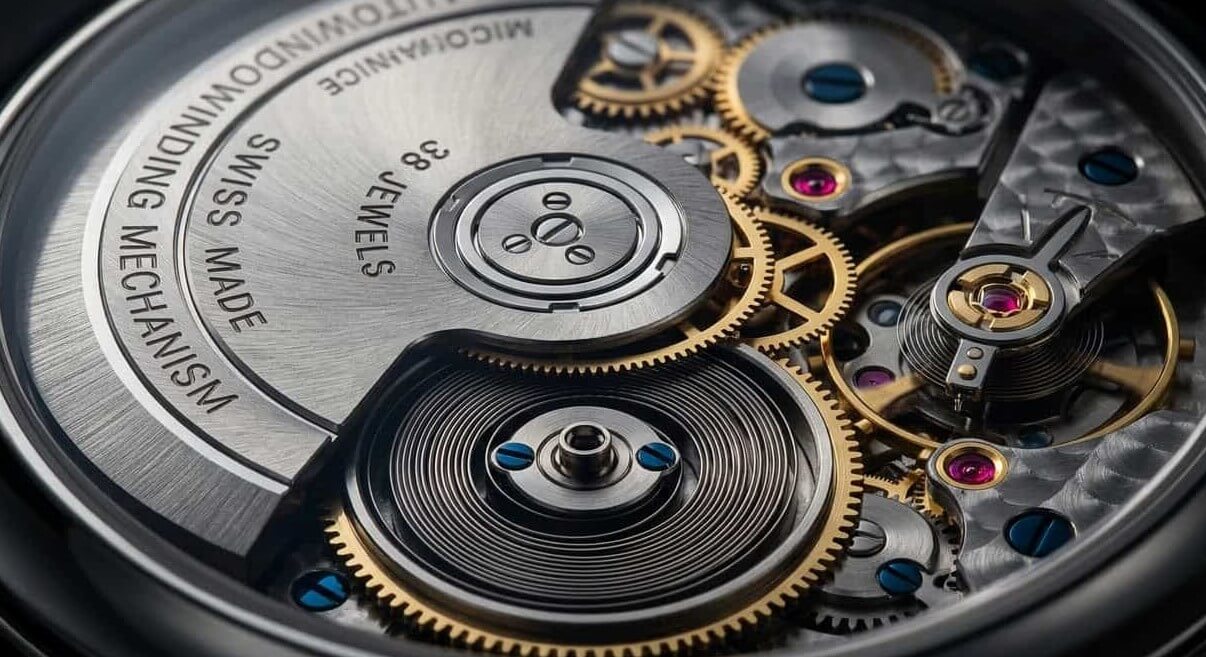
Short Answer: Yes, Self‑Winding and Automatic Mean the Same Thing
Self‑winding and automatic are two names for the same type of mechanical watch. There is no difference between them—they are synonyms. If you see “self‑winding” on one dial and “automatic” on another, you are looking at the same basic mechanism.
An automatic watch (also called a self‑winding watch) is a mechanical timepiece powered by a mainspring that winds itself as you wear it, without any manual winding needed. Both terms describe a watch where the natural motion of your wrist keeps the mainspring wound and the watch running. Unlike quartz watches, which use a battery, mechanical watches—whether automatic or manual—rely entirely on mechanical energy stored in that coiled spring.
The confusion often arises because “mechanical” is used loosely in marketing. Some people say “mechanical vs automatic” as if they are opposing categories, when in fact automatic watches are one type of mechanical watch. The real comparison you need to understand is automatic (self‑winding) versus manual (hand‑wound)—two different kinds of mechanical watches, each with its own winding method.
To help you navigate this terminology, the Quick Terminology Cheat Sheet table below clarifies these distinctions. After that, you will learn how these watches actually work, see side‑by‑side everyday differences, find out how to identify which type you own, get basic care tips, and have your remaining questions answered in a dedicated FAQ.
Quick Terminology Cheat Sheet
Watch terminology can be confusing because the same mechanisms are described using different terms in marketing, on dials, and in casual conversation. Here is a simple reference to clarify what you are actually looking at.
| Term | What It Really Means | How It Is Powered | Winding Method | Beginner Takeaway |
|---|---|---|---|---|
| Mechanical Movement | A watch powered by a wound spring, not a battery | Mainspring (coiled metal spring) | Manual winding or automatic winding | The umbrella term for both automatic and manual watches |
| Automatic | A mechanical watch that winds itself using wrist movement | Mainspring wound by a rotor | Self-winding (no manual winding needed if worn regularly) | Same as self-winding; the terms are interchangeable |
| Self-Winding | A mechanical watch that winds itself using wrist movement | Mainspring wound by a rotor | Self-winding (no manual winding needed if worn regularly) | Same as automatic; often used on older or European watches |
| Manual Wind | A mechanical watch you must wind by hand | Mainspring wound by turning the crown | Manual winding required every 1-2 days | The opposite of automatic; requires deliberate daily attention |
| Hand-Wound | A mechanical watch you wind by turning the crown | Mainspring wound by turning the crown | Manual winding required every 1-2 days | Synonym for manual wind |
The key insight: automatic and self-winding are the same thing, and both are types of mechanical watches. The confusion often arises because some articles loosely use the word mechanical to mean manual wind, when in fact both automatic and manual watches are mechanical. You will see all of these terms on watch dials, case backs, and in product descriptions.
Marketing departments and different regions simply prefer different labels. The real practical choice is between an automatic (self-winding) watch and a manual (hand-wound) watch, and the differences in daily life are significant. Next, we will explore how mechanical watches actually work at a basic level.
How Mechanical Watches Work in Plain English
Before diving into the difference between automatic and manual winding, it helps to understand the shared mechanical heart that powers both types of watches. Whether self-winding or hand-wound, both rely on the same fundamental principles of mechanical energy transfer.
The Core Components
At the center of every mechanical watch is the mainspring—a tightly coiled metal ribbon that stores energy when wound. Think of it like a spring you compress and slowly release—the stored tension is what powers the watch. As it unwinds, it releases that stored energy in a controlled way.
From the mainspring, energy flows through a series of gears called the gear train. These gears transfer and regulate the power, directing it through the escapement—a mechanism that acts like a traffic controller for the energy—and then to the balance wheel. The balance wheel oscillates back and forth at a precise, consistent rate, creating the regular tick you hear and feel. Together, the escapement and balance wheel regulate exactly how fast the energy is released, ensuring the watch hands move at the correct speed.
Finally, the regulated energy moves through additional gears that turn the watch hands around the dial. This entire sequence—from mainspring to gears to escapement and balance to hands—happens continuously as long as the mainspring has energy.
Quick Reference: Mainspring (stores energy as a coiled spring); Gear Train (transfers and regulates power); Escapement (controls the rate of energy release); Power Reserve (how long the watch runs when fully wound).
What Is Power Reserve?
Power reserve is simply how long a watch will continue running after it has been fully wound, without any additional winding or wearing. Most mechanical watches have a power reserve of roughly 36 to 70 hours, depending on the movement design. Once the mainspring has fully unwound and that reserve is exhausted, the watch stops and must be wound again to restart.
The Key Takeaway: Both Types Are Mechanical
The crucial point here is that both automatic (self-winding) and manual (hand-wound) watches share this entire mechanical system. The mainspring, gear train, escapement, balance wheel, and power reserve work identically in both types. The only real difference is how the mainspring gets wound in the first place—and that’s where automatic and manual paths diverge. Understanding this shared foundation makes the distinction between the two much clearer.
Next, we’ll look at how each type handles that winding process, starting with how a self-winding watch accomplishes it automatically.
How a Self‑Winding (Automatic) Watch Actually Works
The magic of an automatic watch lies in a single, elegant component: the rotor. Instead of requiring you to wind the crown every day, an automatic movement harnesses the natural motion of your wrist to keep the mainspring powered. Here is how it happens.
The Rotor: Your Watch’s Built-In Winding Machine
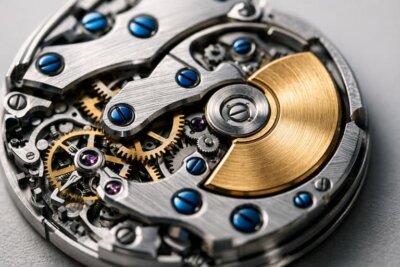
At the heart of every automatic watch sits a semicircular weighted piece called a rotor, also known as an oscillating weight. Think of it as a tiny weighted swing attached to the movement. As you move your wrist throughout the day—whether you are walking, typing, or simply gesturing—the rotor swings and spins in response. This constant motion is the fuel that keeps your watch alive.
The rotor is not floating freely. It is mounted on a bearing and connected to a series of gears inside the watch case. When the rotor moves, those gears turn in a precise sequence, and that rotational energy is transferred directly to the mainspring, gradually winding it tighter. As long as you wear the watch regularly, the rotor keeps working, and the mainspring stays wound.
To visualize this, imagine a small pendulum swinging inside your watch case. Each swing tightens an invisible spring a tiny bit. Over the course of hours of normal wear, hundreds of tiny windings add up, and your watch remains fully powered without any action on your part.
The Step-by-Step Process
Here is the core sequence that makes an automatic watch work:
- You move your wrist (walking, working, exercising, or even resting your arm)
- The rotor swings and spins in response to that motion
- Gears connected to the rotor turn in a controlled direction
- The turning gears wind the mainspring inside its barrel
- The wound mainspring releases energy gradually through the movement, powering the hands and keeping time
- The cycle repeats continuously as long as the watch is being worn
Unlike manual winding, where you consciously tighten the spring once or twice a day, automatic winding is passive. You do not think about it; it simply happens as part of wearing the watch.
What Happens When You Stop Wearing It
This is the trade-off of automatic watches: they only stay powered while being worn regularly. If you set an automatic watch on a shelf or leave it in a drawer, the rotor stops moving, and winding stops. The mainspring gradually unwinds over days or weeks (depending on the power reserve), and eventually, the watch slows, stops, and falls silent.
If you rotate between several watches—wearing one this week and another the next—an automatic that sits unworn may stop completely. When you pick it up again after a few days, you can give the crown a few manual winds to restart the movement, then wear it normally and the rotor takes over from there.
This scenario is one reason automatic watches work best for people who wear the same watch most days, or who wear their watches regularly enough that they never fully run down.
Rotor Styles: A Light Note
Modern automatic watches use different rotor layouts. The most common is the center rotor, a full semicircle mounted in the middle of the movement. Some watches use a micro‑rotor, a smaller weighted piece that takes up less space, or a peripheral rotor that sits around the edge of the movement. These variants do not change how automatic winding works—they are just engineering choices that affect the thickness and aesthetics of the watch. The core principle remains the same: wrist motion spins the rotor, which winds the spring through gears.
A Brief History of the Rotor and Self‑Winding Watches
When wristwatches became mainstream in the early 20th century, watchmakers realized that a rotor attached to a wristwatch movement could spin reliably with arm movement, making it possible for a watch to wind itself without any intervention from the wearer. Unlike pocket watches, which spend much of their time sitting still, a wristwatch is worn on the arm and moves constantly throughout the day as you gesture, walk, and go about your life. This continuous motion made self‑winding designs suddenly practical and appealing.
Early self‑winding designs were marketed using terms like “perpetual”—a nod to the theoretical idea that the watch could run indefinitely as long as it was worn. Over time, the industry settled on the term “self‑winding” to describe the mechanism, and later, “automatic” became the standard label used on dials, casebacks, and product descriptions. Both terms refer to exactly the same thing: a mechanical watch that winds itself via a rotor.
If you look at a modern automatic watch today, you may see any of these labels—”automatic,” “self‑winding,” or occasionally “perpetual”—printed on the dial or caseback. They all point back to this same history and mean the same mechanism at work inside.
Manual Winding: The Other Type of Mechanical Watch
While automatic watches wind themselves through wrist motion, manual wind watches (also called hand-wound watches) require you to wind them by hand using the crown—the small knob typically located on the side of the watch case. This is the true mechanical alternative to self-winding, and it remains a popular choice among watch enthusiasts for reasons both practical and personal.
How Manual Winding Works
To wind a manual watch, you turn the crown clockwise in a steady, gentle motion. As you turn, you are directly tightening the mainspring—the coiled metal strip inside the watch that stores energy. With each turn, you feel increasing resistance, similar to winding a music box or old clock. When the mainspring is fully wound, you will feel a firm resistance that signals you have reached maximum power reserve. At that point, stop turning; do not force the crown further, as excessive force can damage the delicate components inside.
The sensation of winding is quite different from restarting an automatic watch that has stopped. With a manual watch, you are actively engaged in storing energy with every turn. With an automatic that has stopped, you may give it a few gentle winds via the crown to jumpstart it, but the watch then relies on your wrist motion to keep running. Manual winding is a deliberate, hands-on ritual that many owners find satisfying and meditative.
If you forget to wind a manual watch, it will eventually stop running as the mainspring unwinds completely. When you wind it again, you will need to reset the time, since the watch will have stopped at whatever time it ran out of power.
Why Some People Prefer Manual Watches
Manual wind watches offer several distinct advantages:
- Thinner profile: Without a rotor, manual movements can be made significantly thinner and lighter than automatic movements, resulting in a sleeker feel on the wrist.
- Better view of the movement: Many manual watches feature a transparent exhibition caseback, allowing you to see more of the mechanical movement at work—a major appeal for those fascinated by the craft.
- Direct connection: The act of winding creates a tangible, intimate connection between you and the watch’s power source, a ritual that some owners deeply value.
- Simpler mechanism: Fewer moving parts can mean lower manufacturing complexity, though this does not necessarily mean lower cost or fewer service needs.
The guide to manual winding watches explores this ritual in more detail for those curious about the experience.
The Practical Trade-off
The main drawback of manual winding is straightforward: you must remember to wind the watch regularly, typically every 24 to 48 hours, depending on the power reserve. For someone who wears the same watch daily and enjoys the habit, this is rarely a burden. For someone who rotates between multiple watches or has an unpredictable schedule, it can be inconvenient. A watch that sits unworn will stop and require both winding and time-setting when you return to it.
There is also a small but real risk of overwinding if you turn the crown forcefully or too many times. Modern manual watches include safeguards to prevent major damage, but gentle, steady winding is always the safer approach.
Automatic vs Manual Winding: What Really Matters Day to Day
Once you know that automatic and self-winding mean the same thing, the real everyday choice is between an automatic watch and a manual wind watch.
Both are mechanical and powered by a mainspring, but the way they stay wound affects how they fit into your routine, how they feel on the wrist, and how often you interact with the crown.
Convenience: How Each One Stays Running
An automatic watch uses a rotor that turns with your wrist movement to wind the mainspring as you go about your day, so it quietly looks after itself while you wear it.
A manual wind watch relies on you turning the crown regularly to keep the mainspring tensioned, so staying on top of winding becomes part of your habit.
If you are thinking about choosing between automatic and manual, it can help to think about choosing the right watch movement for your lifestyle.
Wearing Habits: Daily Wearer vs Watch Rotation
For someone who wears the same watch every day to work, an automatic watch is usually very low effort: your normal movements keep the rotor turning, the mainspring topped up, and the power reserve healthy, so you may only need to set the time occasionally if it stops after a longer break.
The same daily routine with a manual wind watch means you build in a quick winding moment, often once a day, using the crown to tighten the mainspring so it has enough power reserve to run until the next winding session.
If you rotate several watches, an automatic may stop after not being worn long enough, while a manual will stop if you skip its regular winding—even if unworn.
In a rotation, you will usually restart an automatic by giving it a few turns of the crown and some wrist time, whereas a manual goes from completely stopped to fully wound through a focused winding session.
Thickness and Feel on the Wrist
Because an automatic watch needs space for its rotor, it is often a little thicker and can feel slightly more substantial on the wrist, especially if you are used to very slim cases.
A manual wind watch does not need a rotor, so cases are often slimmer, which many people enjoy for a more discreet, dressy feel under a cuff or for a lighter presence on the wrist.
These are general tendencies rather than rules; there are thinner automatics and chunkier manuals, but the rotor is one reason automatics often have more height.
Interaction and Ritual
Living with an automatic watch tends to be more hands-off day to day: as long as you wear it enough to keep the rotor moving, it quietly maintains its own power without demanding much active attention.
Living with a manual wind watch builds in a small ritual of engagement, as you use the crown to wind the mainspring and feel the gradual increase in resistance, which some wearers enjoy as a daily connection with the movement.
With an automatic, your main “interaction” is often just putting it on and maybe giving the crown a few turns if it has stopped, while a manual makes the winding moment a regular, intentional part of your routine.
Maintenance Implications (In Everyday Terms)
Over time, a manual wind watch usually involves more frequent crown use because you are winding it regularly, so it pays to be gentle and avoid forcing the crown at the end of the wind.
An automatic watch often sees less crown activity day to day, as the rotor does most of the winding work, though you will still use the crown for setting the time and for occasional top-up winding if it has been off the wrist long enough to stop.
In both cases, the internal mechanical movement, gear train, escapement, and balance wheel share broadly similar needs, so the day-to-day difference you feel is mostly in how often you touch the crown rather than in a completely different type of maintenance.
Next, it helps to see these differences side by side.
This table compares automatic (self-winding) and manual wind watches in terms of everyday experience.
| Aspect | Automatic (self-winding) | Manual (hand-wound) | What that means for you |
|---|---|---|---|
| Winding | Rotor winds the mainspring as you move; crown winding is mainly for starting from stopped or topping up. | Mainspring is wound entirely by turning the crown at regular intervals. | Choose automatic if you prefer the watch to wind itself while worn; choose manual if you like the deliberate act of winding. |
| Convenience | Stays running as long as you wear it enough to keep the power reserve up. | Stops unless you remember to wind it, usually once a day or so depending on power reserve. | Automatic suits set-and-forget daily wear; manual suits those happy to build in a brief winding habit. |
| Thickness | Often slightly thicker to accommodate the rotor above the movement. | Often slimmer because there is no rotor layer. | Manual watches often offer slimmer profiles due to the absence of a rotor; automatic watches tend to be slightly thicker but offer many design options regardless. |
| Interaction | More passive: you mostly interact by wearing it and occasionally resetting or winding after a stop. | More involved: regular winding with the crown becomes part of your routine. | Pick automatic for low-effort ownership; pick manual if you enjoy a hands-on ritual with your watch. |
| Maintenance (everyday use) | Less frequent crown use; rotor does most of the winding work during wear. | More frequent crown use from regular winding sessions. | Both need sensible care; your main choice is whether you mind using the crown more often. |
How to Tell if a Watch Is Automatic (Self‑Winding) or Manual
If you are holding a mechanical watch and are not sure whether it is automatic (self‑winding) or manual wind, a few simple checks can usually point you in the right direction.
The most reliable quick clues are the words printed on the watch, whether you can see or feel a rotor, and how the winding through the crown behaves.
1. Read the markings on the watch
Start with the dial and caseback, because brands often tell you the movement type right there.
Common wording you might see includes:
- Automatic
- Self‑winding
- Hand‑winding
- Manual
- Manual wind
If the dial or caseback says automatic or self‑winding, you are looking at an automatic watch that winds itself as you wear it. If it says hand‑winding or manual, it is a manual wind watch that only gains power when you turn the crown. The real distinction you are checking for is automatic versus manual.
2. Look and feel for a rotor
An automatic watch includes a rotor, an oscillating weight that turns with your movements to wind the mainspring.
There are two easy ways to notice it:
- With a display caseback: Turn the watch over and look through the clear caseback. If you see a large, usually semicircular metal piece that can swing around the movement, that is the rotor, and the watch is automatic.
- Without a display caseback: Hold the watch flat in your hand and gently rock it back and forth. Many people can feel a subtle shifting weight inside the case or a soft, brief spin; that moving mass is the rotor, another strong sign that the watch is automatic.
A true manual wind movement has no rotor at all, so you will not see anything swinging under a display back, and you will not feel that extra weight moving when you rock the watch.
3. Pay attention to how it winds through the crown
The crown is the small knob on the side of the case that you use to set the time and, on many mechanical watches, to wind the mainspring.
When you gently wind a manual wind watch through the crown, you typically feel a smooth, steady resistance that increases until you reach a clear stopping point or firm resistance. That is the signal that the mainspring is fully wound, and you should stop turning so you do not risk damaging anything.
When an automatic watch has stopped after sitting unworn, many people give it a few slow turns of the crown just to start it. With cautious winding, you may not encounter the firm resistance typical of manual wind movements, or it may feel lighter. After a short initial wind and a few movements of your wrist, the rotor takes over to keep the watch running.
It is important to remember that some automatics can also be wound by the crown, especially when you first put them back on. That means the presence of crown‑winding alone does not prove the watch is manual; you need to combine this cue with rotor and marking checks.
4. Use documentation to confirm
If the physical cues are unclear, the safest option is to check the official information for the watch.
The user manual, manufacturer website, or movement specifications will usually state clearly whether the movement is automatic, self‑winding, manual wind, or hand‑wound. If you are still uncertain, contacting the brand or a professional watchmaker with the model name or reference number is a cautious way to get a definite answer.
Quick checklist: Am I looking at an automatic (self‑winding) or a manual watch?
Use this simple checklist as a practical guide; treat it as helpful, not foolproof.
- Visual cues
- Check the dial text: Does it say automatic or self‑winding (automatic), or manual, hand‑winding, or manual wind (manual)?
- Check the caseback: Look for the same wording or for a clear view of the movement type in any engraving.
- If there is a display caseback, look for a swinging metal weight (rotor); seeing one strongly suggests an automatic movement.
- Feel cues
- Gently rock the watch in your hand: Feeling a shifting inner weight often points to an automatic rotor.
- Slowly wind the crown: A clear, firm stop after a smooth wind is typical of many manual wind movements; a lighter feel with no abrupt stop can be more common in automatics.
- After a few crown turns, move your wrist: If the watch starts running and keeps going with normal wear, it is likely automatic.
- Documentation
- Check the user manual or official specifications for the movement type.
- If still unsure, note the model reference and ask the manufacturer or a qualified watch specialist to confirm whether it is automatic or manual wind.
Basic Care Tips for Any Mechanical Watch (Automatic or Manual)
Mechanical watches—whether automatic or manual—can last many years when treated with reasonable care. The good news is that keeping one running well does not require special expertise, just a few simple habits and common-sense precautions.
Keep It Running Regularly
The most important habit for any mechanical watch is regular use. For an automatic watch, simply wearing it regularly during your normal activities allows the rotor to wind the mainspring through your wrist movement. Aim to wear it most days if possible, or at least several times per week. For a manual wind watch, establish a routine of winding it every morning or every couple of days—whichever fits your lifestyle. Regular winding keeps the mainspring and gear train properly lubricated and functioning smoothly. If an automatic watch has stopped and is sitting unworn, give it a gentle manual wind using the crown (around 20 to 30 clockwise turns) to restart it, then let your wrist motion take over.
Avoid Unnecessary Shocks and Magnetism
While mechanical watches are robust, sudden impacts—dropping the watch, bumping it hard against a surface, or subjecting it to strong vibrations—can disrupt the delicate balance wheel or damage internal components. Treat your watch with the same care you would give to any precision instrument. Similarly, keep mechanical watches away from strong magnetic fields, such as those near speakers, magnets, or certain electronic devices. Magnetism can interfere with the balance wheel and affect timekeeping.
Crown Winding—Gentle Pressure Only
If you own a manual wind watch, or if you ever need to restart an automatic by hand winding, remember that the crown should turn smoothly with light to moderate pressure. You will feel natural, increasing resistance as the mainspring becomes fully wound—similar to winding a music box or toy; stop at that point. Do not force the crown or continue turning after you feel resistance, as this can strain the winding mechanism. Modern watches have safeguards, but there is no benefit to pushing past what feels natural.
Consult the Maker and Professionals
Every watch is different. Manufacturer documentation—whether in the box or available online—often contains specific guidance for your model regarding water resistance, crown operation, or care requirements. If you ever have concerns about your watch’s performance, are unsure how to operate it, or notice any unusual sounds or behavior, consult the manufacturer’s customer service or a qualified watch professional rather than experimenting on your own. Over the lifetime of a mechanical watch, occasional professional service is a normal part of ownership, though the exact timing and scope depend on your watch, how you use it, and the maker’s recommendations.
Here is a simple checklist to help you remember the basics:
- Wear or wind your mechanical watch regularly—several times per week at minimum—to keep the movement lubricated and running smoothly.
- Avoid dropping, bumping, or exposing your watch to hard shocks or strong vibrations.
- Keep your watch away from strong magnetic fields, such as those near electronics or speakers.
- When winding manually (or restarting an automatic), turn the crown gently and stop when you feel resistance; do not force it.
- Store your watch in a clean, dry place if you are not wearing it for an extended period, and give it a gentle wind to restart before use.
- Check your watch’s manual or contact the maker with questions about water resistance, crown operation, or care specific to your model.
- If you notice unusual sounds, erratic timekeeping, or any concern about your watch’s performance, consult a professional rather than attempting repairs yourself.
Mechanical watches reward consistent, gentle use. The routine of wearing or winding your watch becomes part of its appeal—a small, mindful interaction with a timekeeping instrument that asks very little but genuine attention in return.
FAQ: Common Questions About Self‑Winding and Automatic Watches
Terminology & Basics
Is a self‑winding watch the same as an automatic watch?
Yes, completely. Self‑winding and automatic are two names for the exact same thing. Both terms describe a mechanical watch that winds itself through the motion of your wrist. You may see both phrases on watch dials, in marketing materials, and in watch literature—they are interchangeable. The term “automatic” became more common in modern marketing, while “self‑winding” was used historically, but mechanically they refer to the same rotor-powered system.
Is an automatic watch still a mechanical watch?
Yes. Automatic watches are mechanical watches—both rely on a mainspring and gears, not a battery. The difference is how the mainspring gets wound: automatically through your wrist motion, or manually by you turning the crown. If someone says “mechanical watch,” they could mean either type unless they specify manual winding.
What is the real difference between automatic and manual winding watches?
The core difference is who does the winding. With an automatic (self‑winding) watch, a weighted rotor inside the movement swings as you move your wrist, winding the mainspring for you automatically. With a manual winding watch, you must turn the crown yourself to wind the mainspring. Both store energy in the mainspring; they just get wound differently. This simple difference cascades into lifestyle implications: automatics require regular wearing, while manuals require you to remember to wind them.
Wearing & Maintenance
Do I still need to wind an automatic watch by hand sometimes?
If you wear your automatic watch regularly and it stays wound, no manual winding is necessary—that’s the whole point. However, if you have not worn it for several days or weeks, the mainspring may have fully unwound. In that case, you can manually wind it a few times using the crown to jumpstart it, then put it on and let the rotor take over. Some people also manually wind an automatic before wearing it after a long storage period, just to be sure it has energy. It is not required for daily wearers, but it is an option if needed.
What happens if I don’t wear my automatic watch for a few days?
After a certain period without being worn—typically a few days, depending on the power reserve—your automatic watch will gradually slow down and eventually stop as the mainspring unwinds completely. When you put it back on, it will not restart on its own; the mainspring is fully depleted. You will need to manually wind it a few turns using the crown to give it initial energy, then wear it so the rotor can keep it running. After that, as long as you wear it regularly, it will stay wound and running.
Is one type more accurate than the other in everyday use?
Accuracy in mechanical watches depends far more on how well the movement is designed and regulated than on whether it is automatic or manual. Both types can be equally accurate. That said, an automatic watch that is worn consistently and stays fully wound may perform more steadily over the day because the mainspring maintains tension. A manual watch that stops between windings and is restarted may experience slightly more variation. In practice, the difference is negligible for most wearers; consistent wearing habits matter more than the winding type.
Will I damage my watch by overwinding it?
Modern mechanical watches—both automatic and manual—are designed with a safety mechanism that prevents damage from overwinding. When the mainspring reaches full tension, a bridle or stop mechanism engages, and further winding simply slips without forcing energy into the spring. For manual watches, you may feel slight resistance when the spring is fully wound, which is the safety mechanism at work. Avoid forcing the crown hard if you feel resistance, but normal winding will not break your watch. If you have concerns about a specific watch, consult the manufacturer’s documentation.
Choosing Between Types
Which is better for a first mechanical watch: automatic or manual?
There is no single “better” choice—it depends on your lifestyle and preferences. An automatic watch is more convenient if you wear a watch daily and prefer not to think about winding. It requires no routine action beyond wearing it, and many people enjoy the “set and forget” simplicity. A manual winding watch may appeal to you if you enjoy the ritual of winding, appreciate thinner watch designs, or rotate between several watches and do not mind regular winding. Manual watches also tend to be simpler mechanically and often cost less. Consider whether you prefer a hassle‑free experience (automatic) or do not mind—or even enjoy—the hands‑on interaction (manual).
Can an automatic watch work without being worn?
No, not indefinitely. An automatic watch relies on your wrist motion to wind the mainspring. If it sits unworn, the rotor cannot move, so no winding occurs. The mainspring will gradually release its stored energy, and the watch will stop—usually within a few days, depending on power reserve. To get it running again, you must either manually wind it using the crown or wear it and move your wrist. Some watch enthusiasts use watch winders (motorized devices) to keep automatics running when not worn, but these are optional and not required for normal use.
Are automatic watches more expensive than manual winding watches?
Automatic watches typically cost more than manual winding watches because the rotor mechanism adds complexity and material to the movement. However, price depends on many factors: brand, materials, finishing, movement quality, and market segment. You can find affordable automatics and very expensive manuals, and vice versa. The price difference between automatic and manual is one consideration, but it is only part of the overall value equation for any individual watch.
What is “power reserve” and why does it matter?
Power reserve is the amount of time a mechanical watch will run after being fully wound, assuming it is not being worn or moved. For automatic watches, it matters because it determines how long the watch keeps running after your last wear if you take it off. A longer power reserve (often 40+ hours in modern automatics) means the watch will continue ticking for several days if you leave it unworn. A shorter power reserve means it will stop sooner. For manual watches, power reserve affects how long you can wear the watch before you must wind it again. Neither type is “better”—it is simply useful to understand how long your watch will run so you know when to wind it or when it may have stopped.