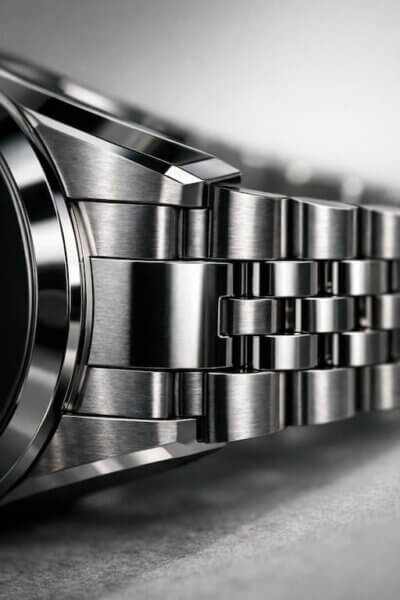
What Are Watch Links? Understanding Bracelet Basics
Watch links are small metal segments that connect together to form a bracelet—the metal band that wraps around your wrist and attaches to your watch case. Unlike a strap, which is made from leather, rubber, nylon, or fabric, a metal bracelet is constructed entirely from metal links held together by fasteners and finished with a clasp underneath the wrist.
Understanding watch links matters because they directly affect three things you’ll notice every time you wear your watch: comfort (how the bracelet bends and feels on your skin), durability (how well it holds up over years of wear), and aesthetics (whether the watch looks sporty, elegant, or somewhere in between). A well-constructed bracelet with properly sized links can make a good watch feel premium, while a poorly made one can undermine even an expensive timepiece.
Basic Bracelet Anatomy
A metal watch bracelet is built from several key parts working together. Here’s how they fit:
- Links: The individual metal segments that form the body of the bracelet. Each link connects to the next via a fastener—typically a pin or screw that runs through aligned holes.
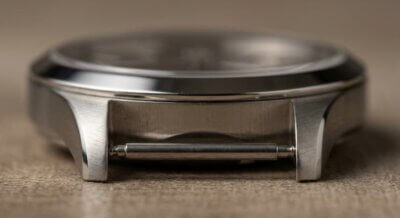
- End links: The links closest to the watch case on both sides. These attach to the case lugs (the small protruding ears) using spring bars—small spring-loaded bars that sit in grooves on the case.
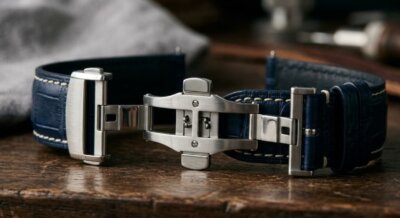
- Clasp: The closure mechanism underneath the wrist that secures the bracelet once fastened. Most clasps have micro-adjustment holes, which are small holes that let you fine-tune the fit without permanently removing or adding links.
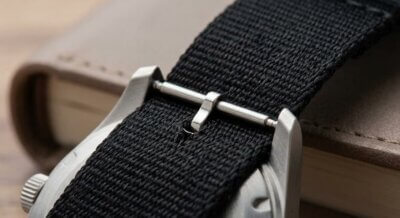
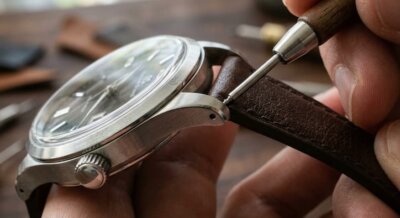
- Spring bars: The small metal bars that hold the bracelet to the case lugs. They compress to allow the bracelet to slide on and off.
- Removable-link fasteners: The pins or screws that hold individual links together, allowing the bracelet to be resized by removing or adding links.
Essential Terminology for Beginners
- Clasp: The metal closure that sits underneath your wrist and locks the bracelet together. Most clasps can fold back on themselves to open and close safely.
- Spring bar: A small spring-loaded metal bar inserted into grooves on the watch case that holds the bracelet in place. It compresses when you slide the bracelet on or off the lugs.
- Micro-adjustment: A quick fit adjustment made at the clasp without removing or adding entire links. Most clasps have micro-adjustment holes that allow you to shift the clasp position slightly for a more comfortable fit.
- Micro-adjustment holes: Small holes in the clasp designed to hold the pin in slightly different positions, providing incremental fit adjustments.
- Lug width: The measurement of the gap between the case lugs where the bracelet attaches. Common lug widths are 18mm, 20mm, 22mm, and 24mm. Your bracelet’s end links must match your case’s lug width or the bracelet won’t fit properly.
What Makes a Quality Bracelet?
Before diving into specific link styles, it helps to know that quality varies significantly across brands and price points. A high-quality bracelet typically features solid metal construction (rather than hollow links), a stainless steel grade suited to daily wear, a smooth finish free of sharp edges or loose parts, and fasteners that hold links securely without rattling. The upcoming sections will explore these quality markers in detail, but the key insight is that how a bracelet is made—its materials, construction method, and finishing—often matters as much as its design style.
Link styles also vary considerably by brand philosophy. Rolex has its signature designs like the Oyster and Jubilee, while other manufacturers like Patek Philippe, Omega, and TAG Heuer develop their own proprietary link systems. Some bracelets are designed to work exclusively with certain watch cases (integrated bracelets), while others are modular and can be swapped across different watches. Understanding these nuances helps you appreciate why one bracelet might suit a sports watch better than a dress watch, and why changing a bracelet can completely transform a watch’s personality.
Understanding Link Quality—Solid vs. Hollow Links
How metal bracelet links are built has a huge impact on link durability, comfort, and how a bracelet ages. The core distinction most beginners need to understand is solid vs. hollow watch links.
What solid vs. hollow watch links mean
From the 1920s through roughly the 1960s, many metal bracelets used riveted or hollow links, where each link was formed from folded metal with an empty space inside rather than a solid block. This kept bracelets lighter and cheaper to make but also introduced more flex and more small gaps between parts.
Modern bracelets at the mid to high end usually use solid watch links, meaning each visible link piece is milled or formed as a dense, solid chunk of metal instead of a thin shell. Small hidden parts such as sleeves may still be separate pieces, but the main link bodies are solid.
When people talk about solid vs. hollow watch links, they are usually comparing these older folded or riveted constructions to today’s fully solid center and side links.
Why hollow links often wear out faster
Hollow links are more prone to bracelet wear over decades because the folded metal can slowly open up where pieces meet. As tolerances open, several things tend to happen:
- Links start to “stretch,” meaning the gaps between links grow and the bracelet hangs longer and looser.
- The bracelet begins to rattle more, with a tinny, jangly sound instead of a tight, muted feel.
- Edges can feel sharper or more flimsy as the folded shells deform and lose their original shape.
- Rivets or pins that hold folded pieces together can loosen, increasing the risk of sudden failure if not serviced.
This does not mean every vintage hollow bracelet is unsafe, but the construction is more likely to show this kind of long-term bracelet wear, especially if the watch was worn daily for many years without maintenance.
How solid links change the experience
Solid watch links resist deformation much better, so they generally keep their original shape and length for far longer. Even as small amounts of play develop at the joints, the overall structure stays tighter because the link bodies themselves are not folding or collapsing.
In practice, that usually means:
- Less visible stretching, so the bracelet keeps its intended drape and length.
- A more “chunky” or secure feel with fewer rattles or tinny noises as you move your wrist.
- Greater confidence wearing the watch daily, including on heavier sports models.
Modern manufacturing standards at reputable brands generally favor solid construction as the default, especially on current three-link, five-link, and sport-focused designs.
Weight and comfort: lighter vs. heavier feel
Hollow links are usually a bit lighter, so vintage bracelets with hollow links can feel very airy and almost weightless. Some collectors enjoy this floaty feel and the way a well-worn hollow bracelet drapes loosely around the wrist.
Solid links add more mass, which makes most modern bracelets feel noticeably heavier but also more substantial. Many wearers associate this extra weight with higher perceived quality, but very slim wrists or those sensitive to weight may prefer a lighter bracelet or a smaller case size to balance things out.
Side-by-side: old hollow/riveted vs modern solid-link
Imagine holding two similar watches side by side. The first has an older hollow, riveted bracelet: when you pick it up and gently shake it, you hear a light rattle and see the bracelet curve in a very loose S-shape, with gaps between links that look stretched compared to how it left the factory. The whole bracelet feels flexible but slightly flimsy, as if the metal could be squeezed or bent by hand at the links.
The second watch has a modern solid-link bracelet: when you shake it, you mostly just feel a dense, muted movement with minimal noise. The bracelet curves smoothly but each link feels “tight” against the next, with even spacing and no obvious elongation. If you run your fingers along the links, you feel a continuous, solid surface rather than thin shells.
This before/after style comparison is especially obvious on some older hollow-link bracelets that have been worn for decades versus current solid-link versions of the same bracelet pattern. One looks stretched and rattly, the other crisp and robust with clear shape retention.
Real-world example: early vs. modern Jubilee
A good example is the evolution of the Rolex Jubilee bracelet. Earlier Jubilee bracelets with hollow links and riveted construction often show visible stretch today, with a pronounced droop when held horizontally. They can feel charmingly vintage but clearly loose compared to how they started life.
Current Jubilee bracelets with solid links feel much tighter and more substantial. The five-link layout still delivers a silky, articulated feel on the wrist, but the tighter tolerances and solid construction help the bracelet keep its shape, reducing the risk of severe stretching over time when properly worn and maintained.
How to spot hollow vs. solid links in person
When you are inspecting a bracelet, especially on a pre-owned or vintage watch, a few simple checks can help you tell whether you are dealing with hollow links or solid watch links:
- Side profile: Look at the side of each link. Hollow links often show seams, thin folded edges, or small gaps where metal is wrapped around. Solid links usually appear as uniform blocks without visible hollows.
- End of links: On some bracelets you can see the underside or ends of the links. Hollow links may reveal a cavity or folded shell, while solid links look filled all the way through.
- Sound and feel: Gently swing the bracelet. Pronounced rattling and a very floppy feel are more common on older hollow bracelets; a denser, quieter feel suggests more solid construction.
- Stretch check: Hold the watch head in one hand and let the bracelet hang. If the bracelet sag is extreme and gaps between links look opened up, it may be a lightly built or heavily worn hollow design.
- Brand and era: Many mid-century bracelets and some later budget-focused models used hollow links. Most modern mid-range and premium stainless steel bracelets now use solid links as standard, especially on sports watches.
These quick checks are especially important when shopping vintage because construction type and condition affect both comfort and value.
When solid vs. hollow matters most
Understanding solid vs. hollow watch links is most relevant in a few key situations:
- Vintage purchases: Older three-link, five-link, and beads-of-rice bracelets were often hollow, so checking for excessive stretch and rattling is critical before buying.
- Daily-wear watches: If you plan to wear a watch every day, solid links usually offer better long-term reliability and shape retention than very light hollow designs.
- Heavier cases: Larger diver or chronograph watches place more stress on the bracelet, making solid construction more reassuring.
- Perceived quality: If you equate quality with weight and tight articulation, solid links will probably feel more satisfying, while very loose hollow bracelets may feel cheaper even if they are historically correct.
At the same time, not every hollow bracelet is “bad.” A well-preserved hollow bracelet can still be comfortable and collectible; the key is understanding that it is more likely to show bracelet wear and stretch when heavily used. Some collectors appreciate vintage hollow bracelets for their authentic lightness and vintage character.
Signs of Quality Bracelet Construction
Use this quick checklist when you handle a metal bracelet in person.
- Links feel tight with smooth articulation, without harsh rattling or obvious looseness between segments.
- Link bodies appear solid from the side, with clean, consistent structure and no thin, sharp folded edges.
- The bracelet hangs in a controlled curve rather than drooping with wide, uneven gaps that signal severe stretching.
- Surfaces show even finishing from link to link, with no rough machining marks or mismatched textures.
- Clasp closes securely with a positive click and feels robust rather than flimsy when you press or flex it lightly.
- Edges along the bracelet and clasp are rounded enough that nothing digs into the skin or catches on clothing during normal movement.
- Overall weight feels appropriate for the watch size, giving a sense of solidity without feeling hollow or toy-like.
Next, we will look at how watch links connect using different fasteners and why that matters for resizing and long-term security.
How Watch Links Connect—Pins, Screws & Fasteners
Understanding how watch links connect is essential for grasping why some bracelets are easier to resize, how secure your bracelet is, and what to expect during maintenance. While the individual links themselves form the visual and tactile character of a bracelet, the fasteners that join them determine durability and adjustability. This section focuses on the three primary connection methods that manufacturers use to hold removable links together.
The Three Connection Methods
Watch links are held together using one of three distinct mechanical approaches. Each method has trade-offs in terms of cost, security, ease of adjustment, and longevity. Understanding these differences helps you make informed decisions about bracelet quality and future resizing.
Link Connection Methods Comparison
| Connection Type | Typical Bracelets | Pros | Cons | Adjustment Ease |
|---|---|---|---|---|
| Pin-based (friction-fit) | Vintage Rolex, budget sports watches, Seiko, Timex, Citizen standard bracelets | Simple, traditional, low cost, easy to resize with basic tools | Can loosen over time, less secure than modern alternatives, may drift | Easy—pin drifts out sideways; no special tools needed |
| Pin + sleeve | Vintage and modern Rolex sports models, mid-range watches | Improved durability over plain pin, reduced wear on link holes, retains simplicity | Still subject to gradual loosening, requires more care than screw connections | Easy—similar to pin-only; sleeve may require slight additional care to remove cleanly |
| Screw-based | Premium modern sports watches, Strapcode and MiLTAT custom bracelets, select Seiko presage models | Highly secure, resists loosening from vibration, can be re-tightened if needed, premium feel | Requires proper screwdriver, slightly more complex to resize, risk of stripping if mishandled | Moderate—requires correct screwdriver size and careful technique; not difficult for most users |
| Push-button / solid pin | Select vintage chronographs, specialized tool watches | Exceptionally durable, solid construction, tamper-resistant | Difficult to remove without professional equipment, impractical for home resizing | Difficult—requires professional tools and expertise; not suitable for DIY adjustment |
Pin-Based Connections
Pin-based connections are the oldest and most traditional method for joining watch links. In this system, a simple metal pin passes through aligned holes in adjacent links, held in place by friction alone. The pin sits horizontally across the bracelet width, and when you look at the side of a bracelet with pin connections, you will see a small cylindrical pin protruding slightly or sitting flush with the outer surface of each link.
A common variant is the pin plus sleeve design, where a small metal tube (sleeve) surrounds the pin to add structural support and reduce wear on the link holes over time. This two-piece approach is found on many vintage Rolex bracelets and continues to appear on mid-range modern watches. The sleeve helps distribute pressure and prevents the pin from gradually loosening as the bracelet is flexed during daily wear.
Pin-based systems are straightforward to resize: a watchmaker or experienced user can drift the pin out sideways using a small tool (pin punch) and remove a link. Reinstalling is equally simple—push the pin back through the holes until it seats. However, pins can loosen gradually over months or years of wear, especially on older bracelets or those with less precise manufacturing tolerances. Budget-conscious brands and vintage pieces often rely on pin connections because tooling and assembly costs are minimal.
You will encounter pin-based connections on many entry-level dive watches, vintage Rolex sports models, and affordable fashion watches. Seiko, Timex, and Citizen commonly use friction-fit pins on their standard bracelets.
Screw-Based Connections
Screw-based connections represent a step up in precision and security. Instead of a simple friction-fit pin, a small threaded fastener—essentially a miniature screw—threads into one or both of the adjacent links to hold them together. When you examine a bracelet with screw connections from the side, you will see a small screw head (often recessed slightly or flush with the link surface) rather than a plain pin.
These connections are significantly more secure than friction-fit pins because the threaded design resists loosening from vibration and flexing. The screw can be tightened periodically if it ever becomes slightly loose, restoring full security without needing replacement. Premium watchmakers and aftermarket bracelet specialists—such as Strapcode and MiLTAT—favor screw-based connections on their high-end replacement bracelets because they signal quality and durability to experienced watch enthusiasts.
The trade-off is that resizing requires a properly fitted screwdriver (often a small Phillips or flathead), and the process is slightly more involved than simply drifting out a pin. Overzealous screwdriving can also strip the tiny screw head or the threaded hole, so care is necessary. For most owners, this is a minor inconvenience offset by the enhanced security and longevity.
Screw-based fasteners are increasingly found on modern sports watches, premium microbrands, and aftermarket bracelet replacements for popular models. Many contemporary Seiko presage models and custom bracelet options use screw connections.
Push-Button and Solid Pin Connections
A less common but highly durable method is the push-button or solid pin fastener. In this system, a solid metal pin with a slightly enlarged head or button-shaped end is pressed into one link and engages in a matching hole or detent in the adjacent link. The button or head prevents the pin from sliding back out during normal wear, and the solid construction eliminates the risk of a hollow pin bending or breaking.
Push-button connections are found on select vintage chronographs and some specialized tool watches. They are exceptionally durable but typically require professional equipment to remove, making them less practical for home resizing. Manufacturers choose this method when durability and tamper-resistance are paramount, even if adjustability is sacrificed.
Spring Bars: The Bracelet-to-Case Connection
Separate from how individual links connect to each other, every bracelet must attach to the watch case at the lugs (the protruding bars at the case ends). This attachment is accomplished using a spring bar—a spring-loaded bar that passes through a hole in the bracelet end link and seats in small grooves on the case lugs. When you remove a bracelet from a watch, you are releasing the spring bars, not the inter-link fasteners.
Spring bars are universal across nearly all strap-on watches and are not a variable that distinguishes bracelet quality in the way inter-link fasteners are. However, understanding that spring bars are distinct from link-joining fasteners helps clarify why a bracelet can be removed from a watch without affecting how the individual links hold together.
Why Manufacturers Choose Each Method
Cost is the primary driver of pin-based systems in budget and vintage watches. Tooling a simple friction-fit pin and drilling two holes is inexpensive, making it ideal for high-volume production. The downside—potential loosening over time—is acceptable at lower price points where the watch may not be worn heavily or indefinitely.
Screw-based connections cost slightly more to implement because threaded holes are more precise and require more careful machining. However, manufacturers of premium sports watches and aftermarket bracelet makers view this cost as justified by increased security and the ability to offer buyers a tighter, more refined product. Screw connections also signal quality to informed buyers, justifying a higher retail price.
Push-button and solid pin methods are reserved for niche applications where durability, security, or heritage design takes absolute precedence over adjustability. Vintage chronograph makers and tool-watch specialists use these methods to ensure that once a bracelet is sized and fitted, it remains locked and reliable for decades without requiring re-tightening or adjustment.
Next, we’ll explore the materials that make up these links and fasteners, focusing on stainless steel grades and how they affect durability and corrosion resistance.
Materials & Durability: Stainless Steel Grades
The stainless steel grade used in a watch bracelet is a material-quality variable that directly affects durability, corrosion resistance, and long-term wear—making it an important consideration when evaluating bracelet quality and longevity. While most watch bracelets use stainless steel, not all stainless steel is equal. Understanding the common grades helps you make informed decisions about which bracelets will hold up best to your lifestyle.
Three stainless steel grades dominate the watch industry: 304, 316L (also called surgical steel), and 904L. Each offers different levels of corrosion resistance, durability, and cost, with practical implications for daily wear, salt-water exposure, and long-term shape retention.
The following table compares these grades across the key factors that matter to bracelet buyers:
| Grade | Durability | Corrosion Resistance | Cost | Common Usage |
|---|---|---|---|---|
| 304 | Good; standard industrial strength | Good; adequate for most environments; less resistant to chlorides and salt | Most affordable | Budget watches, affordable brands, entry-level professional models |
| 316L | Very good; enhanced strength over 304 | Very good; improved salt and chloride resistance due to molybdenum content | Moderate | Mid-range and mid-luxury watches, medical/dental instruments, dive watches |
| 904L | High; superior wear resistance and longevity | High; superior to 316L in extreme corrosion environments and salt water | Most expensive | Luxury sports watches, professional dive models, Rolex professional lines |
For most watch buyers, 316L (surgical steel) strikes a practical balance between durability and cost. It resists salt water and moisture significantly better than 304, making it the preferred choice for dive watches and watches intended for water sports or humid climates. If you live near the ocean, swim regularly with your watch, or prioritize long-term corrosion resistance, 316L or 904L is worth the premium.
904L represents the top tier and is associated with luxury and professional tool watches. Rolex uses 904L exclusively across its sports and professional models, citing superior resistance to extreme environments. The extra cost reflects not just material quality but also prestige and resale value. However, for casual daily wear in typical conditions, the difference between 316L and 904L is modest and may not justify the price difference unless durability in harsh conditions is a priority.
Grade 304 is adequate for casual watches and low-stress environments, but it is more susceptible to pitting and staining if exposed to salt water, chlorine, or humid conditions over extended periods. If you plan to wear your watch primarily indoors or in dry climates, 304 is functional; if water exposure or longevity is a concern, upgrade to 316L.
Key takeaways for bracelet selection:
- Check the material specification when comparing bracelets; it is as important as link design and finish.
- For dive watches and water-sport pieces, prioritize 316L or 904L to avoid corrosion and discoloration over time.
- For everyday dress watches or indoor-focused pieces, 304 is acceptable, but 316L offers better long-term resilience at modest additional cost.
- Higher grades support better shape retention and reduce the likelihood of loose or stretchy bracelets caused by material degradation.
- Stainless steel grade does not prevent scratching or scuffs; it affects internal durability and resistance to corrosion, not surface finish.
End Links: Straight vs. Integrated
End links are the sections of a metal bracelet at the junction between the bracelet and the watch case, designed to bridge the gap and secure the bracelet to the lugs.
Integrated End Links: The Snug, Seamless Look
Integrated end links are shaped to hug the case contours closely, eliminating visible gaps. In a top-down view, the end link flows right into the case without swing, creating visual unity as if the bracelet and case are one piece.
This snug fit enhances comfort by reducing bulk at the junction and improves aesthetics through smooth lines, though it demands precise case-bracelet matching. On an integrated design, picture a close-up view: the end link blends flat against the case side, like a curved puzzle piece snapping perfectly into place. There is no visible step or gap—the metal surfaces appear to merge.
Straight End Links: The Conventional Fit
With straight end links, the bracelet attaches via spring bars to the lugs and swings freely from the case. From a top-down view, you see a clear gap between the case and the first link, allowing some independent movement.
This swing fit provides flexibility but can create a less continuous line, where the bracelet appears to hang slightly below the case edges. Imagine a close-up: straight end links show a 1-2mm drop and pivot at the lugs, creating a visible step between the case section and bracelet section.
Note that integrated end links create a polished transition but differ from a full integrated bracelet, where the entire design flows continuously from case to bracelet without traditional lugs.
Bracelet Finishes & Aesthetics (Brushed, Polished, Mixed, DLC)
Finish choice affects both aesthetics and maintenance. If you wear your watch daily and prefer low-maintenance, brushed or mixed finishes hide wear. If you prioritize a formal look and are willing to clean regularly, polished finishes reward with sparkle.
| Finish | Aesthetic Effect | Scratch Visibility | Common Pairings |
|---|---|---|---|
| Brushed | Matte, directional texture; understated and sporty | Low; scratches blend into the grain | Sport watches, tool watches, everyday wearers (Rolex Submariner, Explorer) |
| Polished | High-gloss mirror finish; formal and luxurious | High; every mark is visible | Dress watches, occasion pieces (formal Datejust variants, Day-Date) |
| Mixed | Brushed outer links with polished center; balanced elegance | Medium; hides wear on brushed areas, highlights polish on center | Versatile dress-sports hybrids (Rolex GMT-Master II, Daytona) |
| DLC | Dark, matte coating; contemporary and technical | Low; shows wear differently than steel | Modern sport watches, limited editions |
| Sandblasted | Fine, frosted texture; subtle and understated | Very low; micro-texture masks imperfections | Vintage-inspired and niche designs |
Understanding Finish Types
A brushed finish is created by running fine abrasive material across the metal in one direction, producing a matte appearance with subtle linear texture. This finish is practical for daily wear because minor scratches and dust blend seamlessly into the existing pattern, so the bracelet looks intentionally aged rather than damaged. Brushed finishes are strongly associated with sport watches and tool watches—think of the classic Rolex Submariner or Explorer, where durability and casual wearability are priorities.
A polished finish is the opposite: the metal is buffed to a mirror-like shine that catches and reflects light uniformly. This creates a jewelry-like, formal appearance but at a cost—every fingerprint, dust particle, and scratch becomes immediately visible. Polished bracelets require regular cleaning and careful handling, making them better suited to occasional wear or formal occasions. Pure polished finishes are less common on modern sport watches and more typical of dress watches.
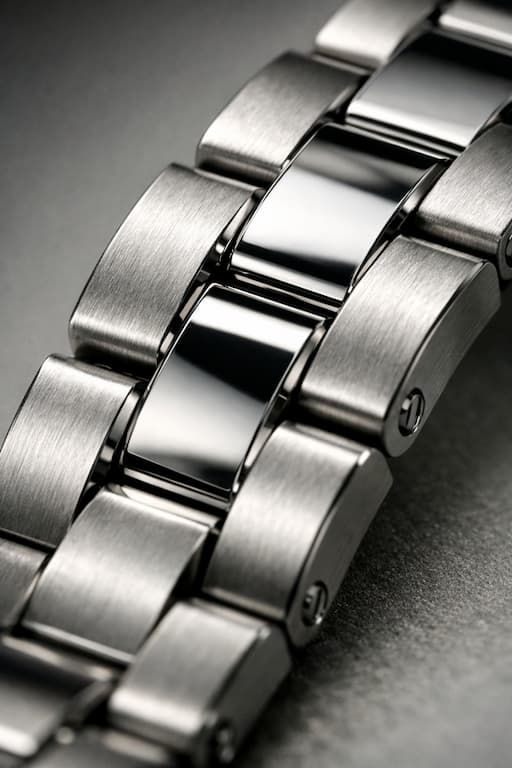
Mixed finishes combine brushed and polished surfaces on the same bracelet, usually with polished center links flanked by brushed outer links. This approach balances aesthetics and practicality: the polished center catches light and creates visual interest and elegance, while the brushed outer surfaces hide wear and maintain a sporty feel. Many high-end watches use mixed finishes—Rolex’s GMT-Master II and Daytona are classic examples—because they work across casual and formal settings.
DLC, or Diamond-Like Carbon, is a thin dark coating applied over the stainless steel that produces a charcoal or black finish. DLC is highly scratch-resistant and gives a contemporary, technical appearance. It is less common on mainstream watches but appears on modern sport watches and limited editions. Sandblasted finishes are created by blasting the metal surface with fine particles to produce a subtle frosted look. This finish is rare on bracelet links but appears on vintage-inspired designs and special editions; it shares the low-scratch-visibility advantage of brushed finishes.
Choosing a Finish for Your Needs
- If you wear your watch daily and prefer not to worry about fingerprints or minor marks, choose brushed or mixed finishes.
- If you prioritize a formal, jewelry-like appearance and are willing to clean and handle the bracelet carefully, polished is the choice.
- If you want flexibility across both casual and dressy occasions, mixed finishes offer the best of both worlds.
- If you value a contemporary or vintage aesthetic with minimal visible wear, consider DLC or sandblasted as specialty options.
- Remember that finish is often tied to bracelet style: five-link Jubilee bracelets are typically mixed or polished to emphasize their elegant design, while three-link Oyster bracelets are usually brushed to reinforce their sporty character.
The Oyster Bracelet—The Three-Link Classic
The Oyster bracelet is the most recognizable and widely adopted metal bracelet style in watchmaking. Named after Rolex’s pioneering Oyster case design introduced in 1926, the three-link bracelet became the industry standard for sport and tool watches—and for good reason. Its straightforward yet robust design has influenced countless brands and remains the foundation against which other bracelet styles are measured.
Design and Construction
The three-link bracelet is defined by its simple but effective structure: each bracelet segment consists of three metal pieces—one large, flat center link flanked by two smaller side links. This configuration creates a male-female connection point where removable links are fastened together using pins, screws, or solid-pin fasteners.
The evolution of the three-link bracelet tells a story of refinement. Early Oyster bracelets (1930s–1960s) featured riveted links, where metal rivets permanently joined the layers—durable but impossible to resize without professional intervention. In 1967, Rolex introduced the folded-link design, where hollow outer shells wrapped around a solid center bar, reducing weight slightly while maintaining strength. By 1975, solid links became the modern standard, offering superior durability, resistance to stretching, and easier resizing. Early riveted designs were permanent and difficult to resize; folded links reduced weight but introduced complexity; solid links became the modern standard for durability and ease of resizing without any drawbacks.
Aesthetic and Feel
The Oyster bracelet projects a sporty, tool-watch aesthetic. Its broad, flat links and straightforward geometry convey robustness and purpose. Most Oyster bracelets feature a brushed finish on the center links, which enhances their sporty character and helps disguise minor wear. However, dressier variants exist—many higher-end models pair polished center links with brushed outer links (a mixed finish) to inject elegance while maintaining the Oyster’s core structure.
In terms of comfort, the large links of an Oyster bracelet provide solid support and feel substantial on the wrist. Proper sizing is essential; a well-fitted three-link bracelet sits snugly and feels secure. The larger surface area of each link can show scratches more readily than intricate five-link or mesh designs, particularly if polished, but this is often viewed as part of the bracelet’s honest, tool-watch character.
Durability and Longevity
The Oyster bracelet is renowned for durability. The substantial center link bar reinforces the overall structure and significantly reduces the bracelet’s tendency to stretch or loosen over time—a common issue with lighter, more delicate designs. When properly constructed from solid stainless steel and maintained, an Oyster bracelet can last decades without degradation. The simpler link design also makes resizing and maintenance straightforward, a practical advantage for everyday wear.
Adoption Across the Industry
While Rolex popularized the three-link design, it is now an industry-wide standard. The TAG Heuer Aquaracer and Seiko SKX, for example, both use three-link Oyster-style bracelets, showing how broad adoption is across price points and brands. Many other manufacturers including Tudor, Breitling, and many others have adopted three-link bracelets on their sport and professional watches. This broad adoption reflects both the design’s proven effectiveness and its universal appeal.
Classic Pairings
The Rolex Submariner and Explorer are the definitive Oyster bracelet partnerships. The Submariner’s tool-watch heritage and dive-watch robustness align perfectly with the Oyster’s sporty, durable character, making the combination an industry icon. The Explorer follows the same logic—a no-nonsense field watch paired with a no-nonsense bracelet. Both watches have remained in production for decades with relatively unchanged Oyster bracelets, underscoring the timeless synergy.
Oyster vs. Jubilee: A Quick Comparison
Beginners often compare the Oyster (three-link) and Jubilee (five-link) bracelets. The Oyster delivers a robust, tool-watch feel with larger links that project durability and sporting purpose. The Jubilee, by contrast, uses narrower inner links that create a silkier articulation and a more refined, dressier appearance. If you prioritize comfort and a contemporary aesthetic, the five-link Jubilee may appeal; if you value straightforward durability and a classic sports aesthetic, the three-link Oyster is the natural choice. Many collectors own both and swap them depending on occasion. Imagine comparing a Rolex Submariner on an Oyster bracelet (compact, assertive, tool-like) with a Rolex Datejust on a Jubilee (more flowing, elegant, refined). The same watch case can feel entirely different depending on bracelet choice, but the Oyster remains the purest expression of the sport watch formula.
The Jubilee Bracelet—Elegant Five-Link Design
The Jubilee bracelet is a specific five-link design introduced by Rolex in 1945 to celebrate the brand’s 40th anniversary. This iconic layout features three narrow center links flanked by two wider outer links, creating a textured, light-catching surface that gives it a dressier, more elegant vibe compared to the sporty Oyster bracelet.
Unlike generic five-link bracelets, which may vary in proportions and arrangement, the Jubilee has a precise Rolex-defined pattern with its distinctive semi-circular links. A quick way to spot a true Jubilee-style layout is the balanced alternation of narrow and wide links, often with contrasting polished edges on the outer pieces for added shine.
Many describe the Jubilee bracelet as feeling silkier on the wrist due to its five links providing greater articulation and flexibility than a three-link design. However, comfort remains subjective and hinges more on overall construction and proper fit than link count alone.
Aesthetically, the Jubilee positions itself as refined and jewelry-like, making it ideal for dressier occasions or versatile daily wear, in contrast to the tool-watch ruggedness of the Oyster. Imagine a side-by-side comparison: a three-link Oyster looks blocky and robust, while the Jubilee drapes with subtle elegance on the same watch style.
It’s a common misconception that all five-link bracelets are Jubilee-style—many brands use different five-link configurations without matching Rolex’s exact proportions. As noted earlier in our discussion of solid versus hollow links, some older Jubilee examples used hollow construction prone to stretching over time, but modern versions rely on solid links for lasting shape retention.
A classic pairing is the Rolex Datejust on a Jubilee bracelet, where the bracelet’s elegant texture complements the watch’s timeless dial and case for an effortlessly sophisticated look that’s been a staple since the 1940s.
The President Bracelet
The President bracelet, often called the Presidential bracelet, is a three-link design with short, semi-circular links that is strongly associated with the Rolex Day-Date line.
First introduced by Rolex in 1956, this bracelet was created as a dedicated partner for the Day-Date and quickly became a visual shorthand for prestige and success.
Unlike the flatter, more tool-oriented three-link look of the Oyster bracelet, the President bracelet has rounded links that give it a softer, more jewelry-like appearance. The semi-circular link profile is more rigid and less articulate than the flexible Jubilee, but the rounded form delivers greater refinement than the Oyster’s squared construction.
Compared with the busier, highly articulated five-link layout of the Jubilee bracelet, the President feels visually calmer and more solid while still looking unmistakably luxurious.
The classic pairing is a Rolex Day-Date on a President bracelet, which many collectors view as the formal and luxury standard because the rounded links, precious metal construction, and iconic dial layout all work together to create a cohesive dressy statement watch.
Most President bracelets are made in gold, platinum, or two-tone combinations, but for beginner decision-making it is more useful to think of them as a dress-focused option rather than to worry about the specific alloy.
This style is sometimes mentioned alongside the more jewelry-like Pearlmaster bracelet in brand catalogs, but President and Pearlmaster remain distinct names and designs.
- Best for: Formal wear, business settings, and occasions where you want a clear, prestige-focused look.
- Look: Smooth, rounded three-link pattern that reads as refined and jewelry-like rather than sporty.
- Feel: Compact, closely spaced links that drape comfortably on the wrist with a substantial, premium presence.
The H-Link Bracelet
The H-link bracelet is defined by outer links that form a clear “H” shape when viewed from above, with two vertical bars joined by a horizontal center bar that frames the smaller inner links.
This H-shaped geometry gives the bracelet a structured, modern look that sits between purely sporty and fully dressy, which is why it is widely used on contemporary sport-luxury watches.
A classic way to recognize an H-link layout is to imagine tracing the brushed outer pieces with your eye: each segment looks like a blocky capital H repeating down the length of the metal bracelet.
The Patek Philippe Nautilus is one of the best-known examples, where the H-shaped outer links are part of an integrated design that flows directly from the watch case into the bracelet.
Many TAG Heuer Carrera models also use an H-link arrangement, but in a non-integrated form where the bracelet attaches in a more conventional way and can be swapped more easily.
It is important to understand that H-link describes the shape of the links themselves, not how the bracelet meets the case, so an H-link bracelet can be either part of an integrated bracelet or a standalone, non-integrated bracelet.
On the Patek Philippe Nautilus, the H-link integrated bracelet creates a premium modern design language: the first H-shaped link appears to grow out of the case, keeping the lines clean and emphasizing the watch’s slim, architectural profile. For a diagram-style mental picture, imagine a close-up where the camera is centered on one outer link: you see two short vertical bars parallel to the edge of your wrist, joined by a horizontal bar that sits closest to the inner links, together forming a blocky capital H. On an integrated version like the Nautilus, that first outer H-link appears almost fused into the case, with its top edge matching the curve and width of the case so there is no visible step or gap between case and bracelet.
On a TAG Heuer Carrera, the H-link shape delivers a similar mix of sportiness and refinement, but with a more traditional attachment that allows the bracelet to hang away from the lugs and makes the watch feel a bit more versatile for strap changes.
H-Link Bracelet: Pros and Cons
Because H-link bracelets sit in the sport-luxury space, their pros and cons often come down to how they look on the wrist and how the individual links articulate.
- Pros: Distinctive H-shaped geometry that is easy to recognize and pairs well with modern, angular case designs.
- Pros: Sporty yet refined appearance that can move between casual and smart settings without feeling out of place.
- Pros: Broad outer links give strong visual presence, especially on larger or more sculpted sport-luxury cases.
- Pros: When well made, the multiple link segments can offer smooth articulation for good everyday comfort.
- Cons: The bold, blocky look can feel too aggressive or busy for very minimal or traditional dress watches.
- Cons: On some integrated designs, the case-specific shape means you are largely committed to the original bracelet rather than easy swapping.
- Cons: Flat, wide outer surfaces can show marks more visibly than more broken-up or rounded link patterns.
Integrated Bracelets
An integrated bracelet is a metal bracelet that is designed as a seamless extension of the watch case, so the case, lugs, and first links flow together as one continuous shape.
Instead of a separate pair of visible lugs with a distinct first link slotted in between, an integrated bracelet usually has sculpted case sides and end sections that visually merge into the first links, making it look more like a single piece of metal that bends around your wrist.
Famous integrated designs include the Audemars Piguet Royal Oak and the Patek Philippe Nautilus, both created in the 1970s by designer Gerald Genta and often cited as the blueprint for the modern “sport-luxury” watch look. On watches like these, the transition from case to bracelet is treated as a central design feature: the case bevels, bracelet link shapes, and finishing are all planned together so that the watch looks cohesive from every angle. On the Patek Philippe Nautilus, for example, the first H-shaped link appears to grow directly out of the case, with no visible step or gap, creating a seamless visual flow that defines the watch’s contemporary elegance.
How to spot an integrated bracelet on the wrist
From the top down, an integrated bracelet usually shows:
- No clear gap or step between the case and the first visible links; the metal surfaces appear to flow directly into each other.
- Lugs that are either hidden, blended into the case, or shaped so they visually “lock” into the first link rather than standing out as separate arms.
- A first link (or link pair) that matches the case shape and width very closely, often mirroring the case’s angles, chamfers, or curves.
- A taper that starts right at the case and feels like part of the overall silhouette instead of a straight bracelet simply attached between lugs.
By contrast, a more traditional setup will show a clear lug shape with a straight or curved end link sitting between the lugs, and you can mentally draw a line between “case section” and “bracelet section” quite easily.
Integrated vs H-link: clearing up the difference
Integrated describes the overall case-to-bracelet design and how the bracelet flows out of the watch; it does not describe the shape of individual links.
H-link refers only to a link shape that looks like the letter “H” when viewed from above; an H-link bracelet can be integrated into the case or built in a more traditional, non-integrated way.
In other words, some integrated bracelets use H-shaped links (for example, certain Nautilus-style designs), but many do not, and some H-link bracelets are fully traditional with visible lugs and a separate end-link piece.
Why integrated bracelets feel “premium”
Many watch brands position integrated bracelets as more premium because:
- The case and bracelet must be designed together, which adds complexity and often leads to sharper detailing and more elaborate finishing.
- The visual effect is clean and modern, with a strong “jewelry-like” presence that can make the watch feel especially refined or architectural on the wrist.
- The way the bracelet hugs the case can create a very tailored fit around the top of the wrist, which some wearers find more balanced and ergonomic.
These points all relate to design, fit, and aesthetics rather than inherent toughness or technical superiority.
Ownership trade-offs and strap-swap limits
Because an integrated bracelet is shaped to match a specific case, it usually relies on a proprietary system that only fits that exact model or family of watches.
This means:
- You typically cannot swap to generic third-party metal bracelets or straps with standard straight ends; only made-to-fit options will align with the case properly.
- Aftermarket choices are often more limited and more expensive, and you may be effectively “locked in” to the original bracelet design for most of the watch’s life.
- If you enjoy changing between different looks frequently, an integrated bracelet watch gives you fewer easy styling options than a watch with standard lugs.
For a beginner, the key takeaway is that integrated bracelets prioritize a unified, design-first look over maximum flexibility in changing to other bracelets or straps later.
Is an integrated bracelet “worth it” for you?
Whether an integrated bracelet is worth choosing comes down to how much you value that sculpted, sport-luxury appearance and case-hugging fit versus how important it is to swap bracelets and straps freely.
If you want a watch that feels like a single piece of jewelry and you are happy to keep its original look, integrated designs like the Royal Oak or Nautilus family can be very appealing; if you prefer to experiment with different metal bracelets and non-metal bands, a more traditional case with visible lugs will usually suit you better.
Next, we will look more closely at how integrated bracelets compare to other bracelet styles in overall wearing experience and versatility.
Beads-of-Rice Bracelet
The beads-of-rice bracelet is a metal bracelet style made up of many small, rounded center pieces that look like tiny grains of rice running down the middle of the wrist.
Visually, you can picture a row of narrow, bead-shaped links framed by larger outer links, so the center of the bracelet almost resembles a strip of rice or fine chainmail. This layout gives the bracelet a flowing, draped look rather than the blocky feel of larger link styles.
History and character
Beads-of-rice bracelets first became popular around the 1940s, especially on refined dress watches and chronographs. They were often seen on high-end pieces from houses like Patek Philippe and Vacheron Constantin, which cemented the style as a classic, vintage-leaning option.
Because of this history, many people today associate beads-of-rice with mid-century elegance, slim cases, and softly curved lugs. Modern brands sometimes use the style to instantly give a new watch a retro, nostalgic character.
How it wears
On the wrist, a beads-of-rice bracelet usually feels lightweight and very supple. The many small center pieces let the bracelet drape closely around the wrist, similar to a fine chain or soft mesh. This can make it feel less chunky than large-link sport bracelets and add a sense of easy comfort for all-day wear.
The overall aesthetic is vintage and slightly dressy, but not overly formal. Depending on the watch, it can read as either a subtle, old-school choice or a bold nod to retro design.
Beads-of-Rice: Then vs Now
Beads-of-rice bracelets have changed a lot from their early days, especially in terms of durability and construction.
- Then: Many vintage beads-of-rice bracelets used thinner components and less robust construction, so they could develop a loose, stretchy feel after decades of wear.
- Now: Modern versions are typically built with sturdier parts and tighter tolerances, so they keep their shape better over time while still feeling soft and flexible on the wrist.
This evolution means you can get the same flowing look and vintage charm today with far fewer worries about long-term flimsiness compared with some older examples.
Modern revival on sport and dive watches
Although beads-of-rice bracelets began on more refined pieces, they have made a strong comeback on sportier models, especially divers that lean into retro styling.
DOXA is one of the best-known modern examples: its colorful professional dive watches often come on a beads-of-rice bracelet, using the soft, rounded center links to balance the bold tool-watch case with a comfortable, vintage-inspired feel. Similar ideas appear on certain Tudor and Tissot divers, where a beads-of-rice bracelet gives a classic silhouette a mid-century twist while remaining practical for everyday use.
If you imagine a modern diver case with a rotating bezel and bright dial, then add a flowing row of rounded center links instead of a more squared-off sport bracelet, you get a clear picture of how this style can turn a serious tool watch into something that feels both capable and charmingly retro.
Best for
- Wearers who want a vintage-inspired bracelet with a softer, more delicate look than chunky sport designs.
- People who prioritize a draped, flexible feel on the wrist and dislike bracelets that feel stiff or blocky.
- Fans of mid-century watch design who want a period-correct pairing for classic or reissue models.
- Modern diver owners looking to add retro character without giving up a metal bracelet.
Watch styles it complements
- Vintage or vintage-style dress watches from makers in the Patek Philippe and Vacheron Constantin tradition.
- Retro chronographs and slim, mid-century inspired field or everyday watches.
- Colorful dive watches like many DOXA models, where the rounded links soften the toolish case.
- Modern divers from brands such as Tudor or Tissot that are designed with clear nods to earlier eras.
Next, we will look at other bracelet layouts to see how beads-of-rice compares with more common sport and integrated designs.
Mesh & Milanese Bracelets
Mesh and Milanese bracelets represent a fundamentally different approach to bracelet construction. Instead of individual links connected end-to-end, these bracelets are made from tightly woven metal strands that create a flexible, fabric-like appearance. The woven structure gives mesh bracelets a distinctive drape and comfort profile that sets them apart from rigid link styles like the Oyster or Jubilee.
The Milanese bracelet takes its name from its 19th-century Milan origins and features a dense, fine weave that creates a smooth, silky surface. This tight weave catches light beautifully and has a luxurious, almost jewelry-like quality. The fine mesh construction allows the bracelet to conform naturally to the shape of your wrist, eliminating the stiff, bridging feel that larger links can sometimes create on flatter wrists.
Adjustability and Fit
One of the biggest practical advantages of mesh bracelets is their adjustability. Most mesh bracelets use a sliding clasp system that allows for fine-grained sizing adjustments without removing individual links. This means you can achieve a custom fit across a much wider range of wrist sizes than traditional fixed-link bracelets. For this reason, mesh bracelets are often described as having fine-tuned positioning—meaning the clasp can slide to any position along the mesh, rather than snapping to fixed increments like a standard three-piece clasp. The actual adjustment precision depends on the clasp design; high-end examples offer smooth, secure movement across the entire bracelet length.
This flexibility makes mesh bracelets ideal for people whose wrist size fluctuates slightly with temperature or time of day, or for those who prefer to share a watch across different wearers without permanently resizing it.
Comfort and Breathability
The woven structure creates small gaps between the metal strands, allowing air circulation against the skin. This makes mesh bracelets feel noticeably more breathable than solid-link styles, especially in warm weather or humid climates. The flexible drape also means fewer pressure points on the wrist; the bracelet moves with your arm rather than sitting rigidly on top of it. Many wearers find mesh to be the most comfortable bracelet style for all-day wear, particularly on smaller or more sensitive wrists.
Shark Mesh: A Bolder Variant
Shark Mesh is a related but distinct weave pattern that features larger, more open links compared to traditional Milanese. Developed in the 1970s, Shark Mesh creates a more pronounced, visually striking appearance with even greater breathability. The larger gaps make it slightly less formal than a tight Milanese weave, but it remains versatile enough for both casual and semi-dressy contexts.
Comparison of mesh variants:
- Milanese: tight, fine weave; smooth, silky finish; more formal presentation; excellent for dress or formal sport watches
- Shark Mesh: larger, more open weave; bolder visual texture; more casual-friendly appearance; greater air flow; popular on vintage divers and tool watches
Both adjustability and breathability advantages remain the same across these variants.
Aesthetic and Style Notes
Mesh bracelets occupy a unique style middle ground. They read as more refined and elegant than sporty three-link or five-link designs, yet remain versatile enough for casual wear. The woven texture creates visual interest without competing with the dial, making them suitable for everything from vintage chronographs to modern sport watches. The ability to drape and move with the wrist also gives mesh a more organic, less tool-watch aesthetic than rigid link styles.
This versatility makes mesh a popular aftermarket replacement choice for watches originally fitted with leather or fabric straps, and a growing number of new releases—especially in the vintage-revival category—feature mesh as a primary option.
Classic Pairings
The Omega Seamaster on a mesh bracelet exemplifies the elegant, versatile positioning of this bracelet style. While the Seamaster is equally at home on a solid-link bracelet, the mesh alternative transforms the watch into something that feels refined enough for business or social settings while retaining its capable dive-watch heritage. The combination demonstrates how mesh can bridge the gap between sport and dress without compromise.
Best For
- All-day comfort wearers, especially those with smaller or flat wrists
- Warm climates or high-humidity environments where breathability matters
- Shared watches or fluctuating wrist sizes
- Vintage-inspired or dressy-casual watch styles
- Anyone seeking a softer, more organic feel compared to rigid links
Choosing Your Ideal Bracelet
With so many bracelet styles available, the best choice depends on your lifestyle, comfort priorities, wrist size, and how much you value durability versus aesthetics. This section guides you through a practical decision framework and provides tools to match your needs to the right bracelet type.
Decision Flow: Finding Your Match
Start with your primary priority and follow the path to a recommended bracelet type.
- Comfort and smoothness matter most → Five-link (Jubilee) or mesh bracelet.
- Daily rugged wear and durability → Three-link (Oyster) or H-link.
- Formal or luxury aesthetic → President or five-link (Jubilee).
- Lightweight and minimalist look → Mesh (Milanese) or beads-of-rice.
- Scratch tolerance is low → Integrated bracelet (H-link or proprietary design).
- Want maximum versatility (dress and casual) → Five-link (Jubilee) or three-link (Oyster) with mixed finishing.
- Prefer a watch that cannot be easily modified → Integrated bracelet.
Choosing the Right Bracelet for Your Watch: Decision Checklist
Use these questions to narrow down your choice.
- Daily wear vs. formal occasions only?
- Is comfort and wrist articulation a top priority?
- What is your scratch tolerance?
- Does your wrist size or shape require specific adjustability?
- What is your budget?
- Do you plan to swap or customize the bracelet?
- Do you prefer a vintage-inspired or modern aesthetic?
- Is weight a consideration?
Bracelet Comparison Table
This table summarizes the key characteristics of the major bracelet types to help you compare side-by-side.
| Bracelet Type | Link Count/Shape | Aesthetic | Best For | Comfort and Feel | Notable Examples |
|---|---|---|---|---|---|
| Oyster (Three-Link) | 3 links; one large center, two smaller sides | Sporty, tool-watch; straightforward and robust | Daily wear, sports watches, outdoor use | Sturdy and secure; slightly less articulate than five-link; solid links feel substantial | Rolex Submariner, Explorer; TAG Heuer Aquaracer; Seiko SKX |
| Jubilee (Five-Link) | 5 links; two large outer, three narrow center | Elegant, refined; more flexible appearance | Versatile daily wear, dress occasions, formal watches | Silky articulation; more wrist movement; comfortable for extended wear | Rolex Datejust, Day-Date (with mixed finishing); Omega Seamaster (some refs); Tudor Glamour |
| President | 3 links; semi-circular, curved profile | Luxury, formal, prestigious | Formal occasions, luxury dress watches, high-end collections | Soft and rounded; designed for comfort in formal settings; precious metal versions enhance feel | Rolex Day-Date, Rolex Lady-Datejust |
| H-Link | 2 components; H-shaped main link with connecting link | Sleek, integrated; modern and refined | Integrated watches, dive watches, luxury sports watches | Depends on construction; integrated versions drape smoothly; strong and durable | Patek Philippe Nautilus, Audemars Piguet Royal Oak, TAG Heuer Carrera |
| Beads-of-Rice | 5+ links; small rounded center links flanked by larger outer links | Vintage-inspired, refined, delicate | Vintage watches, dress chronographs, vintage revival pieces | Lightweight and drapes well; more links mean finer articulation; historically prone to stretch in older versions | Patek Philippe Calatrava, Vacheron Constantin Historiques, DOXA vintage divers |
| Mesh/Milanese | Woven metal strands | Sleek, minimalist, modern | Dress watches, Bauhaus-style watches, casual dress-up, lightweight daily wear | Lightweight, breathable, fine-tuned clasp adjustment; drapes smoothly on wrist | Omega Seamaster (mesh variants), vintage dress watches, modern minimalist designs |
| Integrated Bracelet (proprietary case-matched design) | Varies; often H-link or custom shape | Cohesive, designer-forward, distinctive | Luxury sports watches, signature designs, watches intended as complete pieces | Comfort varies; proprietary design means optimal fit at case; cannot be swapped | Patek Philippe Nautilus, Audemars Piguet Royal Oak, Gerald Genta designs |
Famous Bracelet Pairings
These combinations represent classic matches that showcase why certain bracelets pair ideally with specific watch models.
- Rolex Submariner on Oyster: The three-link Oyster bracelet complements the Submariner’s sports-tool heritage. Its robust construction and slightly brushed finish emphasize durability and underwater capability without frill.
- Rolex Datejust on Jubilee: The five-link Jubilee was introduced alongside the Datejust in 1945 to celebrate Rolex’s anniversary. The Jubilee’s flexible, elegant design elevates the Datejust’s versatility from casual to formal, making it the quintessential dress-sports watch.
- Patek Philippe Nautilus on H-Link Integrated: The Nautilus’s integrated H-link bracelet flows seamlessly from case to wrist, creating a unified design. This proprietary design is inseparable from the watch and reflects Patek Philippe’s luxury positioning.
- Rolex Day-Date on President: The President bracelet’s soft, semi-circular links epitomize the Day-Date’s ultra-formal positioning. Offered exclusively in precious metals, this pairing conveys prestige and is reserved for the most distinguished occasions.
- Omega Seamaster on Mesh: Many Seamaster models pair with sleek mesh bracelets that balance the watch’s professional heritage with minimalist aesthetics. The mesh’s breathability suits water-sports contexts while appearing dressy.
Comfort Nuance: Three-Link vs. Five-Link
Five-link bracelets typically feel silkier because the additional center links allow smoother flexing. However, comfort depends equally on fit quality, solid construction, and proper sizing. A well-fitted three-link can feel as comfortable as a five-link; prioritize fit over link count.
Bracelet Care and Maintenance Basics
Proper care extends the life and appearance of your bracelet.
- Wipe the bracelet with a soft, dry cloth after wear, especially after perspiration or activity.
- Rinse under fresh water after exposure to saltwater or chlorine, then dry thoroughly.
- Check screw-based link connections periodically to ensure they remain tight.
- Avoid harsh abrasives and cleaners on polished surfaces.
- Store the watch in a dry environment.
Frequently Asked Questions
What is the difference between an Oyster and a Jubilee bracelet?
The Oyster bracelet features a three-link design with one large center link flanked by two smaller links on each side. The Jubilee bracelet uses a five-link layout with two wider outer links and three narrower center links. The Jubilee’s extra links create more articulation and a silkier, more flexible feel around the wrist, while Oyster bracelets have a sportier, tool-watch aesthetic with contrasting polished and brushed surfaces.
Which bracelet is most comfortable for all-day wear?
Comfort is personal and depends on your wrist size, skin sensitivity, and preference for flexibility. Five-link bracelets like the Jubilee tend to feel silkier due to increased articulation, and mesh bracelets are extremely flexible and adjust easily, making them excellent for sensitive skin or fluctuating wrist sizes. Three-link Oyster bracelets are robust and secure but may feel slightly stiffer. The best bracelet is one that fits properly without pinching and matches your personal preference for flex versus stability.
Are integrated bracelets worth the extra cost?
Integrated bracelets create a seamless visual flow between the case and bracelet, offering a luxury aesthetic and proprietary design that justifies their premium pricing for collectors who value that unified look. However, the trade-off is limited flexibility: integrated bracelets typically cannot be swapped for alternative styles. If you prioritize visual cohesion and plan to keep the watch long-term, an integrated bracelet is worth the investment. If you prefer versatility and the option to experiment with different styles, a non-integrated design offers more freedom at lower cost.
What does “three-link” and “five-link” actually mean?
These terms describe the cross-sectional pattern of removable links in a bracelet. A three-link bracelet has one larger center link with two smaller links on either side, repeating along the bracelet length. A five-link bracelet has two wider outer links with three narrower links in the middle, also repeating. The “five” refers to the visible links across the width of the bracelet, not the total number of removable segments. This layout difference affects comfort, aesthetics, and how the bracelet flexes around your wrist.
Why do some older bracelets feel loose or stretchy?
Older bracelets often used hollow links or riveted construction, where links were formed with thin walls or joined by rivets rather than solid pins or screws. Over years of wear, the tolerances between linked sections open up, and hollow links can lose their shape, causing the bracelet to feel loose or stretchy. Modern solid-link construction uses thicker, fully formed links and secure fasteners, which maintain their shape and integrity much longer.
Can I switch my bracelet to a different style?
Many watches allow bracelet swaps because the bracelet connects to the case via spring bars, which can be removed and reattached. You can replace an Oyster bracelet with a Jubilee, mesh, or other style on most watches. However, integrated bracelets cannot be easily swapped because they are permanently attached or designed to fit only that specific case. Additionally, the lug width of your watch must match the bracelet’s pin width, and you may need professional tools or assistance to safely swap bracelets without damaging the watch.
What is the difference between solid and hollow watch links?
Solid links are machined from a single piece of metal, forming a complete, thick structure with no empty space inside. Hollow links have thin walls with air or space inside, making them lighter but more prone to flex, deformation, and wear over time. Solid links maintain their shape, durability, and structural integrity indefinitely, while hollow links can lose rigidity, stretch, or develop rattles as tolerances wear. Modern bracelets almost exclusively use solid links.
How do I know if a bracelet is high-quality?
Look for these markers of quality construction: solid links with no signs of dents or deformation, a polished or finely milled clasp that closes smoothly and securely, smooth articulation as links move without grinding or sticking, stainless steel marked as 316L or 904L rather than lower-grade material, no rattling or loose feeling when flexed gently, and consistent finishing across all surfaces without uneven brushing or polishing. Premium watches often feature solid end links and seamless construction throughout.
Is mesh bracelet infinitely adjustable?
High-quality mesh bracelets are designed with fine-tuned clasp positioning, meaning the clasp can clamp down at any point along the woven length, allowing for custom sizing without discrete link removal. However, this depends on clasp design and construction quality. Not all mesh bracelets offer this feature, especially lower-cost versions with fixed-position clasps. If you choose a mesh bracelet, verify that the clasp is flexible and can tighten anywhere along the length to maximize fit comfort.
What is the difference between brushed and polished finishes?
Brushed finishes have a matte, directional surface created by fine grinding, giving a subtle, understated appearance that hides scratches well. Polished finishes are highly reflective and smooth, creating a lustrous, jewelry-like aesthetic that catches light beautifully but shows scratches and dust more easily. Mixed finishes combine both, typically with brushed center links and polished outer surfaces, balancing visual interest with scratch resistance. Choose brushed if you prioritize durability and low maintenance, and polished if you value luxury aesthetics and are willing to clean and polish regularly.