What Is Watch Lug Width?
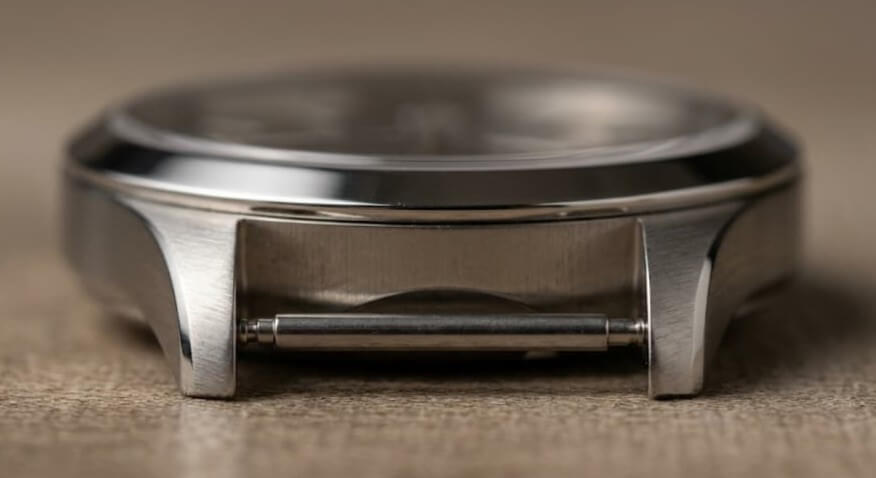
Watch lug width is the distance between the two small metal tabs on either side of your watch case where your strap or bracelet attaches. This measurement is always expressed in millimeters and is the single most important number you need when shopping for a replacement watch strap.
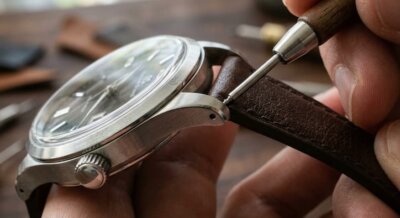
The two metal tabs are called lugs, sometimes referred to as horns. Between these lugs sits a tiny metal bar called a spring bar, which holds your strap or bracelet securely in place. When you remove your old strap, you are removing it from the spring bars that connect it to the lugs.
Here is the core rule: the width of your new strap must match the lug width of your watch case exactly. Even a difference of one millimeter will result in a poor fit. A strap that is too narrow will leave gaps between the strap and the case, making your watch feel loose and potentially allowing it to slip off your wrist. A strap that is too wide will not fit between the lugs at all, or it will force the lugs apart and damage your watch case over time.
Standard strap widths come in whole-number millimeter sizes, typically ranging from 16mm to 24mm for most modern watches. This is why measuring accurately and reading strap labels carefully matters so much. Your goal is to find the exact lug width of your watch so you can confidently purchase a strap that fits perfectly and keeps your watch secure.
Why Getting Lug Width Right Matters
Choosing a strap that matches the proper lug width is not just a technical detail; it directly affects how your watch feels, how secure it is, how long it lasts, and how it looks on your wrist.
When the lug width and strap width match, the strap sits snugly between the lugs, the spring bars are supported correctly, and the watch wears comfortably and safely. Even a 1 mm mismatch can change the way the watch behaves in daily use.
Fit and Comfort: How Lug Width Affects Strap Fit
Correct lug width gives you a clean, stable strap fit. The strap fills the gap between the lugs without squeezing or rattling, so the watch sits flat on your wrist and does not twist more than it should during normal movement.
If the strap is not matched to the lug width, you may feel the watch shifting side to side, riding up on one edge, or digging into your skin as the case rotates. Over a full day, that small mismatch can make the watch noticeably less comfortable.
What Happens If You Get It Wrong
This callout summarizes the most common outcomes when the strap width does not match the lug width.
- Strap too narrow for the lug width:
- Visible gaps at one or both sides of the strap.
- Strap can slide sideways along the spring bar.
- Extra twisting puts uneven stress on the spring bars.
- Watch may feel loose or off-center on the wrist.
- Strap too wide for the lug width:
- Strap edges rub hard against the inside edges of the lugs.
- You may struggle to fit the spring bars into place at all.
- Forcing the strap in can mark the strap coating or leather.
- In extreme cases, it can scratch or deform the inside of the lugs.
Too Narrow vs Too Wide: Real-World Scenarios
With a strap that is slightly too narrow, you will see daylight around the strap when you look straight down at the watch. The strap can shift left and right on the spring bars, so the case may tilt slightly when you move your wrist. Over time, that constant movement can cause the spring bars to wear grooves in the strap holes or the bar itself.
With a strap that is too wide, it may not even seat fully between the lugs. To fit it, you might have to bend the strap edges upward or wedge it in at an angle. This makes spring bar installation difficult and can leave creases, dents, or chipped finish where the strap rubs the lugs.
By contrast, the correct lug width looks and feels different. From above, the strap fills the gap cleanly with no side gaps and no bulging. You can gently wiggle the strap, but it does not slide across the spring bars, and the watch stays centered on your wrist during normal use. The spring bars sit squarely in their holes, and the strap pivots smoothly around them when you fasten or remove the watch.
Durability and Longevity
Matching the strap width to the lug width improves durability for both the watch and the strap. When the fit is correct, the spring bars share the load evenly along the inside edges of the lugs, and the strap material around the bar holes is not being twisted or crushed.
With a narrow strap, most of your daily movement is transferred through a smaller contact area. The strap holes can elongate faster, and the bar can dig into the material, especially on leather or softer rubber. On the watch side, repeated side loading can slowly wear the spring bar holes in the lugs.
With a wide strap, the constant friction between strap edges and lugs can wear off coatings, polish, or paint. Leather edges can fray or darken where they scrape the metal. Over the long term, this kind of rubbing can make a relatively new strap look prematurely used.
Security: Keeping the Watch Safely on Your Wrist
Security is one of the most important reasons to pay attention to correct lug width. Your watch is held in place by spring bars sitting between the lugs, and those spring bars rely on a properly fitting strap to keep everything aligned.
If a strap is too narrow and can slide sideways, the spring bar may be pried out of its hole during a snag or sudden pull. Because the strap has room to move, the force is no longer straight along the bar; instead, it can lever the bar out of one side. That greatly increases the risk of a dropped watch.
If a strap is too wide and forced between the lugs, the spring bar can sit under constant sideways tension. Under impact, this tension can bend the bar or chip the coating on the strap and case. Although the watch may feel tight at first, this kind of stressed fit is less secure in the long run than a correctly matched strap.
With the correct lug width, the spring bars stay straight, seated, and shielded by the strap. Everyday motions, from typing to light sports, are far less likely to disturb the bar or pop it out from the lug holes.
Aesthetics: A Clean, Intentional Look
Even if the watch technically stays on your wrist, the wrong lug width can make the watch look unfinished.
When the strap is too narrow, the gap between strap and lugs draws the eye. It can make the watch case look oversized or the strap look flimsy, as if it belongs to another watch entirely. This is especially noticeable on dress watches, where a tidy transition from case to strap is part of the overall design.
When the strap is too wide and pressed into the space, the strap may bulge or buckle where it meets the lugs. The edges can flare upward or look pinched, which distracts from the shape of the watch case and makes the swap look improvised rather than intentional.
A strap that matches the correct lug width aligns neatly with the watch case and makes the transition from metal to strap look smooth. This small detail helps the whole watch appear balanced and properly proportioned on the wrist, no matter whether you choose leather, rubber, fabric, or bracelet-style options.
Keeping these fit, security, durability, and appearance benefits in mind will make the next steps on tools and measurement methods feel much more worthwhile, since a precise lug width measurement directly leads to better strap fit and a better experience wearing your watch.
Tools & Setup: What You Need to Measure
Before you measure your watch lug width, gather the right tools and prepare your workspace. Having everything ready ensures accuracy and prevents mistakes that could lead to ordering the wrong strap size.
Essential Tools for Measurement
You do not need expensive equipment to find your lug width accurately. The two most reliable options are a digital caliper or a millimeter ruler. Both are inexpensive and widely available.
A digital caliper is the most precise tool available. It measures the distance between the inside edges of your lugs to within 0.1 millimeter, making it nearly impossible to misread. If you own one (many people have them for hobbies or home projects), use it first. A metric ruler with clear millimeter markings is an excellent alternative. It is less precise than a caliper (accurate to within 0.5 millimeter) but still reliable enough for selecting the correct strap size, since standard strap widths are whole numbers.
You may also have backup methods available: an existing strap that already fits your watch, or access to your watch manual or manufacturer specifications online. These are useful shortcuts if direct measurement feels intimidating, and they work well for confirming a measurement you have already taken.
Workspace Setup
Prepare a clean, well-lit workspace before you begin. Place your watch on a soft, flat surface such as a towel, mousepad, or soft cloth. This protects the watch case from scratches and keeps it stable while you measure. Remove the strap or bracelet completely so you have clear access to both lugs. Good lighting is essential so you can see exactly where the inner edges of the lugs are located and read your measurement tool accurately.
Why Precision Matters: Understanding Accuracy Tolerances
A difference of just one millimeter in lug width can mean the difference between a strap that fits perfectly and one that is either too loose or too tight. When you measure, aim for accuracy within 0.5 millimeter if using a ruler, or 0.1 millimeter if using calipers.
Here is why: if your watch has a 20 millimeter lug width and you accidentally order a 21 millimeter strap, the strap will be too wide. It may not sit securely in the lugs, creating gaps that allow the strap to shift or slip. If you order a 19 millimeter strap for a 20 millimeter watch, the strap will be too narrow and may not fit at all or sit at an angle. Either scenario leads to wasted money and frustration. Spending a few extra seconds to measure twice and ensure accuracy prevents this.
| Tool | Accuracy | Cost | When to Use | Pros | Cons |
|---|---|---|---|---|---|
| Digital Calipers | Within 0.1 mm | 10 to 30 USD | First choice for direct measurement | Most precise; fast reading; easy to use; reusable for future watches | Requires purchase if you do not own one; slightly steeper learning curve for first-time users |
| Metric Ruler | Within 0.5 mm | 2 to 8 USD | Direct measurement if calipers unavailable | Inexpensive; familiar to most people; works well if you are careful | Less precise than calipers; requires steady hand and clear sightline to read accurately |
| Existing Strap (underside label check) | Within 0 mm (if labeled) | Free (if you own a fitting strap) | Quick confirmation after direct measurement | No measurement needed; direct answer stamped on strap; fastest method if strap is labeled | Only works if your current strap fits and is labeled; not reliable for unlabeled or vintage straps; does not help if strap is missing |
| Online Lookup (brand and model search) | Varies (depends on source) | Free | Confirmation or if you prefer not to measure | No tools needed; often available for popular brands; can include multiple sources to cross-check | May not exist for older or obscure models; information can be outdated or incorrect; requires internet access |
Gathering Your Measurement Kit
Before you move to the next step, confirm you have what you need. If using a digital caliper, check that the battery is working and the jaws move smoothly. If using a ruler, make sure the millimeter markings are clear and the edge is straight. If you plan to check your existing strap, locate it and confirm it fits your watch comfortably. Now you are ready to measure.
Method 1: Direct Measurement with Calipers or Ruler
This is the most reliable way to measure lug width because you are measuring the actual inner distance between the lugs in millimeters, not guessing from labels or online specs.
Numbered Steps: How to Measure Watch Lug Width Directly
- Gather a caliper or millimeter ruler.
- Remove the existing strap or bracelet so the spring bars and lugs are fully exposed.
- Lay the watch on a soft surface (like a cloth or mouse pad); dial-up or dial-down is fine as long as the lugs you are measuring are easy to reach.
- Locate the two lugs on the side you are measuring; these are the small metal extensions that stick out from the watch case where the strap attaches.
- Place the tool’s zero point at the inside edge of one lug, not on the outer edge or the curved case.
- Extend or align the caliper jaws or ruler straight across to the inside edge of the opposite lug so you are measuring inner edge to inner edge only.
- Read the lug width measurement in millimeters from your caliper display or from the millimeter marks on your ruler.
- Double-check your result by measuring a second time. Most modern watches have whole-number lug widths (16mm, 18mm, 20mm, etc.), so a decimal reading usually indicates a measurement error. Remeasure carefully. (Exception: vintage watches may have authentic odd sizes like 17.5mm; see Troubleshooting section.)
Photo/Diagram Cues to Help You Place the Tool
Step 3 Photo: the watch lies flat on a folded cloth, with the strap removed, showing an empty gap between the two lugs on one side of the watch case.
Step 5 Photo: the fixed jaw of a caliper (or the zero mark of a ruler) touches the inside edge of the left lug, not the tip of the lug and not the outside face.
Step 6 Photo: the movable jaw of the caliper is opened until it just meets the inside edge of the right lug; both jaws rest lightly on the inner edges so the tool spans the gap in a straight horizontal line.
Ruler placement cue: the zero line of a millimeter ruler is pressed gently against the inside edge of one lug, and the opposite inside edge lines up with one of the millimeter marks further along the same straight line on the ruler.
Pro tips for accurate lug width measurement
- Measure only the inner distance between lugs; do not include the outer edges in your reading.
- Ensure your measuring tool is perpendicular to the watch case and the measuring edge sits at the innermost point where each lug meets the watch case. The tool should cross the gap in a straight horizontal line.
- Use good lighting so you can clearly see the inside edges and millimeter marks.
- Steady your hands by resting your wrists or elbows on the table while you measure.
- Measure twice, write it once: take at least two readings and only note the size when both match.
Example: Turning a Measurement into the Strap You Buy
If your caliper shows 22mm between the inside edges of the lugs, you should buy a strap with a 22mm width at the lugs so the strap fits the gap cleanly without overhang or looseness.
If your ruler reading comes out very close to 20mm between the inner edges, you would choose a 20mm strap width at the lugs so the strap matches that measured lug width exactly.
Once you have this precise number in millimeters, you can move on to comparing tools, shortcuts, and common sizes to double-check that your result makes sense before you shop for a new strap.
Method 2: Check Your Existing Strap
If your watch already has a strap or band attached and it fits comfortably without gaps or excessive tightness, you have a fast way to confirm the lug width without any measuring tools.
Many quality leather, rubber, and fabric straps have the lug width stamped or imprinted directly on the underside. This marking is typically located near the attachment point or along the inner surface where the strap connects to the watch case.
How to Read Your Strap Label
Remove your watch strap and flip it over to examine the underside carefully. Look for a number or size marking such as:
- A single number: “20” or “22”
- A number with “mm”: “20mm” or “22mm”
- Notation with two numbers (such as “20-16” or “20/18”)—the first number is your lug width; the second refers to buckle width and can be ignored for this purpose
That number is the lug width of your strap. Since the strap fits your watch correctly, it matches your watch’s lug width exactly.
When This Method Works Best
This shortcut is most reliable when:
- The strap came with the watch and has never been replaced
- You inherited or purchased a watch with its original or factory-matched strap. For example, you inherit a vintage Rolex Submariner with its original strap and find “20” stamped on the underside—confirming your watch has a 20mm lug width without measuring.
- The strap fits snugly with no visible gaps between the strap end and the lug attachment points
- The strap shows no signs of stretching, damage, or previous modification
When to Skip This Method
Do not rely on this approach if:
- The strap is worn, stretched, or damaged—a damaged strap may have fit poorly even before degrading
- The strap has no visible marking or the marking is illegible
- The strap fits loosely or gaps appear between the strap and the lug, suggesting it is the wrong size
- You are unsure whether the strap was originally matched to the watch
In these cases, move forward to direct measurement or an online lookup for a definitive answer.
Method 3: Find Your Lug Width Online
If you prefer not to measure your watch or want to verify a measurement you’ve already taken, looking up your lug width online is a fast and reliable option. This method works best when you know your exact watch brand and model number.
How to Search for Your Watch’s Lug Width
The simplest approach is to use a search engine with a targeted query. Open Google (or your preferred search engine) and type your watch’s brand and model number followed by the words “lug width.” For example:
Search: “Omega Seamaster lug width” or “Rolex Submariner 41mm lug width”
Be as specific as possible with your model. If your watch has a reference number (often printed on the caseback), include that too. For instance, “Seiko SKX007 lug width” will yield more accurate results than just “Seiko lug width.”
Where to Look for Reliable Specifications
When your search results appear, prioritize these sources for accuracy:
- Manufacturer’s official website: Visit the brand’s site directly and navigate to your watch’s product page. Specification sheets or downloadable manuals often list lug width clearly.
- Watch databases: Sites like WatchBase, Chrono24, or Hodinkee maintain detailed specifications for thousands of models, including lug width.
- The watch manual: If you have the original instruction booklet or can find a PDF version online, it typically includes a full specification table with lug width.
- Trusted retailers: Major watch retailers often list lug width in their product descriptions as a helpful purchasing detail.
- Brand forums and communities: Enthusiast forums dedicated to your watch brand (such as Rolex forums or Seiko communities) are goldmines for model-specific information, especially for older or regional variants.
When Online Lookup Works Best—and When It Doesn’t
This method is fastest for modern, widely available watches from major brands. If your watch is common and well-documented, you’ll find the answer in seconds. However, there are limitations:
- Older or vintage watches may have sparse online information, especially if the brand no longer publishes specs.
- Regional variants or limited-edition models sometimes have different lug widths than the standard version, which won’t always be documented online.
- If you’re unsure of your exact model number, search results may be ambiguous or unhelpful.
For these tricky cases, direct measurement (Method 1) is your most reliable fallback. If you find conflicting information online, or if the specs seem unclear, measuring with calipers or a ruler removes all doubt.
Once you’ve located your lug width online, jot it down and compare it against the common sizes list in the next section to confirm it falls within the expected range for your watch type.
Common Watch Lug Widths at a Glance
Understanding the most common lug widths will help you immediately contextualize your measurement and know whether your result falls within the expected range. Most modern watches cluster around just a few standard sizes, though specialty and vintage watches may fall outside the typical band.
The Most Common Sizes
For modern watches, 20mm and 22mm are the industry standards. Twenty millimeters dominates casual and dress watches, while 22mm is the go-to for sports watches, dive watches, and chronographs. Eighteen millimeters is common for smaller watches, vintage pieces, and slim dress styles. If your measurement lands on one of these three, you are in the mainstream and will find strap options readily available.
Beyond these three anchor sizes, the spectrum expands: 16mm, 17mm, 19mm, 21mm, 23mm, 24mm, and even 26mm all exist and serve specific watch categories. The broader historical and specialty market reaches from 8mm (ultra-slim vintage) to 32mm and beyond (oversized tool watches and some smartwatch adapters), but these extremes are uncommon.
Size Range by Watch Type
The following table shows where typical lug widths fall by watch category, rarity, and real-world examples:
| Lug Width (mm) | Typical Watch Categories | Rarity / Frequency | Example Use Case |
|---|---|---|---|
| 16–18mm | Dress watches, vintage, slim styles, women’s watches | Common for vintage and smaller modern watches | Classic dress watch or petite vintage timepiece |
| 19mm | Niche dress, some vintage, European sport watches | Less common; often requires specialty straps | Mid-range vintage Omega or Seiko dress model |
| 20mm | Industry standard: casual, dress, field watches, some sports | Most common modern width; widely available straps | Rolex Submariner, Omega Speedmaster, everyday watches |
| 21mm | Niche modern, some military, European brands | Less common; specialty suppliers stock these | Certain field or vintage-inspired models |
| 22mm | Modern sports, divers, chronographs, tool watches | Very common; extensive strap selection | Seiko SKX, modern sport chronographs, dive watches |
| 23–24mm | Oversized watches, some pilots, chronographs, smartwatch adapters | Moderately common for modern oversized models | Large aviation watch or oversized chronograph |
| 26mm+ | Oversized tool watches, large military, some smartwatch bands | Uncommon; specialty sources necessary | Panerai Luminor, large tactical watch, smartwatch band adapter |
In summary, 20mm and 22mm dominate modern watches, while 18mm is standard for smaller or vintage models. If your measurement falls outside the 16–24mm range, double-check your technique or consult the troubleshooting section.
The Typical Range and Extremes
Most watches manufactured in the last 50 years fall between 16mm and 24mm, with 20mm and 22mm capturing the vast majority of modern production. This tight clustering is why finding compatible straps for these sizes is effortless.
Outside this band, options narrow. Sizes like 8mm, 9mm, or 32mm do exist historically and in specialty contexts, but encountering them is rare. If your measurement falls outside the 16–24mm range, double-check your technique before assuming you have an outlier. If the measurement is consistent and your watch is vintage or from a specialty maker (such as Panerai), you may indeed have a non-standard width, and a custom or specialist strap supplier will be your resource.
Keep in mind that straps themselves come in whole-number widths only. Even if your measurement lands at 20.5mm or 21.7mm, you will round to the nearest standard size or seek a specialist. This is addressed in detail in the troubleshooting section ahead.
Understanding Strap Notation: What “20-16” Means
Watch strap labels use a simple two-number notation that tells you both the lug width and the buckle width. Understanding this format prevents costly shopping mistakes and ensures you select a strap that fits your watch correctly.
Common Strap Notation Formats
Strap manufacturers display lug width notation in several ways, all meaning the same thing:
- 20-16
- 20 / 18
- 20mm x 18mm
- 20 x 16
Regardless of the separator or inclusion of “mm,” the structure is identical: the first number always represents lug width, and the second number always represents buckle width.
The Notation Rule: First Number, Second Number
Strap notation “20-16” means 20mm lug width and 16mm buckle width. The first number is the measurement that must match your watch. The second number refers to the width at the buckle end, where the strap tapers (narrows) toward the clasp.
When shopping for a strap, match the first number to your watch’s lug width. For example, if you determined your watch has a 20mm lug width, you should buy straps labeled “20-XX” where XX can be any buckle width such as 16, 18, or 20. The buckle width is a comfort and aesthetic choice, not a compatibility requirement.
Common Strap Notation Examples
Here are typical strap notation formats you will encounter while shopping:
- 16-14 (very small watches, often vintage or women’s models)
- 18-16 (smaller watches or vintage models)
- 20-16 (common for men’s watches; narrower taper)
- 20-18 (common for men’s watches; less dramatic taper)
- 22-20 (larger watches; minimal taper)
- 24-22 (larger sports or pilot watches)
The taper (difference between the two numbers) reflects how much the strap narrows as it approaches the buckle. A 20-16 strap tapers 4mm total, while a 20-20 strap has no taper at all.
Reading a Strap Label: What to Look For
Most leather and rubber straps display the lug width notation stamped, embossed, or printed on the underside of the strap, near the buckle or clasp area. The marking is usually small but clearly visible when you hold the strap upside down and examine the inner surface close to the attachment hardware. On quality straps, this label is often repeated on both sides of the strap for easy reference. Metal bracelets typically show sizing information on the underside of links or on a tag attached to the clasp.
Buckle Width Does Not Affect Fit to Your Watch
A common beginner mistake is confusing buckle width (the second number) with lug width. Remember: only the first number matters for fitting the strap to your watch. A strap marked “20-18” fits your 20mm lug width watch exactly as well as one marked “20-16.” The buckle width affects comfort and wrist appearance but does not change whether the strap will attach securely to your watch case.
If your watch lug width is 20mm and you select a strap marked “18-16,” the strap will be too narrow and will not fit. Conversely, if you select a strap marked “22-20,” it will be too wide and create gaps or overhang. Always verify that the first number matches your measured lug width.
Non-Standard and Odd Notation Formats
Occasionally, vintage or specialty straps use unusual notation or lack clear labeling entirely. If you find a strap with notation like “20.5-18” or “19-17,” treat it as a non-standard size. In these cases, confirm the lug width with the seller or manufacturer before purchasing, as it may not fit standard strap selections for other watches. Some boutique strap makers offer custom notation to accommodate older vintage watches with unusual measurements.
Troubleshooting: What If Your Measurement Isn’t a Whole Number?
If your ruler or caliper reading shows 20.5mm, 20.3mm, or any decimal value, do not panic. Most watches have whole-number lug widths, so an odd reading usually signals a measurement error rather than an unusual watch. Follow this decision path to identify the issue and find the correct strap size.
Step 1: Remeasure Your Watch
Decimal readings are almost always caused by improper tool placement or misalignment. Remeasure using these corrections:
- Ensure your measuring tool is perpendicular to the watch case and the measuring edge sits at the innermost point where each lug meets the watch case. The tool should cross the gap in a straight horizontal line.
- Take the measurement three times and write down all three values.
If all three measurements are within 0.5mm of each other and remain decimal (for example, 20.2mm, 20.4mm, 20.5mm), proceed to Step 2. If they vary widely, repeat the process with better lighting and a softer work surface to stabilize the watch.
Step 2: Identify the Likely Cause and Round
If your readings consistently land on a .5mm value, rounding to the nearest whole number is the standard approach. Most strap makers do not produce half-millimeter widths, so your watch likely has a standard size and your measurement is capturing a small alignment error.
| Your Measurement | Recommended Action | What to Try First | If That Doesn’t Fit |
|---|---|---|---|
| 20.3mm or 20.5mm | Round down to 20mm | Order a 20mm strap and test fit | If gaps appear, try 21mm next |
| 20.7mm or 20.9mm | Round up to 21mm | Order a 21mm strap and test fit | If too tight, try 20mm next |
| 19.5mm | Round to nearest (20mm likely); confirm with seller | Try 20mm strap first | If gaps, try 19mm; if tight, try 21mm |
When in doubt, round to the nearest whole number and purchase the strap with a flexible return window. A properly fitted strap should sit snugly against the watch lugs with no visible gaps or overhang.
Step 3: Confirm with a Test Fit
Once you receive your rounded-size strap, check the fit before committing:
- The strap should slide into the lugs smoothly without forcing.
- No gaps should be visible between the strap ends and the lugs.
- The strap should not hang over the edges of the lugs.
- When inserted, the strap should feel secure and not move side to side.
If the fit is perfect, you have found your correct lug width. If gaps appear or the strap is too tight, try the alternative size listed in the table above.
The Vintage Exception: Non-Standard Lug Widths
Some vintage watches, particularly from the 1960s and 1970s, genuinely have non-standard lug widths like 17.5mm or 18.5mm. If you consistently measure an odd value and the watch is older or rare, this may be authentic.
To confirm a non-standard width:
- Search the exact watch model and year on vintage watch forums or databases.
- Contact the watch manufacturer if they still publish vintage specs. Note that most vintage brands no longer publish detailed specs, so forums and specialist dealers are often more reliable than manufacturer websites.
- Consult a watch repair specialist or vintage dealer familiar with that brand.
If your vintage watch truly has a 17.5mm or similar non-standard width, you have two options: purchase a custom strap from a specialist strap maker (many offer bespoke widths), or use an adaptor kit to fit a standard-width strap (though this is less ideal for everyday wear).
Common Measurement Error Scenarios
Here are the most frequent causes of decimal readings and how to fix them:
- Measuring from the outer edge instead of the inner edge: Outer-edge readings will be larger than the true lug width. Repeat, starting from the innermost point where the lug curves into the watch case.
- Measuring at an angle: If your ruler or caliper is tilted, the reading will be inaccurate. Ensure the measuring edge is perpendicular to the watch face and parallel to the ground.
- Tool placement on the lug instead of the gap: The measurement must span the gap between the two lugs, not rest on top of the lug itself. Position your measuring edge to cross directly from one lug’s inner edge to the other.
- Watch case not level: A tilted or uneven work surface can distort the measurement. Place your watch on a flat, soft surface (a mousepad or folded towel works well) and ensure the case sits level.
Remeasure once more after addressing these points. In the vast majority of cases, a careful second measurement will yield a whole number that matches a standard strap size.
When to Consult a Specialist
If your measurements are inconsistent, repeatedly yield unusual values like 19.7mm or 21.3mm, or your watch is rare or antique, contact a watch repair shop or custom strap maker. They can measure your watch in person and recommend the correct strap width or create a bespoke option if needed. This service is particularly valuable for heirloom watches or limited-edition models where a poorly fitting strap could affect value or function.
Common Mistakes & How to Avoid Them
- Measuring the outside of the lugs instead of the insideThe most common error. Measuring from the outer edges (the tip or outer face of the lug) gives you a larger number and results in a strap that is too wide. A too-wide strap will not fit into the lug slots at all and can pinch or damage the watch case.Fix: Always place your measuring tool at the innermost point where the lug meets the watch case, not on the tip or outer face of the lug. Your measurement must span the gap between the lugs, where the strap actually connects.
- Measuring lug-to-lug (top-to-bottom) instead of lug width (left-to-right)Lug-to-lug measures the vertical distance along the case from the top of one lug to the bottom of the opposite lug. This is used for strap length fit on your wrist, not for choosing strap width. Confusing the two will give you the wrong measurement entirely.Fix: Remember: lug width runs horizontally (side to side). Measure only the gap between the two lugs on the same side of the watch, not the top-to-bottom span.
- Not removing the existing strap before measuringTrying to measure with the old strap attached blocks your access to the inner edges of the lugs and makes accurate measurement impossible. You may also measure part of the strap itself instead of the lug gap.Fix: Always remove the watch strap completely before measuring. Use a spring bar tool or small flathead screwdriver to gently release the spring bar from the lugs, then lay the watch on a soft surface.
- Eyeballing the measurement instead of using a toolGuessing by eye is unreliable and may feel close but be off by 1mm or more. A strap that fits snugly at 20mm will be too loose at 21mm and too tight at 19mm.Fix: Always use either digital calipers (most accurate), a millimeter ruler, or consult your existing strap label. Do not estimate.
- Assuming all watches from the same brand have the same lug widthEven within a single brand, different watch models have different lug widths. A Rolex Submariner is 20mm, but another Rolex model may be 19mm or 22mm. Assuming all are the same wastes money on wrong-sized straps.Fix: Measure or look up your specific watch model, not just the brand. Check the official manufacturer website or model-specific watch retailers for accurate specs.
- Confusing buckle width with lug widthWatch strap notation like 20-16 lists lug width first and buckle width second. Buying a strap labeled 16-20 when you need 20-16 means you get a strap that is too narrow at the lugs, even if the buckle width happens to be 20mm.Fix: Always match the first number in the strap notation to your watch’s lug width. The first number is what goes between the lugs. The second number is the width at the buckle end and is a bonus detail for compatibility with specific clasp types.
The best defense against all of these mistakes is to measure twice, use the correct tool, and compare your result against the common lug width ranges before you buy. When in doubt, contact the watch manufacturer or an authorized retailer to confirm your specific model’s lug width.
Lug Width vs. Lug-to-Lug: Don’t Confuse Them
Lug width and lug-to-lug are two completely different measurements, and mixing them up is one of the most common mistakes when buying a replacement strap. Understanding the difference will save you time and money.
Lug Width: Horizontal Measurement for Strap Sizing
Lug width is the distance between the two lugs measured horizontally (side to side, or left to right) on the same side of the watch case. This is the measurement you need when selecting a replacement strap or bracelet. It tells you which width strap will physically fit into the slots on your watch lugs. If your watch has a lug width of 20mm, you must buy a 20mm strap—no exceptions.
Lug-to-Lug: Vertical Measurement for Wrist Fit
Lug-to-lug is the distance measured vertically (top to bottom) from the highest point of the upper lugs to the lowest point of the lower lugs. This measurement determines how the watch sits on your wrist and whether the lugs will overhang your wrist or feel comfortable. A watch with a long lug-to-lug distance may feel too large on smaller wrists, even if the strap width is correct.
Why the Confusion Matters
Here is the critical rule for strap shopping: use only lug width to select your strap size. Lug-to-lug plays no role in determining which strap width you need. If you accidentally use lug-to-lug as your measurement, you will end up with a strap that does not fit your watch lugs at all. For example, a watch might have a lug width of 20mm but a lug-to-lug of 50mm. The 50mm number is irrelevant for strap sizing—you still need a 20mm strap. However, that 50mm lug-to-lug tells you the watch may feel large on a small wrist due to overhang.
Visual Reference: Measurement Directions
Imagine looking down at your watch from above with the strap removed. Lug width runs horizontally across the watch face, measuring the gap between the inside of the left lug and the inside of the right lug on the same lugs where your strap connects. Lug-to-lug, by contrast, runs vertically down the watch case, starting at the top of the upper pair of lugs and ending at the bottom of the lower pair. They are perpendicular to each other—one horizontal, one vertical—and they serve entirely different purposes.
When you are shopping for a strap, ignore lug-to-lug completely and focus only on the lug width number.
FAQ: Your Lug Width Questions Answered
What exactly is lug width, and why does it matter?
Lug width is the distance in millimeters between the inside edges of the two metal lugs (or horns) on your watch case where the strap attaches. It matters because you must match your watch’s lug width exactly when buying a replacement strap or bracelet. A mismatch causes poor fit, potential damage to the watch case, or the strap falling off.
What’s the difference between lug width and lug-to-lug distance?
Lug width measures horizontally—the gap between the two lugs side by side. Lug-to-lug distance measures vertically—from the top of one lug to the bottom of the other lug on the same side. Lug-to-lug affects how the watch sits on your wrist; lug width determines which strap you can attach. When shopping for a strap, you only need lug width.
How do I measure my watch lug width accurately?
Use digital calipers (most accurate) or a millimeter ruler. Remove the strap, lay the watch on a soft surface, and position your tool at the inside edge of one lug. Extend it straight across to the inside edge of the opposite lug. Measure twice and expect a whole number (16mm, 18mm, 20mm, etc.). For detailed step-by-step instructions, see Method 1.
What tools do I need to measure lug width?
The best tool is a digital caliper, which gives accuracy to ±0.1mm. A metric ruler with millimeter markings is a reliable backup (±0.5mm accuracy). You may also check your existing watch strap’s underside—many straps have the width stamped on them—or search your watch brand and model online to find the specification.
What are the most common lug widths?
For modern watches, 20mm and 22mm are the industry standard. 18mm is common for smaller or vintage watches. The wider range of typical watches spans 16mm to 24mm. Less common sizes include 17mm, 19mm, 21mm, 23mm, and 24mm. Specialty or oversized watches may reach 26mm or beyond, though these are rare.
Can I use a strap that’s 1mm off from my watch’s lug width?
No. A strap that is 1mm too narrow will be loose and may shift on your wrist or fall off. A strap that is 1mm too wide will not fit into the lug slots and may damage the watch case if forced. Always match the exact lug width.
What if I measure 20.5mm—which strap do I buy?
First, remeasure carefully to rule out alignment error. If you consistently measure 20.5mm, round to the nearest whole number (20mm in this case) and order a strap with a flexible return policy. Test the fit: if gaps appear, try 21mm. If the strap is too tight, try 20mm. Vintage watches rarely have .5mm sizes like 17.5mm; if your watch is vintage and confirmedly has a non-standard width, consult a specialist strap maker.
What’s the difference between lug width and buckle width?
Lug width is the space between the two lugs on your watch. Buckle width is the width of the strap at its buckle end, which is typically narrower than the lug width. When you see strap notation like “20-16” or “20mm x 18mm,” the first number is lug width and the second is buckle width. The strap tapers from 20mm down to 16mm. The taper occurs only at the buckle end and does not affect the fit at the watch lugs. Only the lug width number must match your watch.
Do all watches of the same brand have the same lug width?
No. Different watch models from the same brand often have different lug widths. For example, one Rolex model may have 20mm while another has 22mm. Always verify the lug width for your specific watch model, not just your brand.
Where can I find my watch’s lug width online?
Start with the manufacturer’s official website and look for a spec sheet or technical details section. Check the user manual (often available as a PDF download). Search retailer product pages that sell your watch model—they typically list lug width. Use watch databases like WatchBase or Timezone forums, where enthusiasts catalog specifications. For vintage watches, specialized forums or vintage watch retailers may have the information. Be aware that older or discontinued models may have sparse online documentation.
What happens if I buy a strap that’s too wide or too narrow?
A strap that is too narrow will not fit into the lug slots at all—you will not be able to attach it. A strap that is too wide will fit loosely on the watch lugs, creating gaps between the strap and the case. This loose fit causes the strap to shift when you wear the watch, feels unstable, may damage the edge of the watch case over time, and looks poor aesthetically. Always confirm your lug width before ordering a strap.