What Is a Carbon Fiber Watch Strap?
A carbon fiber watch strap is a composite material made from thin strands of carbon woven together and bonded with an epoxy resin binder. A composite material combines two or more components to create properties neither could achieve alone. Unlike traditional watch straps made from steel, rubber, or leather, carbon fiber combines extreme lightness with exceptional strength, making it an increasingly popular choice for both luxury and sports watches.
How Carbon Fiber Is Made
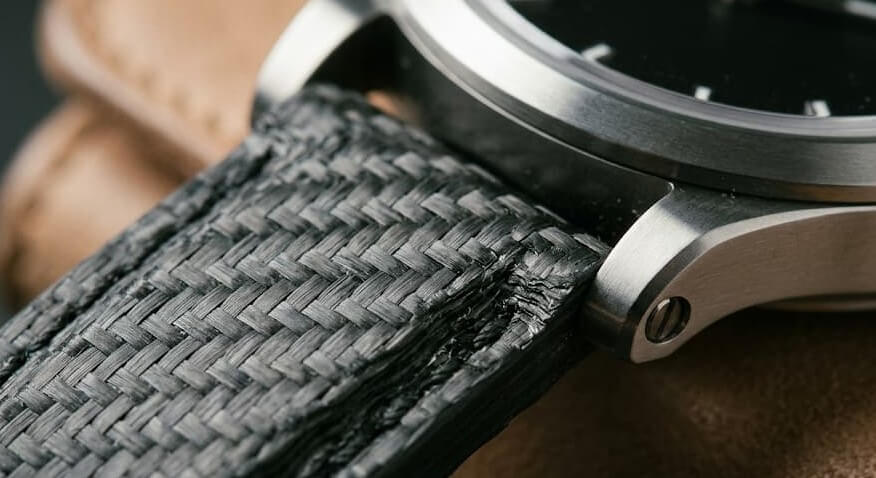
Carbon fiber watch straps are created through a layered weave process. Individual carbon filaments are first woven into a tight pattern, then multiple layers of this woven material are stacked and bonded together using epoxy resin under high-temperature conditions. The result is a composite material that combines the strength of multiple woven layers with the binding properties of resin.
To understand why this layered approach matters, think of it like a rope or fabric: a single strand is weak, but when many strands are woven together and reinforced, the structure gains tremendous strength. The resin acts as a binder, locking the woven fibers in place and distributing stress evenly across the entire strap. This is why carbon fiber is valued for its tensile strength—a measure of how much force is needed to pull the material apart or stretch it beyond its limit.
The Aerospace Heritage
Carbon fiber has been used in aerospace engineering for decades, where engineers needed materials that were both incredibly strong and as light as possible to reduce fuel consumption and improve performance. That same principle applies to watchmaking: designers want straps that are durable enough for daily wear and rough conditions, yet light enough to keep watches comfortable on the wrist all day long.
Why Watchmakers Choose Carbon Fiber
The appeal of a carbon fiber watch strap comes down to its strength-to-weight ratio—the balance between how strong it is and how little it weighs. Unlike steel, which is heavy, or rubber, which can lack durability against scratches and abrasion, carbon fiber offers both resilience and minimal weight. It also resists corrosion, meaning it won’t rust or degrade when exposed to sweat, saltwater, or humidity.
Visually, carbon fiber brings a modern, high-tech aesthetic to any watch. Its woven texture and matte dark finish create a distinctive look that pairs well with contemporary designs, making it equally at home on a casual sports watch or a sleek dress watch.
A Quick Material Comparison
To orient you, here’s how carbon fiber differs from common strap materials at a glance:
- Steel straps are durable but heavy and can cause wrist fatigue with all-day wear.
- Rubber straps are lightweight and water-resistant but prone to UV fading and degradation over time.
- Leather straps offer elegance but require regular conditioning and are not suitable for water exposure.
- Carbon fiber straps split the difference: they’re as light as rubber, more durable than leather, and free from the weight penalty of steel.
Next, we’ll explore just how light carbon fiber really is and what that means for your comfort.
How Light Is Carbon Fiber? (The Weight Advantage)
One of the most immediate benefits of a carbon fiber watch strap is how little it weighs. When you strap a watch to your wrist for eight hours—or more—every gram matters. Carbon fiber watch straps are dramatically lighter than the metal and rubber alternatives most people wear, and that difference translates directly into comfort.
To understand the scale, consider this: carbon composite materials typically have a density between 1.7 and 1.9 grams per cubic centimeter. Compare that to steel at around 8 grams per cubic centimeter, titanium at 5 grams per cubic centimeter, and gold at a staggering 19 grams per cubic centimeter. The practical result is striking.
A watch case designed in steel might weigh approximately 40 grams. The same design in gold would weigh over 95 grams. Constructed from carbon composite, it would barely reach 10 grams. These figures are illustrative; actual weights vary by specific model, thickness, and construction method.
Weight Comparison by Material (Watch Case Example)
The table below illustrates how material choice affects overall watch weight using a standard case design as a baseline.
| Material | Weight (grams) | vs. Carbon Fiber |
|---|---|---|
| Carbon Fiber | ~10 | Baseline |
| Aluminum | ~27 | +17g (2.7x heavier) |
| Titanium | ~54 | +44g (5.4x heavier) |
| Steel | ~40 | +30g (4x heavier) |
| Gold | ~95 | +85g (9.5x heavier) |
These figures represent an illustrative watch case design. Actual weights vary by specific model, thickness, and construction method, but the relative comparison holds across different designs.
The Comfort Payoff: Wrist Fatigue and All-Day Wear
Why does this matter in daily life? Consider a common scenario: you’re wearing a steel sports watch—a solid, durable piece at around 150 grams total (case, steel strap, and crystal included). By 5 p.m., you feel the weight pressing into your wrist. Your wrist aches slightly. You may have adjusted the strap position two or three times during the day without realizing it.
Now imagine the same watch with a carbon fiber strap instead. The strap alone might drop from 60 grams to just 15 grams. Your total watch weight falls from 150 grams to around 105 grams—a 30 percent reduction. Over an eight-hour workday or a ten-hour hike, that difference eliminates the pressure sensation, reduces wrist fatigue, and keeps you from unconsciously adjusting it. For active people, athletes, and those who wear smartwatches throughout the day (an inherently light device), this advantage is especially noticeable.
Even when luxury watches combine heavier precious metals—like gold or platinum cases—with a carbon fiber strap, the lightweight strap assists in offsetting the overall mass while maintaining the visual and structural benefits of the precious material. You get elegance without the fatigue.
A Lightweight Comparison: What 30 Grams Feels Like
To illustrate the difference in everyday terms: 30 grams is roughly equivalent to the weight of a standard AA battery, or about 1 ounce. Removing a single AA battery from your wrist throughout an entire day reveals how meaningful this shift is. Smartwatch users already understand this principle—most smartwatches weigh 30 to 50 grams, and their popularity partly stems from how comfortable that reduced weight feels compared to traditional metal watches.
Next, we’ll examine the durability side of carbon fiber—how its lightweight structure manages to be surprisingly tough under stress.
Durability & Strength: How Tough Is Carbon Fiber?
One of the most compelling reasons active people choose carbon fiber watch straps is their exceptional durability. Carbon fiber straps are engineered to withstand impacts, scratches, and daily wear that would damage straps made from softer or more brittle materials. Understanding what makes carbon fiber so tough—and how that translates to real-world longevity—helps explain why they’re a practical investment for people who put their gear through demanding conditions.
Tensile Strength: What It Means for Your Strap
At the core of carbon fiber’s durability is a property called tensile strength. This is a material’s ability to resist being pulled or stretched without breaking. Carbon fiber composites have exceptional tensile strength, which is why they’re widely used in aerospace, sports equipment, and high-performance applications.
Material specifications and competitor tests frequently reference metrics such as approximately 200 pounds of tensile force capacity and strength-to-weight ratios around 5 times that of steel. These benchmarks illustrate the material’s high engineering performance relative to alternatives and should be understood as indicators of material robustness rather than universal failure thresholds under all conditions. Real-world durability depends on the quality of the composite construction, the resin binder, and how the strap is designed and maintained.
In practical terms, tensile strength means that the carbon fibers in your strap are not easily stretched or deformed under normal stress. Combined with the layered weave structure, this property translates into a strap that resists damage from everyday impacts, friction, and handling.
Scratch, Dent, and Impact Resistance
Beyond tensile strength, carbon fiber straps excel at resisting the visible damage that typically shortens a strap’s useful life. Carbon fiber’s surface is naturally hard and slick, making it resistant to scratches and scuffs that would mar rubber or softer materials. Whether your watch band brushes against desk edges, climbing gear, or concrete, carbon fiber maintains its appearance far better than comparable alternatives.
Here are some real-world durability scenarios where carbon fiber proves its worth:
- Drop on concrete: A carbon fiber strap accidentally dropped on hard surfaces typically emerges unscathed, while rubber straps may crack or tear, and leather may scuff or puncture.
- Gym and sweat exposure: When combined with perspiration and friction from athletic wear, carbon fiber resists degradation. Unlike rubber, which can become sticky or degrade under prolonged sweat exposure, carbon fiber maintains its structural integrity and flex.
- Hiking and brush abrasion: Repeated contact with branches, rocks, and rough terrain can fray or snag softer straps. Carbon fiber’s smooth, durable surface resists these wear patterns, keeping the strap intact over years of use.
The durability of carbon fiber watch straps also reflects their resistance to environmental stress. High-quality composites remain stable across temperature changes and humidity fluctuations, meaning your strap won’t become brittle in cold conditions or overly soft in heat—a risk with some rubber and leather alternatives.
Carbon Fiber vs. Other Materials: A Durability Comparison
The following table compares how carbon fiber ranks against commonly used strap materials in terms of durability-related properties:
| Material | Tensile Strength | Scratch Resistance | Dent Resistance | Impact Resistance |
|---|---|---|---|---|
| Carbon Fiber | High | High | High | High |
| Steel | High | Medium | Medium | Medium |
| Titanium | High | Medium | High | High |
| Rubber | Medium | Medium | Low | Medium |
| Leather | Low | Low | Low | Low |
| Aluminum | Medium | Low | Low | Medium |
Steel and titanium straps also offer high tensile strength, but they’re significantly heavier than carbon fiber and show visible scratches more readily. Rubber straps are affordable and comfortable but require more frequent replacement as they degrade over time through UV exposure and material breakdown. Leather, while elegant, is among the least durable options for active wear. Carbon fiber combines the strength of metals with the lightweight comfort of modern composites, making it uniquely suited to people who demand both durability and wearability.
Realistic Maintenance Outlook
Because carbon fiber straps are so resistant to surface damage, they require replacement far less frequently than rubber or leather alternatives. A well-maintained rubber strap might last 2–4 years of regular wear before degradation becomes noticeable. A carbon fiber strap, by contrast, typically maintains its appearance and function for much longer under the same conditions—provided the resin seams, magnetic clasp (if present), and connector points are inspected periodically.
The key to maximizing durability is preventive care and monitoring of stress points. Regular inspection of seams and connector points ensures that minor wear is caught before it spreads. This is addressed in detail in the maintenance section; for now, the takeaway is that carbon fiber’s inherent toughness means you spend less time worrying about replacing a damaged strap and more time wearing a watch that looks and feels good after years of active use.
Next, we’ll examine how carbon fiber performs in water and outdoor environments, including the important distinction between water-resistant and waterproof—and what to do when saltwater enters the picture.
Water & Environmental Resistance
One of the most common misconceptions about carbon fiber watch straps is that they are waterproof. This confusion often leads buyers to overlook critical care requirements. Understanding the difference between water-resistant and waterproof—and knowing how your carbon fiber strap performs in different environments—is essential to protecting your investment.
Water-Resistant vs. Waterproof: What You Need to Know
Water-resistant and waterproof are not the same thing. Water-resistant means a strap can handle exposure to water up to a certain point, but it is not completely sealed against water intrusion. Waterproof implies a complete seal that prevents all water penetration—a standard most watch straps, including carbon fiber, do not meet.
Most carbon fiber watch straps carry a water-resistance rating that indicates how much water exposure they can tolerate. These ratings are typically expressed in depth categories and help you understand the strap’s limitations.
| Depth Rating Category | What It Means | Suitable For |
|---|---|---|
| Splash Resistant | Handles brief water contact, such as hand washing or light rain | Daily wear in dry climates |
| 30 Meters (3 ATM) | Tolerates brief immersion, such as a quick dip or washing hands | Swimming in a pool or shower |
| 100 Meters (10 ATM) | Designed for recreational water sports and snorkeling | Active water sports, excluding diving |
| 200+ Meters (20+ ATM) | Intended for professional diving or extended underwater use | Technical diving only |
Note: These depth ratings apply to the strap material itself. Your overall watch’s water-resistance rating depends on the case, crystal, and crown design. Always check your watch manufacturer’s specification before water exposure.
These categories describe the strap’s rated tolerance, but they are not guarantees of performance in all conditions. Always check your specific strap’s rating before exposing it to water.
Corrosion Resistance: Why Carbon Fiber Excels
Unlike metal straps, carbon fiber itself is naturally resistant to corrosion. This means it will not rust, oxidize, or degrade when exposed to moisture, humidity, or saltwater. This property makes carbon fiber straps an excellent choice for swimmers, outdoor athletes, and anyone living in humid climates where metal bands deteriorate quickly.
Sweat from workouts, morning dew, and ocean spray will not damage the carbon fiber material itself. The composite structure—carbon fibers bound together with resin—is chemically stable and does not react with water the way steel or aluminum do.
The Saltwater Caveat: Hardware Matters
While the carbon fiber material resists corrosion, watch straps contain metal components that may not. Stainless steel pins, clasps, and fasteners that hold the strap together can corrode or degrade over time when exposed to saltwater. The carbon fiber band is protected, but these hardware elements are vulnerable. Some hardware, such as 316L stainless steel, resists corrosion better than standard grades. Check your strap’s specifications if saltwater exposure is frequent.
If you plan to wear your carbon fiber strap in the ocean or saltwater environment, rinse it thoroughly with fresh water within two hours of exposure. This simple step removes salt residue and significantly reduces the risk of hardware degradation. For frequent saltwater users, periodic inspection of the clasp and pins is wise.
Pool chlorine poses a similar but less severe concern. Most chlorine-treated water will not harm the strap material or hardware, but a quick rinse after pool time is still recommended to extend the life of metal components.
Temperature Extremes and Outdoor Resilience
Carbon fiber straps are naturally resilient to temperature fluctuations. Whether you are hiking in cold mountain air, running in the heat of summer, or moving between air-conditioned indoor spaces and outdoor heat, the material does not become brittle in cold or degrade in heat the way some plastics or rubber compounds do.
This makes carbon fiber straps ideal for outdoor athletes and adventurers who experience rapid temperature changes. A strap that performs reliably whether you are in snow or desert heat reduces the need to swap bands seasonally.
Practical Care for Water Activities
For different water scenarios, follow these guidelines:
- After swimming in a chlorinated pool, rinse the strap with fresh water and pat dry with a soft cloth within an hour. Chlorine is not toxic to the material but will leave residue that can dull the finish.
- After saltwater exposure (ocean swimming, snorkeling, or coastal hiking), rinse thoroughly with fresh water within two hours. Pay special attention to any seams, clasps, or metal hardware where salt can accumulate.
- Avoid prolonged submersion (more than a few minutes) regardless of the strap’s depth rating. Even water-resistant materials can develop issues if held underwater for extended periods.
- For shower use, brief exposure is fine, but do not soak the strap or apply high-pressure water directly at seams where the resin bond meets hardware.
In all cases, air-dry the strap completely before storing the watch. Moisture trapped near metal components increases corrosion risk.
Comfort & Skin Safety (Hypoallergenic & Flexibility)
One of the most underrated advantages of carbon fiber watch straps is how comfortable they feel against your skin. Unlike metal bands, which can irritate sensitive skin or trigger allergic reactions, carbon fiber straps offer a gentler alternative without sacrificing durability or style.
Hypoallergenic & Nickel-Free Design
Many traditional metal watch straps contain nickel, a common allergen that causes itching, redness, and skin irritation in people with metal sensitivities. Carbon fiber straps are typically nickel-free and hypoallergenic, making them an excellent choice for anyone with sensitive skin or a history of metal allergies. Because carbon fiber is a composite material made from carbon fibers and resin, it does not contain the metal compounds that trigger reactions in metal-sensitive individuals.
Consider a runner with a documented nickel allergy who had to remove her stainless steel watch after 30 minutes of exercise due to wrist irritation. When she switched to a carbon fiber strap, she could wear her watch for entire workouts and all-day activities without discomfort. The strap felt light and cool against her skin, and within a week she noticed the redness around her wrist had disappeared entirely. This scenario is common among active people who spend hours wearing their watches during training, commuting, or outdoor work.
If you have sensitive skin or a known metal allergy, carbon fiber straps often represent a practical solution. Look for product listings that explicitly state “nickel-free hardware” or list the clasp material (e.g., titanium, stainless 316L, or plastic). If not specified, contact the manufacturer before purchase. Even then, always check the product specifications to confirm that any metal hardware or clasps on the strap are also nickel-free, as some magnetic clasps or connectors may contain small metal components.
All-Day Comfort & Perspiration Resistance
The lightweight nature of carbon fiber straps contributes directly to all-day comfort. Because the strap does not add significant weight to your wrist, you experience less strain during extended wear, whether you are at a desk, at the gym, or hiking. Combined with the material’s corrosion resistance, carbon fiber performs well in sweaty conditions. Metal straps can develop discoloration or surface corrosion when exposed to sweat and salt from perspiration, whereas carbon fiber remains unaffected. This makes carbon fiber straps particularly suitable for people who exercise regularly or work in demanding conditions where sweat exposure is unavoidable.
Flexibility & Fit
Carbon fiber straps offer impressive flexibility without compromising strength. The material can bend to approximately 90 degrees without permanent damage, allowing the strap to flex naturally as you move your wrist, put the watch on, and take it off. This flexibility also means the strap can adapt slightly to variations in wrist circumference throughout the day as your wrist swells or contracts due to temperature, activity level, or hydration.
To test the flexibility of your carbon fiber strap, hold the loose end and gently bend it toward your wrist at a 90-degree angle. You should observe the strap flexing smoothly without cracking, splitting, or making creaking sounds. The material should return to its original shape when released. This flexibility distinguishes carbon fiber from more brittle materials and contributes to both comfort and durability during daily wear.
The resin binder that holds the carbon fibers together allows the composite to move with your wrist without feeling stiff or restrictive. Over time, even after thousands of flex cycles, a high-quality carbon fiber strap maintains its flexibility, unlike some rubber or leather straps that can harden or deteriorate.
Maintenance & Care (It’s Easier Than You Think)
One of the underrated advantages of a carbon fiber watch strap is how little maintenance it actually requires. Unlike traditional metal or rubber bands, carbon fiber straps resist rust, don’t degrade from sweat or moisture, and maintain their appearance well with basic care. A few simple care habits will keep your strap looking fresh and performing reliably for years.
Cleaning Your Carbon Fiber Strap
Start with the easiest step: wipe your strap regularly with a soft, dry cloth. This removes dust, sweat residue, and light grime that accumulate during daily wear. A microfiber cloth works best and won’t scratch the surface. For most people, a quick wipe after workouts or at the end of the day is all that’s needed.
If your strap picks up stubborn residue, use a slightly damp soft cloth with lukewarm water. Gently wipe the affected area, then dry immediately with a clean cloth. That’s it. Avoid harsh chemicals, abrasive scrubbers, acetone, or solvents—these can degrade the resin binder and dull the finish. The same gentle approach applies after saltwater exposure: rinse gently with fresh water within a couple of hours, then pat dry. This simple step prevents mineral buildup and protects any metal hardware (like pins or clasps) from potential corrosion.
What Not to Do
Carbon fiber is tough, but the resin that binds it and the hardware components have limits. Avoid prolonged submersion (soaking for hours) even though the material itself is water-resistant. Don’t expose your strap to extreme heat—leave it off a hot dashboard or away from direct sunlight for extended periods, as the resin can weaken. Store your watch in a cool, dry place, and if you’re removing the strap for storage, keep it flat or loosely coiled rather than folded tightly.
Magnetic Clasp Inspection
If your carbon fiber strap features a magnetic clasp, perform a quick monthly check. Hold the watch at wrist level and gently tug the clasp sideways—it should resist and stay secure. If it feels loose or slides apart too easily, the magnetic connection may be weakening. Some clasps can be re-magnetized; others may need adjustment or replacement. A weakening magnetic clasp can cause accidental loss of your watch during active use. Stop wearing the watch until the clasp is re-magnetized or replaced. Catching this early prevents accidental loss during active use.
Seam and Resin Inspection
Every month or two, inspect the seams where the carbon fiber layers meet and where the strap connects to the watch case. Look for small cracks, separation, or white stress marks in the resin. Minor surface wear is normal; however, if you notice growing cracks or delamination (layers peeling apart), that’s a sign the strap is nearing the end of its usable life and may need replacement.
Maintenance Checklist
- After gym or sweaty activity: wipe strap with a soft, dry cloth.
- After saltwater exposure: rinse gently with fresh water and pat dry within 2 hours.
- Weekly or as needed: light wipe-down with a slightly damp soft cloth for stubborn grime.
- Monthly: inspect magnetic clasp for secure connection.
- Monthly or bi-monthly: check seams and resin for cracks or delamination.
- Storage: keep strap in a cool, dry place away from extreme heat and direct sunlight.
- Avoid: harsh chemicals, solvents, abrasive scrubbers, prolonged submersion, and extreme temperature exposure.
Carbon Fiber vs. Rubber Band Maintenance
A quick comparison shows why carbon fiber appeals to people seeking durability. Rubber bands require regular cleaning to prevent mold and mildew, degrade from UV exposure and sweat over time, and typically need replacement every 2–3 years. Carbon fiber, by contrast, doesn’t degrade from moisture or perspiration, resists UV damage, and typically maintains good condition longer than rubber, with longevity dependent on usage intensity and regular care. The maintenance burden is lower, and the expected lifespan is typically longer—a practical win for active people who don’t want to fuss with their gear.
With just a soft cloth and a little water, your carbon fiber watch strap will stay comfortable, functional, and visually sharp. Next, we’ll explore how carbon fiber stacks up directly against other popular strap materials to help you make the best choice.
Carbon Fiber vs. Other Watch Strap Materials
Carbon fiber stands out in the crowded strap market because it combines several advantages that are difficult to find in a single alternative. To help you decide whether a carbon fiber strap is right for you, here’s how it stacks up against the most common watch strap materials.
Side-by-Side Comparison
The table below shows how carbon fiber compares across the key factors that matter most when choosing a watch strap.
| Material | Weight | Durability | Water Resistance | Maintenance | Aesthetic Appeal | Hypoallergenic | Typical Price Range |
|---|---|---|---|---|---|---|---|
| Carbon Fiber | Very Light | Excellent | Excellent | Minimal | Modern, Technical | Yes | Premium ($80–150) |
| Stainless Steel | Heavy | Excellent | Good | Moderate (polishing, cleaning) | Classic, Formal | Often No (nickel) | Mid to Premium ($30–120) |
| Titanium | Light | Excellent | Good | Minimal | Modern, Sleek | Often Yes | Premium ($100–200+) |
| Rubber | Light | Good | Excellent | Minimal | Sporty, Casual | Usually Yes | Budget to Mid ($15–50) |
| Aluminum | Light | Good | Good | Minimal | Modern, Lightweight | Often Yes | Mid ($40–80) |
| Leather | Light | Fair (degrades over time) | Poor (water damage) | High (conditioning, protection) | Formal, Classic | Variable (depends on tanning) | Mid to Premium ($50–150) |
Typical Price Range values are approximate and vary significantly by brand, retailer, and market.
Decision Matrix: Which Material Is Right for You?
Use the profiles below to identify your best fit.
Choose carbon fiber if you value a modern look, want minimal maintenance, plan active use, have sensitive skin, or need a lightweight strap that resists scratches and water exposure.
Choose stainless steel if you prefer a timeless, formal aesthetic, can accept the weight, and do not have nickel sensitivity. Steel is durable and affordable, but it requires occasional polishing and may irritate sensitive skin.
Choose titanium if you want the lightest premium metal option and are willing to pay for it. Titanium matches carbon fiber in weight advantage and is hypoallergenic, but it costs significantly more and lacks the modern technical look.
Choose rubber if your priority is affordability, maximum water resistance for swimming or diving, and ease of cleaning. Rubber is durable for casual use, but it typically does not last as long as carbon fiber and may feel less refined.
Choose aluminum if you want a budget-conscious alternative to carbon fiber with similar lightness. Aluminum is hypoallergenic and water-resistant, but it offers less scratch resistance than carbon fiber and may dent more easily.
Choose leather if you value formal elegance and do not expect heavy water exposure. Leather requires regular conditioning and care, degrades over time, and is unsuitable for water sports or humid environments.
Why Carbon Fiber Is the Best All-Around Choice for Active People
Carbon fiber occupies a unique position in the strap market. It is one of the few materials that excels simultaneously at being lightweight, durable, water-resistant, low-maintenance, and hypoallergenic. This combination is rare. Steel is durable but heavy and may cause allergic reactions. Rubber is affordable and water-friendly but degrades faster and lacks sophistication. Titanium matches carbon fiber in many respects but costs two to three times more. Leather offers elegance but demands constant care and fails in water.
For users with active lifestyles—gym workouts, hiking, water sports, or outdoor work—carbon fiber eliminates trade-offs. You get comfort through minimal weight, peace of mind through proven scratch and impact resistance, worry-free water exposure, and zero risk of metal allergies. The premium price reflects this comprehensive advantage.
For users prioritizing affordability or specific aesthetics, alternatives make sense. Budget-conscious buyers should consider rubber or aluminum. Those seeking formal elegance may prefer steel or leather, accepting the trade-offs in weight or maintenance. But for anyone seeking a strap that does everything well, carbon fiber delivers a balanced package that other materials cannot match.
Who Should Choose a Carbon Fiber Watch Strap? (Use Cases & Lifestyle Fit)
Carbon fiber watch straps shine in specific lifestyle and activity contexts. If your daily routine involves physical demands, environmental exposure, or skin sensitivity to metals, a carbon fiber strap may be the right fit. This section maps real-world scenarios to help you decide whether the investment makes sense for your needs.
Active and Sports Lifestyles
If you hit the gym, run trails, or play contact sports, carbon fiber straps are built for the punishment. Consider a gym routine: you’re sweating against the band, wiping it down between sets, occasionally bumping your wrist on equipment. A carbon fiber strap resists scratches and dents that would mark steel or aluminum, and the lightweight design means your wrist doesn’t fatigue during long sessions. Similarly, hikers and trail runners benefit from the strap’s resistance to abrasion—brush against rocks or tree bark, and carbon fiber absorbs impacts without denting or delaminating the way softer materials might.
The low weight also matters during extended outdoor activities. A lighter strap reduces wrist fatigue on long days, which compounds when you’re already carrying a backpack or climbing steep terrain.
Water Sports and Outdoor Professions
Swimmers, snorkelers, and water sports enthusiasts appreciate carbon fiber’s natural water resistance and corrosion resilience. If you’re regularly in chlorinated pools or ocean environments, the material won’t rust or degrade. However, remember the saltwater caveat: while carbon fiber itself resists corrosion, metal pins and clasps in the strap can still be vulnerable. If you’re frequently in saltwater, rinse the strap with fresh water within two hours after exposure, and periodically inspect the hardware.
Professional outdoor workers—field researchers, divers, climbers, maritime crews—also gravitate toward carbon fiber. The combination of durability and corrosion resistance means the strap survives months in harsh conditions without degrading. That said, if diving is your primary use, verify that your specific watch and strap combo meets the water-resistance rating you need. Carbon fiber straps themselves are water-resistant, but the overall system’s rating depends on the watch case and clasp design.
Metal Sensitivity and Skin Comfort
If nickel or other metals in traditional watch bands cause irritation or allergic reactions, carbon fiber offers an alternative. Because it’s a composite material with no metal content, a full carbon fiber strap sidesteps the problem entirely. This is especially valuable if you wear your watch all day or have particularly sensitive skin. Even if your watch case is metal, swapping the strap to carbon fiber eliminates the direct contact irritant.
Frame this as a material choice, not a medical cure—individual sensitivities vary—but for many people with known metal allergies, carbon fiber is a pragmatic solution that keeps their favorite watch wearable.
Decision Aid: When Carbon Fiber Makes Sense
Use the following quick reference to assess your fit:
| Lifestyle or Need | Recommended? | Why | Alternative If Not |
|---|---|---|---|
| Active gym, running, or sports | Yes | Scratch and dent resistance, lightweight, sweat-tolerant durability. | Rubber or silicone strap (lower cost, easy to clean). |
| Swimming, snorkeling, water sports | Yes | Water-resistant, corrosion-resistant; rinse after saltwater. | Silicone or rubber strap (lower cost, simple maintenance). |
| Hiking, climbing, outdoor work | Yes | Abrasion and impact resistant, lightweight, durable in rough conditions. | Heavy-duty rubber or fabric strap (lower cost). |
| Formal office or dress occasions | Conditional | Carbon fiber has a modern, technical aesthetic; pairs well with minimalist watches, less so with classic leather looks. | Leather or metal bracelet (more traditional formality). |
| Metal allergies or sensitive skin | Yes | Hypoallergenic, nickel-free contact surface. | Hypoallergenic rubber or silicone (often lower cost). |
| Budget-conscious or occasional wear | No | Carbon fiber straps command a premium; better value if worn frequently. | Standard rubber, silicone, or fabric strap (lower cost, sufficient durability). |
The Cost-Value Trade-Off
Carbon fiber straps typically cost $90 or more, significantly more than $20–40 rubber or silicone alternatives. This premium delivers value only if you wear the watch daily in demanding conditions. For occasional wear or backup straps, lower-cost options may be more practical.