Why Your Watch Bracelet Matters
Your metal watch bracelet shapes how your watch looks, feels, and wears daily—it is far more than just a functional attachment.
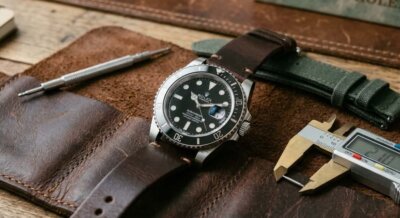
Change only the bracelet and the same watch can read completely differently: a Rolex Submariner on a three-link Oyster feels like a purposeful tool watch, while a similar case on a finer, more intricate bracelet suddenly looks closer to a dress-sport piece.
Because the bracelet frames the case and dial, it steers the watch’s personality toward sporty, casual, or elegant. Chunkier link configurations tend to emphasize a rugged, athletic look, while slimmer or more complex links usually push the watch in a dressier direction.
Comfort is also heavily driven by bracelet choice. Three key factors determine how a metal watch bracelet wears on your wrist day to day:
- Link size: larger links usually feel more structured and “blocky,” while many small links or woven styles can feel more drapey and conforming.
- Link articulation and flex points: bracelets with more pivot points can wrap more closely around the wrist, while simpler designs move in bigger segments.
- Weight distribution: heavier, solid constructions can feel very secure if the weight is balanced, but may be tiring if all the mass sits on top of the wrist.
These comfort factors show up differently across the main bracelet types, and later in the guide you will see them compared directly so you can match them to your own wrist and lifestyle.
Different watches also tend to pair best with different bracelet styles for balanced aesthetics. Tool and dive watches often look most at home on more robust, simpler link configurations, while slimmer dress-sport watches can benefit from finer, more intricate bracelets that visually “lighten” the watch on the wrist.
Proportion matters just as much as style. A very chunky bracelet on a small, slim case can overwhelm it, while a tiny, delicate bracelet on a large sports watch can make the head of the watch look top-heavy and unstable.
One of the most common beginner questions is straightforward: what is the difference between an Oyster and a Jubilee bracelet, and why do they make the same watch feel so different? This guide will give you a clear visual and comfort-focused comparison so that question is easy to answer.
Metal watch bracelets are popular because they combine durability, versatility, and everyday practicality. They handle sweat and moisture well, can transition from casual to smart settings, and, with the right fit, offer secure wear for years.
To make everything easy to navigate, this guide is organized in layers: first, an at-a-glance overview of the main bracelet families; then deeper explainers for each bracelet type; followed by a comfort and wearability comparison, a simple decision framework to help you choose, and practical sizing and care basics plus a short FAQ.
Main Metal Bracelet Types at a Glance
| Bracelet Type | Link Configuration | Key Characteristic | Best For | Comfort | Formality Level |
|---|---|---|---|---|---|
| Oyster (three-link) | Three wide, flat links per row | Sporty, robust, structured feel | Dive, tool, and everyday sport watches | Secure and stable once sized well | Casual to versatile smart-casual |
| Jubilee (five-link) | Five smaller links per row | More intricate, dress-sport look | Dress-sport and everyday office wear | Very drapey and fluid feel on the wrist | Smart-casual to dressy |
| President bracelet | Short, semi-circular three-piece links | Luxe, refined presence | Formal and high-end dress-sport watches | Comfortable, smooth contouring | Dressy to very formal |
| Mesh / Milanese | Fine woven metal strands | Sleek, airy, highly flexible | Dress, minimalist, and some dive watches | Light, breathable, very conforming | Dressy or clean modern casual |
| Beads-of-Rice | Many small rounded center “beads” with outer links | Vintage-inspired, soft drape | Vintage and retro-style sport or dress-sport watches | Very supple and wrist-hugging | Smart-casual to dressy vintage |
| Integrated bracelet | Bracelet flows directly from the case | Seamless, architectural look | Luxury sport and design-forward watches | Structured feel, comfort varies by case shape | Sport-luxury to dress-sport |
| H-link bracelet | Links shaped like the letter “H” | Clean, modern geometry | Sport and design-led modern watches | Balanced between structure and flexibility | Casual to smart-casual |
| Engineer bracelet | Chunky multi-link rows, often five across | Heavy-duty, industrial presence | Dive and tool watches on larger wrists | Very secure, can feel substantial | Casual, tool, and adventure-focused |
| Expansion bracelet | Spring-loaded links that stretch | Slip-on convenience with no traditional clasp | Everyday wear, fluctuating wrist size, vintage styles | Comfortable for swelling or changing wrist size | Casual to relaxed dress |
Next, you will see each bracelet type broken down in more detail so you can recognize it at a glance and understand how it will look and feel on your wrist.
Oyster (Three-Link)
The Oyster bracelet is one of the most iconic metal bracelet designs in watchmaking history. Its name comes from the Rolex Oyster Perpetual watch line, introduced in 1926 and further refined in the 1930s. The Oyster bracelet features a straightforward three-piece link configuration: one broad, flat center link flanked by two narrower outer links on each side. This simple yet robust design has remained a benchmark for durability and everyday wearability.
How It Looks
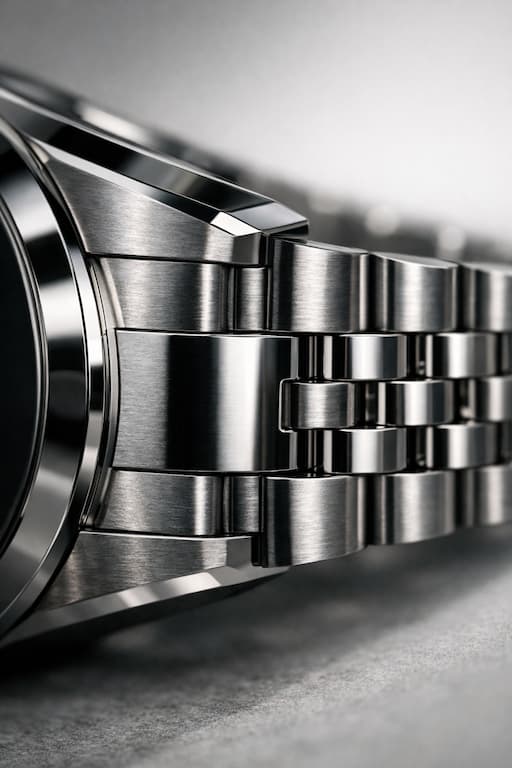
The Oyster’s visual identity is defined by its large, flat links with minimal articulation points. The center link is noticeably wider and often features a reinforcing bar running through its middle, which is both a structural strength point and a visual signature. The polished or brushed finish on these broad surfaces makes the bracelet prominent on the wrist—it does not fade into the background the way a delicate mesh might. The overall impression is solid, professional, and purposeful.
How It Wears
Because the Oyster has fewer pivot points than designs like the Jubilee or mesh bracelets, it offers a more structured, less drapey feel. This does not mean it is uncomfortable; rather, it sits with slightly more rigidity and weight distribution concentrated through the center links. Many wearers appreciate this firmness for sports watches and everyday use, as it provides a secure, substantial mooring for the watch. However, if you prefer a bracelet that conforms closely to your wrist and flexes with natural movement, you may find the Oyster slightly less fluid than alternatives.
The Oyster’s construction—with solid links and a reinforced center bar—makes it exceptionally resistant to stretching over time. This durability is one of the reasons the design has remained popular across decades and multiple watch brands beyond Rolex.
Best For
The Oyster bracelet is ideal for sports watches, dive watches, and robust everyday timepieces. It pairs well with tool watches and professional-grade designs that demand a no-nonsense aesthetic. Depending on the finish, it can range from casual (brushed stainless steel) to semi-formal (polished or mixed finishes). The Rolex Submariner, Explorer, GMT-Master II, Yacht-Master, and Daytona all feature Oyster bracelets, illustrating its versatility across use cases. The bracelet is also found on sports watches from other brands such as Tudor, Omega, and TAG Heuer.
Finishes and Materials
The Oyster is most commonly finished in brushed stainless steel, which hides daily scratches well and reinforces a tool-watch aesthetic. Polished finishes offer a dressier, more formal appearance but show scratches more readily. Many modern Oyster bracelets use a mixed finish—brushed center links with polished outer links—to balance elegance with practicality. The solid-link construction in modern Oyster bracelets (as opposed to older hollow-link versions) means the bracelet feels weightier and more substantial, a quality many collectors value.
What to Check When Buying
- Ensure links move smoothly without excessive play or rattling; this indicates solid construction and proper pin/screw tension.
- Check that the center bar in each link is intact and not bent or separated.
- Look at the end links (the connector pieces at the case lugs); they should fit snugly without gaps.
- On vintage examples, tap the bracelet gently and listen for a solid sound rather than a hollow ring, which may indicate wear or hollow-link construction.
- Verify that the clasp engages firmly and the safety mechanism (if present) functions smoothly.
Jubilee (Five-Link)
The Jubilee is a five-link bracelet design that uses two wider outer links alternating with three narrower central links in each repeating segment. This configuration creates significantly more articulation points than the three-link Oyster, resulting in a bracelet that moves fluidly and conforms more closely to the wrist. Rolex introduced the Jubilee in 1945 and famously paired it with the Datejust, where it remains the classic choice and has become synonymous with elegance in watch design.
Construction and Visual Identity
The defining feature of a five-link Jubilee is its link pattern: each outer link is broader and often polished, while the three inner links are narrower and typically brushed. This mixed finish—polished outer edges catching light with brushed inner surfaces—creates a distinctive visual rhythm and contributes to the bracelet’s reputation as more upscale and refined than the simpler three-link Oyster. The increased number of links means more connection points and more flex, which allows the bracelet to drape naturally across the wrist rather than sitting rigidly.
Comfort and Wearability
Most wearers find Jubilee bracelets comfortable for extended wear, especially compared to Oyster designs. The reasons are straightforward:
- More flex points distribute pressure across a larger surface area, reducing the chance of pressure points on the wrist.
- The narrower inner links allow the bracelet to bend and conform more naturally, adapting to wrist movement and swelling throughout the day.
- The overall feel is “drapey” and fluid rather than structured, which many find more jewelry-like and less tool-watch in character.
- The mixed finish is forgiving: brushed surfaces hide daily scratches and dust, while polished edges maintain visual appeal.
That said, comfort remains individual. Some prefer the structured, secure feel of an Oyster, while others find the Jubilee too loose or wispy if not properly fitted.
Durability and the Stretching Question
Stretching concerns stem primarily from vintage examples with hollow links from the 1950s–1980s, which were prone to loosening over decades of wear. Modern Jubilee bracelets use solid-link construction, making them considerably more durable. If you are considering a vintage five-link bracelet, inspect it for obvious gaps between links, a rattling feel, or visible looseness before purchase. Modern solid-link versions, especially from Rolex, Tudor, and Seiko, hold their fit reliably when properly maintained. The difference comes down to construction quality and age, not the five-link design itself.
Style and Formality
Jubilee bracelets are often described as dressier than Oyster designs, and there is good reason. The combination of mixed finishing, flowing articulation, and historical association with dress watches like the Datejust creates an elegant impression. However, context matters: a stainless steel Jubilee on a sports chronograph reads differently than the same bracelet on a precious-metal dress watch. The Jubilee adapts well to both formal and casual settings, making it versatile for watches worn across different occasions.
Oyster vs. Jubilee: Quick Comparison
- Link count: Oyster uses three broad links per segment; Jubilee uses five (two outer, three inner).
- Flexibility: Oyster feels more structured and tool-like; Jubilee flows and conforms more readily.
- Visual impact: Oyster is understated and industrial; Jubilee is refined and catches light with mixed finishes.
- Best for: Oyster suits dive watches, sports models, and those who prefer secure, stable support. Jubilee excels on dress watches, dress sports, and wearers prioritizing comfort and fluid movement.
- Durability: Modern versions of both are robust. Older Jubilees may show stretching due to hollow-link construction; modern solid-link versions are reliable.
Iconic Examples
The Rolex Datejust remains the quintessential Jubilee watch, available in numerous metals and dial options since 1945. Beyond Rolex, you will find five-link Jubilee designs on Tudor watches such as the Black Bay, offering the same fluid comfort at a lower price point. Seiko and other Japanese manufacturers also produce excellent Jubilee-style bracelets, demonstrating that this design transcends brand boundaries and appeals to a broad range of watch enthusiasts.
President
The President bracelet represents the pinnacle of refined luxury in metal bracelet design. Introduced by Rolex in 1956, it is instantly recognizable by its distinctive semi-circular link architecture and remains the exclusive bracelet of the Rolex Day-Date, a watch synonymous with prestige and formal occasions.
Construction and Visual Identity
What sets the President apart from the Oyster and Jubilee is its elegant link geometry. Each link consists of three semi-circular pieces: two larger curved outer pieces flanking a smaller curved center element. This creates a smooth, articulated flow that feels refined and jewelry-like compared to the more angular profiles of other bracelet types. The semi-circular design also means the bracelet sits slightly more snugly against the wrist, with a gentler curve that complements dress watches and formal contexts.
The President is traditionally crafted from precious metals—primarily yellow gold, white gold, and platinum on Rolex examples—which contributes to both its weight and its luxury positioning. That said, stainless steel versions exist and share the same semi-circular link construction, offering the aesthetic without the precious metal premium.
Comfort and Wearability
The President occupies a middle ground between the structured Oyster and the more drapey Jubilee. The semi-circular links provide more articulation points than the robust three-link Oyster, resulting in a more fluid, flexible feel. However, the construction is still more compact and refined than the five-link Jubilee, lending it a tailored appearance that suits smaller to medium wrists particularly well. The weight of precious metal versions adds a reassuring presence on the wrist, though this can feel heavier than stainless steel alternatives.
For daily formal wear or special occasions, the President delivers comfort without sacrificing elegance. It does not rattle or shift excessively, and the refined links resist the visual “clunkiness” some find in heavier three-link designs.
Formality and Context
The President is unequivocally the formal choice among metal bracelets. It is the bracelet of choice for black-tie events, boardroom settings, and milestone occasions. The Day-Date’s traditional association with presidents, executives, and dignitaries reinforces this positioning. If your watch life centers on tool watches, sports models, or casual daily wear, the President is likely overspecified and may feel out of place on a dive watch or field watch.
The Rolex Day-Date on a President bracelet is the classic example, but other luxury brands—including Patek Philippe, Vacheron Constantin, and Audemars Piguet—produce President-style bracelets on their formal dress watches, maintaining a similar aesthetic of refined elegance and precious metal craftsmanship.
When Not to Choose It
If you are building a first watch collection focused on versatility, durability in rugged conditions, or a lighter, more breathable wear experience, the President is not the priority. Its formal positioning and often-higher cost (especially in precious metals) make it a secondary or tertiary bracelet choice for most beginners. It is best added once you have a reliable everyday piece and are ready to invest in a dedicated dress watch.
Mesh / Milanese
Mesh and Milanese bracelets represent one of the most comfortable and versatile metal bracelet styles available. Characterized by tightly woven metal wires—typically stainless steel—these bracelets create a fabric-like appearance that drapes smoothly around the wrist. Unlike link-based bracelets with fixed sizing increments, mesh bracelets offer flexible sizing via a sliding clasp mechanism, making them ideal for wrists that swell throughout the day or for those who prefer a customized fit without removing individual links.
The defining appeal of mesh bracelets is their exceptional flexibility and breathability. The numerous small gaps in the woven construction allow air to flow freely, keeping your wrist cool and comfortable during extended wear. This design was originally engineered for deep-sea diving, where the weave needed to withstand the rigors of professional use while maintaining excellent airflow. That heritage translates to everyday wearability: mesh bracelets feel lightweight despite their secure, weighty appearance, and they conform naturally to wrist contours rather than imposing a rigid structure.
Tighter Milanese vs. Shark Mesh
Not all mesh bracelets are constructed identically, and understanding the distinction helps clarify apparent contradictions about durability. Fine, tightly woven Milanese mesh features densely packed wires that create a smooth, polished aesthetic. This style is often paired with dress watches or minimalist designs and delivers a refined, elegant appearance. Because the weave is tight and uniform, fine Milanese resists snagging and feels more delicate in hand—though “delicate” refers to appearance rather than fragility; modern mesh is durable and secure.
Shark mesh, by contrast, uses a coarser, chunkier weave with larger, more visible gaps between wires. The name references its historical inspiration: protective mesh suits worn by divers. This variant offers noticeably more breathability and a more rugged, adventurous visual character. The larger weave geometry makes shark mesh especially comfortable for summer wear and active use, and its more substantial appearance suits tool watches and dive instruments. Durability across both styles is excellent when properly maintained; the difference lies in aesthetic positioning and weave density rather than fundamental robustness.
The Omega Seamaster is the quintessential example of mesh versatility. Omega offers both tighter Milanese mesh options (particularly on dress-oriented Seamaster variants) and chunkier shark mesh configurations (especially on professional diving models). This range demonstrates how a single bracelet category can serve everything from formal occasions to underwater expeditions.
Care considerations specific to mesh are straightforward but worth noting. Inspect the weave periodically for any snagging or loose threads, particularly if you wear the watch near textiles or during active use. The interstices between wires can occasionally catch fine fabrics or hair, so gentle handling when putting on and removing the watch prevents irritation. Cleaning mesh is simple: a soft brush under warm running water removes salt, dust, and debris accumulated in the gaps. Unlike solid link bracelets, mesh requires no link removal for sizing, making adjustments quick and non-invasive.
Mesh bracelets suit nearly any wrist size and shape effectively. Because the weave offers flexible sizing rather than constrained to discrete link increments, mesh works well for smaller wrists (where larger link-based bracelets might gap awkwardly) and for variable wrist sizes due to swelling or seasonal changes. The bracelet’s drape and flow make it a natural choice for slimmer watch cases and minimalist designs, though modern watchmakers pair mesh with sports and tool watches just as readily. If comfort and adjustability are your priorities, or if you spend time in warm climates where breathability matters, mesh deserves strong consideration.
Beads-of-Rice
Beads-of-Rice is a metal watch bracelet style known for its comfort and vintage character. It uses rows of many small rounded center pieces (7–10 per row) flanked by larger outer links, creating a dense, flexible pattern that spreads pressure evenly across the wrist, resulting in a drapey, fluid feel with fewer pressure points.
Because there are so many small contact points instead of a few large ones, pressure is distributed more evenly. This gives a fluid, flexible feel that many people find especially comfortable for all-day wear, even on smaller or bony wrists.
Beads-of-Rice has strong roots in vintage watch design. It is closely associated with brands like Doxa and Patek Philippe, where it was often paired with elegant dress and sport-dress watches. A modern example that leans into this heritage is the Doxa SUB 200 on a Beads-of-Rice bracelet, which combines a retro dive-watch look with the smooth, flowing feel of this link configuration.
On the wrist, Beads-of-Rice usually wears lighter and more fluid than chunkier sport options. The small rounded links can conform to wrist shape in many tiny steps, which reduces hot spots and makes the bracelet feel more like a soft chain than a rigid band. This can be especially appealing if you prefer a bracelet that “disappears” on the wrist rather than constantly reminding you it is there.
From a durability perspective, older Beads-of-Rice bracelets were often built with thinner components and more hollow links, which can be prone to stretching over decades of wear. In this context, stretching describes the way gaps open up and links loosen as metal wears down at the joints, rather than any intentional elasticity. Many modern versions use more robust construction and solid links in key areas, which generally improves long-term stability while still keeping the characteristic fluid feel.
In terms of style, Beads-of-Rice tends to read as vintage elegance. On slimmer watches or those with polished details, it can look quite dress-leaning and refined. Paired with a sporty or colorful dive watch, brushed surfaces, or a tool-watch bezel, it can also work casually while still adding a softer, retro charm compared with a more industrial three-link or Engineer bracelet.
What to look for with Beads-of-Rice bracelets
Use this quick checklist when buying or owning a Beads-of-Rice bracelet to keep comfort and condition in mind.
- Check for link looseness: Gently hold the watch head and let the bracelet hang; look for excessive side-to-side play or visible gaps between the small rounded links that might indicate notable stretching on an older bracelet.
- Listen for rattling: Lightly move the bracelet back and forth; some vintage rattle is normal, but loud, clacky sounds or links that move unpredictably can suggest worn joints that may affect long-term security.
- Inspect outer links and edges: Make sure the larger outer links that frame the Beads-of-Rice rows are not bent, cracked, or thinned, since they help keep the smaller center links aligned and comfortable.
- Test the drape on your wrist: Wrap the bracelet around your wrist and see if it flows smoothly without kinks or tight spots; a good Beads-of-Rice bracelet should follow your wrist’s curve with an easy, fluid motion.
- Look for even finishing: Whether brushed, polished, or mixed, consistent finishing across the small center links and the larger side links helps the bracelet look cohesive and can signal careful, higher-quality construction.
- Assess modern vs vintage construction: For older pieces, accept a bit of extra movement as part of the charm and check condition more closely; for newer bracelets, expect tighter tolerances and less play while still getting that characteristic soft drape.
Keeping these points in mind helps you enjoy the comfort and vintage style of Beads-of-Rice while avoiding examples that are overly worn or in need of significant refurbishment.
Integrated Bracelet
An integrated bracelet is one where the metal links flow seamlessly from the watch case itself, with no distinct lugs or visible transition point between case and bracelet. This unified architecture creates a cohesive, premium aesthetic that defines the visual identity of the entire watch. Rather than being a separate component attached via spring bars, the integrated bracelet is engineered as part of the case structure from the design stage.
The most iconic integrated bracelets were pioneered by designer Gerald Genta. The Audemars Piguet Royal Oak, introduced in 1972, established the integrated bracelet as a hallmark of luxury sports watch design. The Patek Philippe Nautilus, which followed in 1976, further cemented the appeal of this seamless architecture. Both watches remain among the most coveted in the world, largely due to the distinctive visual unity their integrated bracelets provide.
The Core Trade-Off: Design Unity vs. Flexibility
The primary advantage of an integrated bracelet is aesthetic cohesion. Because the bracelet is engineered as part of the case, the proportions, angles, and overall design feel intentional and refined. Owners often report a sense of “completeness” that separates bracelets feels different from swappable designs.
The main drawback is reduced versatility. Since the bracelet is fixed to the case, you cannot easily swap it for a leather strap or a different metal bracelet style. This commitment to a single look is part of the design philosophy but may limit your options if you want to change the watch’s personality for different occasions. Additionally, integrated bracelets are often more difficult and costly to service or replace if they are damaged.
Comfort and Fit Considerations
Integrated bracelets are typically more size-dependent than removable bracelets because the case and bracelet are one unit. The fit is more critical at purchase, and micro-adjustments are sometimes limited compared to traditional three-link or five-link designs. Some wearers find them exceptionally comfortable due to their tapered, anatomical design, while others note that the narrower links near the case can feel less forgiving if your wrist size falls between standard sizing increments.
The H-link pattern, which pairs seamlessly with integrated architectures, also plays a role in comfort. The geometric articulation of H-links tends to follow the wrist’s natural contours more closely than blocky three-link designs, often creating a more secure and form-fitting feel.
How to Recognize an Integrated Bracelet
- The bracelet appears to begin directly at the case with no visible lugs or connection points.
- The end links are often integrated end links, meaning they are part of the case rather than separate components screwed or pinned on.
- The overall silhouette flows in one continuous line from the case to the wrist; there is no visual gap or step between case and first bracelet link.
- Removing or replacing the bracelet typically requires professional service rather than simple spring bar removal.
If you are considering an integrated bracelet watch, understand that you are committing to that specific bracelet design for the life of the watch. This is neither inherently good nor bad, but it is a conscious choice that prioritizes design purity over adaptability.
H-Link Bracelet
The H-link bracelet is defined by its distinctive link geometry: H-shaped center links connected by thinner side connectors, creating a pattern that resembles the letter H when viewed from above. This modern design pattern is most commonly found on integrated sport-luxury watches and is prized for its refined visual appearance and articulation characteristics.
The H-link pattern is most famously associated with Gerald Genta, the legendary watch designer who created the Patek Philippe Nautilus in 1976 and the Audemars Piguet Royal Oak in 1972. Both watches feature H-link bracelets as a core part of their integrated design language, and these references remain the gold standard for H-link execution. The pattern has since become synonymous with high-end integrated bracelets and is a hallmark of modern luxury sport watches.
How H-Link Geometry Affects Comfort and Feel
The H-link pattern influences how the bracelet articulates on your wrist. The geometry of the H-shaped center links, combined with their connecting side pieces, creates specific flex points that allow the bracelet to bend smoothly in multiple directions. This design typically results in a more fluid, responsive feel compared to the three-link Oyster, while still maintaining the structural integrity of a modern sport bracelet.
Because H-link bracelets are nearly always integrated, their comfort and weight distribution are closely tied to the overall case design. The seamless flow from case to bracelet means the bracelet feels like a natural extension of the watch rather than a separate component. This integration can make the overall watch feel more balanced on the wrist, especially on larger cases where a traditional three-link bracelet might feel top-heavy.
The link pattern also tends to distribute pressure more evenly across the wrist compared to bracelets with larger, blockier links. The smaller individual components and more numerous flex points mean less concentrated pressure at any single articulation point, which many wearers find more comfortable during extended wear.
Integrated vs. H-Link: Understanding the Difference
A common point of confusion for beginners is the relationship between integrated bracelets and H-link bracelets. These terms describe different aspects of bracelet design and should not be used interchangeably.
An integrated bracelet refers to the architectural relationship between the watch case and the bracelet: the end links flow seamlessly from the case lugs without a visible gap or separate attachment point. This is a case-to-bracelet design choice.
An H-link bracelet refers specifically to the link pattern used within the bracelet itself. The H-shaped geometry of the individual links is a stylistic and functional detail that can appear on integrated bracelets, non-integrated bracelets, or even as a retrofit option on some watches.
In practice, most modern H-link bracelets are integrated, which is why the two terms are often mentioned together. However, H-link is the link style, and integrated is the overall design architecture. Understanding this distinction helps when shopping for bracelets or discussing watch designs with others.
Brand Examples and Variations
Beyond the Nautilus and Royal Oak, other luxury brands have adopted or created H-link-style patterns for their sport and dress watches. Vacheron Constantin incorporates similar geometry in some of its integrated sport models. IWC incorporates comparable link patterns in professional dive watch lines. Each brand’s interpretation of the H-link pattern varies slightly in proportion and finish, so two H-link bracelets from different manufacturers may feel and look noticeably different on the wrist. This diversity is part of what makes H-link bracelets appealing to collectors: the pattern is distinctive enough to be recognizable, yet flexible enough to accommodate individual brand identity.
The prevalence of H-link bracelets in the sport-luxury category reflects their proven comfort and visual sophistication. If you gravitate toward integrated watches with a modern aesthetic and smooth articulation, an H-link bracelet is a strong indicator that the watch was engineered for daily wearability as well as design refinement.
Engineer Bracelet
The Engineer bracelet represents the rugged end of the metal bracelet spectrum. Characterized by chunky, heavy multi-piece links—typically arranged in a five-link configuration—the Engineer style prioritizes durability and a substantial on-wrist presence over minimalist elegance. These bracelets are built with solid, blocky construction designed to withstand demanding conditions, making them a favorite for professional dive watches, tool watches, and sports timepieces.
Seiko established itself as a pioneer of Engineer-style bracelets, and the iconic Seiko Monster exemplifies the look: oversized, protruding links that convey industrial strength and tool-watch credibility. The bracelet’s weight is immediately noticeable—a characteristic that appeals to some wearers who value the secure, grounded feeling of a substantial bracelet, yet can feel fatiguing for others during extended wear, particularly on smaller wrists or for those accustomed to lighter designs. Modern Engineer bracelets typically feature solid links throughout, eliminating hollow-link concerns and contributing to their perceived durability and longevity.
The Engineer bracelet’s appeal lies in its functional aesthetic. The broad, interlocking links are engineered to resist stretching and maintain their integrity under pressure—qualities especially valuable in dive and field watches where reliability is non-negotiable. The style pairs naturally with larger watch cases and sport bezels, creating a cohesive, no-nonsense appearance.
Comfort and Fit Considerations for Heavy Bracelets
Because Engineer bracelets are notably heavier than alternatives like mesh or Jubilee styles, wearers sometimes report wrist fatigue, particularly during the first few days of ownership. This is not necessarily a flaw; rather, it reflects the bracelet’s solid construction. If you find an Engineer bracelet initially uncomfortable, consider these adjustments:
- Verify fit: A bracelet sitting too loosely will shift and feel unstable; ensure link removal has created a snug fit with minimal gap between the bracelet and wrist. Even a single link removal can make a noticeable difference in comfort.
- Test micro-adjustment: If your bracelet includes a micro-adjustment feature, experiment with positioning to balance security and breathing room.
- Assess wrist proportion: Chunky bracelets are most comfortable on medium to larger wrists; if your wrist is slender, the visual and tactile weight may feel disproportionate. In such cases, a lighter bracelet style may be a better long-term choice.
- Allow adjustment time: Many wearers report that perceived heaviness diminishes after a week or two as the wrist acclimates and the bracelet settles into a natural wearing position.
The Engineer bracelet’s secure, grounded feel is precisely why it thrives on tool watches and dive watches—the weight conveys reliability and inspires confidence in demanding environments. For daily wear on a suitable watch and wrist, the Engineer bracelet is a durable and visually commanding choice.
Expansion Bracelet
Expansion bracelets feature spring-loaded links that allow the bracelet to stretch over the hand without needing a traditional clasp. This design provides a seamless fit by expanding and contracting to hug the wrist naturally.
Speidel introduced this innovative bracelet type in 1959, making it a staple for casual watches seeking effortless wear. Unlike rigid link configurations, the spring mechanism eliminates the need for pins or screws in adjustment, focusing purely on convenience.
Comfort stands out as the primary appeal: these bracelets slip on and off easily, accommodating wrist swelling during exercise, heat, or travel without loosening over time. Picture a vintage field watch or modern casual piece where you prioritize quick access over formal styling—the expansion design shines here for all-day ease.
Beginners appreciate the pros and cons in everyday scenarios:
- Pros: supreme on/off simplicity, forgiving for fluctuating wrist sizes, lightweight feel for extended wear.
- Cons: often limited to casual aesthetics that may not suit dress watches, potential for visible wear on springs over years requiring occasional maintenance.
Choose an expansion bracelet when comfort drives your decision. Consider it if:
- Your wrist size varies with activity or seasons.
- You want a no-fuss option for daily casual wear.
- Swapping tools or clasps feels like extra hassle.
Comfort & Wearability Comparison
Comfort is deeply personal, yet understanding how each bracelet type behaves on the wrist helps you find the style that works best for your daily routine. This section breaks down the key comfort factors across all major bracelet types, reveals which feel most fluid versus structured, and offers solutions for common wear issues.
Understanding Comfort Factors
Several structural elements shape how a bracelet feels and performs day-to-day.
Link flexibility refers to how easily the links bend and conform to your wrist. Bracelets with many small links (mesh, Jubilee, Beads-of-Rice) move more freely than those with fewer, larger links (Oyster, Engineer). Articulation and flex points describe where the links pivot; more pivot points allow smoother, more natural wrist movement. Draping refers to how much the bracelet hugs or flows across your wrist. A drapey bracelet feels supple and adaptive; a structured bracelet resists bending and feels more rigid. Weight distribution affects fatigue over long wear—some bracelets concentrate weight in bulky links (Engineer), while others spread it across many small segments (mesh). Best wrist size describes proportionality; larger wrists suit chunky link designs, while smaller wrists may find them visually oversized or physically cumbersome. Adjustability covers how easily you can customize fit without tools or professional service.
The table below synthesizes these factors across the six main bracelet types.
| Comfort Factor | Oyster | Jubilee | Mesh | Beads-of-Rice | President | Integrated |
|---|---|---|---|---|---|---|
| Link Flexibility | Low (large, rigid links) | High (five smaller pieces per link) | Very High (woven wire or tiny segments) | High (many rounded segments) | Moderate (semi-circular pieces) | Depends on link pattern (often rigid) |
| Articulation & Flex Points | Fewer (3 per link) | More (5 per link) | Continuous (many micro-pivots) | Many (numerous rounded links) | Moderate (3 pieces per link) | Varies (case-integrated) |
| Draping to Wrist | Structured, slightly rigid | Fluid, drapey | Very fluid, adaptive | Fluid, drapey | Moderate fluid | Structured, cohesive with case |
| Best Wrist Size | Medium to Large | Small to Large | Small to Large | Small to Large | Medium to Large | Case-dependent (varies by model) |
| Weight Feel | Heavy, concentrated | Moderate, distributed | Very light (fine Milanese) to Moderate (Shark Mesh); depends on wire gauge and weave density | Moderate, well-distributed | Heavy (precious metals common) | Varies (often integrated into case weight) |
| Ease of Adjustment | Requires link removal (tool or professional) | Requires link removal (tool or professional) | Infinitely adjustable (no sizing needed) | Requires link removal (tool or professional) | Requires link removal (tool or professional) | Not swappable; fixed to case |
Comfort Groupings: Structured vs. Drapey Feel
Oyster and integrated bracelets deliver a structured, more rigid feel. The Oyster’s three large flat links per segment create fewer pivot points, so the bracelet maintains its shape and resists aggressive bending. This is not uncomfortable for daily wear—it is simply less mobile. Integrated bracelets, by design, are bonded to the case, so flex depends entirely on the link pattern (often similar to Oyster) plus the case shape. Both suit larger wrists and formal contexts well; smaller wrists may find them visually or physically overwhelming.
Jubilee, Beads-of-Rice, and President bracelets sit in the middle, offering moderate to high flexibility. The Jubilee’s five-link configuration and the Beads-of-Rice’s many rounded segments create more flex points, allowing the bracelet to flow and adapt to wrist contours. President, with its semi-circular pieces, feels smoother than Oyster but less drapey than Jubilee. These suit a wider range of wrist sizes and work equally well for casual and formal occasions.
Mesh bracelets are the most fluid and adaptive. Because they are woven from fine wire or tiny interlocking segments, they move continuously. This makes mesh exceptionally comfortable for all-day wear, especially on smaller wrists or in warm weather. Fine Milanese mesh, with its tightly woven construction, has a sleek, dressy drape. Coarser shark mesh feels chunkier and more rugged, offering better airflow for active use. Both are infinitely adjustable—no links need removal—which is a major comfort advantage for variable wrist sizes or swelling throughout the day.
Engineer and Expansion Bracelets: Special Comfort Cases
Engineer bracelets are exceptionally heavy and use chunky multi-link segments (often five links per connector). This mass creates a secure, tank-like feel ideal for dive watches and tool watches, but the weight can feel tiring on smaller wrists over long wear sessions. The structured articulation mirrors an Oyster in stiffness, with fewer flex points. If you have a larger wrist and prefer a substantial, tool-watch aesthetic, Engineer bracelets deliver comfort through confidence and durability. On smaller wrists or for delicate wear, they can feel burdensome.
Expansion bracelets (spring-loaded, no traditional clasp) offer unique comfort: they stretch slightly to fit your wrist without the need for sizing tools or professional adjustment. This is ideal for variable wrist sizes, swelling in warm weather, or casual, quick-on, quick-off wear. The trade-off is that expansion bracelets are less refined in appearance and feel less secure than a proper deployant clasp, making them less suitable for formal occasions or active water sports.
Common Comfort Problems and Quick Fixes
Even well-chosen bracelets can feel uncomfortable if sizing or maintenance issues arise. Here are practical solutions for typical complaints.
Bracelet feels stiff or rigid: This is normal for new Oyster and integrated bracelets with fewer flex points. Gentle daily wear loosens the links slightly. If stiffness persists after weeks of wear, the bracelet may be over-sized; have a professional remove one or two links. Alternatively, consider switching to a Jubilee or mesh bracelet if you prefer a more fluid feel.
Bracelet feels too loose or moves around: A loose bracelet is usually under-sized. Have a professional add links or, if the bracelet has a micro-adjustment feature, use it to tighten incrementally. For mesh bracelets, tighten the clasp mechanism. If looseness develops over time, inspect for wear and replace stretched links if needed.
Bracelet rattles or has visible gaps between links: This indicates loose connections, often from worn pins or hollow links beginning to separate. For vintage Jubilee or Beads-of-Rice bracelets, have a professional inspect and re-pin or re-screw the links. For modern solid-link bracelets, rattling is rare and may signal a defect; contact the manufacturer or a certified service center.
Bracelet catches hair or skin: This is most common with mesh bracelets, where the open weave can pinch. Check that the clasp mechanism is fully closed. Consider applying a thin cloth tape under the clasp area if catching persists. Alternatively, switch to a bracelet with more coverage, such as Oyster or Engineer.
Decision Framework / Choosing Your Bracelet
Selecting the right metal bracelet comes down to matching your lifestyle, comfort priorities, and aesthetic preferences to the bracelet’s design strengths. Use the following step-by-step decision tree to narrow your options, then confirm your choice with the accompanying checklist.
Step-by-Step Decision Tree
Start at the top and follow the path that matches your situation.
Step 1: What is your primary use case?
- Daily wear, any weather, rugged use (sports, diving, outdoor work) → Go to Step 2A
- Primarily desk work, occasional formal events, lighter daily use → Go to Step 2B
- Mixed (both casual and formal occasions, variable wrist size) → Go to Step 2C
Step 2A: You need durability and security. Which matters more?
- Maximum structural strength and minimal flex (confidence in rough conditions) → Oyster (three-link) or Engineer bracelet. Oyster is classic and comfortable for most wrists; Engineer is heavier and chunkier. Example: Rolex Submariner with Oyster for professional divers; Seiko Monster with Engineer for substantial, tool-watch feel on larger wrists.
- Breathability and lightweight feel (water sports, sweating, hot climates) → Mesh/Milanese bracelet. Woven construction offers airflow and flexibility. Example: Omega Seamaster with Shark Mesh.
- Secure fit without traditional clasp adjustment → Expansion bracelet. Spring-loaded links stretch to fit variable wrist swelling from activity.
Step 2B: You prioritize elegance and comfort over extreme durability. Which appeals more?
- Refined, fluid drape with a polished look (dress watches, smaller cases) → Jubilee (five-link) bracelet. Offers grace and flexibility. Example: Datejust with Jubilee.
- Formal luxury and prestige feel → President bracelet. Three semi-circular links deliver a distinctive, sophisticated appearance. Example: Day-Date with President.
- Minimalist, sleek aesthetic → Mesh/Milanese bracelet. Fine weave works beautifully on dress-oriented timepieces. Example: Omega dress watch with Milanese mesh.
- Cohesive, unified design (case and bracelet as one piece) → Integrated bracelet. Premium positioning and no bracelet swapping. Example: Royal Oak or Nautilus.
Step 2C: You need flexibility and comfort across variable situations. Which is the priority?
- Comfortable fit without sizing headaches (wrist size changes, no jeweler access) → Expansion bracelet (no clasp sizing required) or Mesh/Milanese (infinitely adjustable with micro-adjustment clasp).
- A bracelet that works equally well casual and semi-formal → Jubilee (five-link) bracelet. Its balanced construction and fluid articulation suit both contexts. Example: Datejust worn in steel or precious metal.
- One bracelet for all seasons and moods → Oyster (three-link) bracelet. Despite its structured feel, it is versatile from sports to business and is widely available on diverse watch models.
Step 3: Consider watch size and wrist proportions.
- Smaller wrist or dress watch (34–38mm case) → Jubilee, Mesh/Milanese, Beads-of-Rice, or President. Avoid Engineer and chunky Oyster on tiny wrists.
- Medium wrist (38–42mm case) → All types work; Oyster, Jubilee, Mesh, and Integrated are safest bets.
- Larger wrist or larger case (42mm+) → Oyster, Engineer, Integrated, H-link, and Expansion all scale well.
Step 4: Final aesthetic and budget check.
- Vintage or retro aesthetic → Beads-of-Rice (classic diver heritage, Doxa SUB 200 example) or older-style Oyster.
- Modern, contemporary feel → Mesh/Milanese, Expansion, or new-production Jubilee.
- Adventurous or specialized (pilot, diver, mountaineer heritage) → Engineer, H-link (Nautilus/Royal Oak), or specialty mesh variants.
- Budget-conscious (stainless steel, good availability) → Oyster, Jubilee, Mesh, or Beads-of-Rice on mainstream brands (Seiko, Hamilton, Tissot, TAG Heuer).
- Willing to invest in precious metals or ultra-premium positioning → President, Integrated (Patek Philippe, Vacheron Constantin, Audemars Piguet examples), or specialty Rolex sports models.
Checklist: Choosing Your First Metal Bracelet
Use this checklist to validate your choice before purchasing.
- I have identified my primary use case (daily rugged, desk-to-formal, or mixed).
- I understand the key comfort trade-off of my chosen bracelet type (e.g., Oyster is structured; Mesh is infinitely adjustable; Jubilee is fluid).
- My wrist size and watch case size are proportional to the bracelet style (checked against wrist/case guidance above).
- I can access link removal or micro-adjustment (or I am choosing Expansion/Mesh for no-adjustment comfort).
- I prefer the aesthetic (brushed steel, polished, mixed finishes, etc.) and brand ecosystem of the watch model I am considering.
- I am comfortable with the weight and feel of the chosen bracelet (lighter: Mesh; heavier: Engineer, Oyster; moderate: Jubilee, President, Beads-of-Rice).
- If I am buying vintage or pre-owned, I have checked for signs of stretching or looseness (see Vintage vs. Modern Construction section for inspection cues).
- I understand the formality level of my bracelet (casual: Mesh, Engineer; balanced: Oyster, Jubilee, Beads-of-Rice; formal: President, Integrated, polished Jubilee).
- I am ready to commit to basic care (regular cleaning, occasional professional service for stretching or link looseness) or I have a jeweler contact for support.
Sizing & Adjustment (Brief)
A well-fitted metal bracelet typically sits snugly on your wrist with minimal movement, though comfort preferences vary. The ideal fit allows roughly one finger width of space between the bracelet and your skin, ensuring comfort during daily wear while preventing the watch from sliding during activity.
Most metal bracelets are adjusted by removing or adding individual links to achieve the correct length. Many modern bracelets feature removable links, which are easily taken out or reinstalled using basic tools. Most bracelets feature individual removable links held by pins or screws; to resize, a jeweler removes links from the end closest to the clasp until fit is snug (typically one finger’s width gap). Many bracelets also include a micro-adjustment feature at the clasp for fine-tuning without removing links. These fasteners connect through the spring bars, the small metal rods that attach the bracelet to the watch case itself.
End links, the small connector pieces at each end of the bracelet where it meets the watch case, come in two main configurations. Straight-cut end links are removable and independent from the case, making bracelet swapping easier. Integrated end links are molded as part of the bracelet design to fit seamlessly with specific watch cases, offering a refined appearance but reducing flexibility if you want to change bracelets later.
Account for natural wrist fluctuations—your wrist may swell slightly during warm weather or after physical activity. A slight gap in cooler conditions is preferable to a bracelet that becomes uncomfortably tight. If your wrist size varies significantly throughout the day, look for bracelets with micro-adjustment features at the clasp, which allow minor length adjustments without permanent link removal.
For your first adjustment, consider visiting a jeweler or authorized watch retailer rather than attempting link removal yourself. Professionals have the proper tools to avoid damaging pins, screws, or the bracelet’s finish, and they can ensure the remaining links sit flush and secure.
Finishes & Materials (Brief)
The material and finish of a metal bracelet shape its appearance, feel, and how it ages on your wrist. While construction and link pattern determine comfort and durability, finishes and base materials influence style and everyday practicality.
Material: Stainless Steel as the Standard
Stainless steel is the dominant material for metal watch bracelets across the industry. It offers an excellent balance of durability, corrosion resistance, and affordability, making it the default choice for everything from entry-level watches to luxury sports models. You will encounter stainless steel in nearly every bracelet type discussed in this guide.
Titanium appears on premium and professional watches, prized for its lightweight feel and superior corrosion resistance, especially in diving and aviation contexts. A titanium bracelet delivers the same visual structure as its stainless steel counterpart but sits noticeably lighter on the wrist, a key advantage if you prefer minimal weight or have wrist sensitivity. Titanium is also hypoallergenic, benefiting those with metal sensitivities.
Precious metals—gold, platinum, and two-tone combinations—are reserved for luxury and dress watches, positioned at a higher price point. These materials signal formality and heritage but require the same care and sizing considerations as stainless steel. For a beginner, precious metal bracelets are not a primary concern unless you are shopping in the high-end segment.
Finishes: Brushed, Polished, and Mixed
The surface finish of individual links dramatically changes how a bracelet looks and how it catches light.
Brushed (also called satin or matte) finishes feature fine linear scratches that diffuse light and create a subtle, understated appearance. Brushed bracelets show wear less visibly than polished ones and lean toward a sporty or professional aesthetic. Most tool watches and dive watches employ predominantly brushed finishes for this practical reason.
Polished finishes reflect light and create a bright, jewelry-like gleam. Polished links appear more formal and elegant but reveal scratches and fingerprints more readily, requiring regular cleaning to maintain their shine. Many dress watches and luxury sports models emphasize polished surfaces on the center links or outer surfaces.
Mixed finishes combine brushed and polished elements on the same bracelet. The Rolex Jubilee exemplifies this approach with polished center links and brushed outer links, creating visual contrast and striking a balance between formality and practicality. Mixed finishes are common on bracelets designed to transition between casual and dressy contexts.
Specialized finishes like DLC (dark, scratch-resistant) and sandblasted surfaces exist but are uncommon on mainstream bracelets.
How Finishes Affect Style and Practicality
Your finish choice influences both the visual personality of your watch and its maintenance demands. If you wear your watch daily and want minimal upkeep, a brushed or mixed finish is forgiving. If you prioritize a formal or dressy appearance and are willing to polish occasionally, polished elements add sophistication. Many collectors choose bracelets with mixed finishes to enjoy both benefits.
Vintage vs. Modern Construction (Stretching, Solid vs. Hollow Links)
If you are considering buying a used or vintage metal bracelet, understanding construction differences helps you evaluate durability and likely wear. Hollow vs. solid links, and pin vs. screw connections, directly affect how a bracelet ages and whether stretching is a concern.
Solid vs. Hollow Links: What It Means
Early metal bracelets, particularly vintage five-link Jubilee and beads-of-rice designs from the 1950s through 1980s, often used hollow links—metal pieces that are shaped but not completely filled. Hollow links are lighter and less expensive to produce, but over years of daily wear, the internal structure can weaken. Modern bracelets, especially from established brands, use solid links: metal pieces that are completely filled and machined as a single unit. Solid links feel heavier and more substantial on the wrist, resist deformation better, and maintain their fit for decades without loosening.
The weight difference is noticeable. A solid-link bracelet, particularly in designs like the Oyster or Engineer, will feel more secure and grounded. A hollow-link bracelet of the same style may feel slightly lighter and, over time, can develop a subtle rattle or looseness as the internal walls compress from repeated opening and closing of the links.
Stretching: What It Really Is
Bracelet stretching is not elasticity—it is not like rubber expanding. Instead, it refers to the loosening of fit that occurs when individual link connections wear or when hollow internal structures compress. Each link is connected to the next via pins or screws that run through small holes. Over time, repeated flexing and the natural settling of metal can cause these connection points to develop tiny gaps. The bracelet may move more freely on your wrist, feel less snug, or even allow the watch to slide up and down.
This wear happens across all bracelets with use, but hollow-link designs are more prone to noticeable stretching because the hollow interior offers less structural support. Beads-of-rice bracelets, which have many small articulation points, are historically more susceptible than simpler three-link Oyster designs. However, modern solid-link beads-of-rice and five-link Jubilee bracelets have largely resolved this concern.
When to Worry and When Not To
If you are buying a vintage bracelet from the 1960s through 1980s, especially in five-link or beads-of-rice styles, moderate stretching is common and should be factored into the purchase price. A bracelet that moves slightly on the wrist can be tightened by removing a link or by professional servicing, so it is not a deal-breaker.
If you are buying a modern bracelet from a reputable brand—Rolex, Tudor, Omega, Seiko, or others—stretching concerns are far less relevant. Modern manufacturing uses solid links and tighter tolerances, so a new or recent bracelet should remain stable for many years of normal wear. Even if you remove and adjust it yourself by taking out links, modern solid construction keeps the connection points tight.
Quick Inspection Checklist: Signs of Wear
When examining a used bracelet, look for these signs of construction condition:
- Link looseness: Gently flex the bracelet side to side. Do the links wiggle or rattle? Some give is normal, but excessive movement suggests wear or hollow construction.
- Visible gaps between links: Open the bracelet and look at the connection points. If you see noticeable gaps where links meet, the pins may be worn.
- Rattle when shaking: A faint click or rattle when you shake the watch on the bracelet suggests internal looseness.
- Overall fit: Put the bracelet on and note how it sits. Does it feel secure, or does the watch slide noticeably when you move your wrist?
- Link condition: Check the sides of each link for cracks, bends, or visible wear marks. Solid links show wear as scratches and patina; hollow links may show dents or deformation.
End Links and Pin/Screw Construction
Each bracelet connects to the watch case via end links—the two links at either end of the bracelet that interface with the watch lugs. These are held in place with spring bars, small springloaded rods that nest in grooves on the case and bracelet. The end links themselves can be either straight-cut (removable and replaceable) or integrated into the bracelet design. Straight-cut end links, common on vintage and many modern designs, make it easier to service or swap bracelets. Integrated end links, found on some luxury sports watches, are machined as part of the bracelet architecture and cannot be removed; they are part of the design unity.
Inside each link, small pins or screws hold the links together in a chain. Pins are simple round metal rods; screws are threaded and often have solids heads for removal. Modern bracelets more commonly use screws because they hold tighter and are less prone to backing out during wear. Vintage and budget bracelets sometimes use pins, which can loosen over time. This distinction is mainly relevant when servicing or having a bracelet adjusted, but it contributes to the overall sense of construction quality.
Modern Improvements in Five-Link and Beads-of-Rice Designs
The five-link Jubilee and beads-of-rice styles are the most historically susceptible to stretching because they have more articulation points per unit length than the three-link Oyster. Modern versions have largely overcome this by switching to solid links throughout, using screw connections instead of pins, and refining the tolerances of how links fit together. A modern Jubilee from a current-production Rolex Datejust will not stretch the way a 1970s five-link bracelet might. The same is true for contemporary beads-of-rice bracelets on watches like the Doxa SUB 200.
If you are considering a vintage five-link or beads-of-rice bracelet, assume some stretching is normal, inspect it honestly, and expect to budget for professional adjustment or link removal. If you are buying new, stretching concerns are minimal and should not influence your bracelet choice.
Specialty & Modern Variations (Oysterflex, Rouleaux, Ladder, Shark Mesh)
Beyond the core metal bracelet types, several specialty designs have emerged that blend traditional watchmaking with modern innovation or rare heritage craftsmanship. These variations appeal to collectors seeking distinctive aesthetics or functional improvements, and they round out the bracelet landscape for those ready to explore beyond the mainstream.
Oysterflex
Oysterflex represents a hybrid approach introduced by Rolex in 2015, combining a metal bracelet’s visual identity with elastomer comfort. The bracelet features a patented longitudinal cushion system composed of titanium and nickel-alloy blades wrapped inside black elastomer, giving it the rigidity and stability of a metal bracelet while offering the softness and suppleness of a strap. You’ll find Oysterflex on modern Rolex sports models such as the GMT-Master II and Yacht-Master, where it delivers shock absorption and flexibility ideal for active wear. It requires minimal adjustment and sits between traditional metal and rubber strap experiences, making it a modern alternative for those who find all-metal bracelets too rigid or want a more tactile, cushioned feel on the wrist.
Rouleaux
The Rouleaux bracelet features distinctive bullet or capsule-shaped links that create a sleek, minimalist profile. This design gained prominence with Breitling’s Chronomat in 1984 and appeals to those seeking a streamlined look that differs from the more angular three-link or five-link configurations. The rounded link geometry offers smooth articulation and a refined appearance, sitting somewhere between the structure of an Oyster and the flow of a Jubilee. Rouleaux bracelets are less common than core types, making them a statement choice for collectors valuing distinctive visual identity alongside solid construction.
Ladder Bracelet
The ladder bracelet, pioneered by the legendary Gay Frères design house, consists of minimal, widely spaced links that maximize wrist contact and airflow while reducing overall visual bulk. This rare style emphasizes a skeletal, purposeful aesthetic and is famously seen on select Zenith El Primero chronographs. Ladder bracelets appeal to minimalist watch enthusiasts who prioritize an airy feel and unique visual signature, though their limited link count and specialized geometry make them less common in modern collections and more challenging to resize or repair.
Shark Mesh
Shark mesh is discussed in detail in the Mesh / Milanese section above.
Care, Maintenance & Troubleshooting
Metal bracelets are durable and low-maintenance compared to leather or fabric straps, but they do benefit from regular care to keep them looking sharp and functioning smoothly. Most issues beginners encounter are preventable with simple habits and basic inspection.
Checklist: Bracelet Care & Maintenance Basics
- Rinse your bracelet with fresh water after exposure to salt water, chlorine, or sweat to prevent corrosion and discoloration.
- Dry the bracelet thoroughly with a soft, lint-free cloth, paying attention to crevices and link joints where moisture can linger.
- Clean between links and around the clasp using a soft brush or old toothbrush with mild soap and warm water; avoid abrasive scrubbers that scratch the finish.
- Inspect the bracelet monthly for loose links, rattling, or visible gaps between links, especially on older or heavily worn pieces.
- Check for hair or fabric snagging, particularly with mesh bracelets; gently work out any caught threads and consider using a fine-tooth comb to prevent future tangles.
- Periodically test the clasp function and micro-adjustment mechanism to ensure they operate smoothly and securely.
- Store your watch in a cool, dry place away from direct sunlight and humidity to prevent oxidation and finish degradation.
- Avoid wearing your watch during vigorous exercise, heavy lifting, or activities where the bracelet might strike hard surfaces and cause dents or link damage.
Troubleshooting Common Bracelet Issues
Most beginner frustrations with metal bracelets fall into a few recurring categories. Here is how to diagnose and address them:
Bracelet Feels Stiff or Rigid: Confirm fit is correct (one finger’s width gap). Structured bracelets (Oyster, Engineer) naturally feel more rigid than fluid designs (Jubilee, Mesh). If fit is correct, wear the bracelet for a few days to allow links to articulate; modern bracelets often break in. For vintage pieces, a watchmaker can clean and lightly lubricate links if stiffness persists.
Bracelet Is Too Loose or Slides Around: Check that the clasp is fully engaged and the micro-adjustment (if present) is set to the tightest comfortable position. If the bracelet still slides, it likely needs a link removal. Most metal bracelets are sized by removing full links from the end link closest to the clasp; this is a common service at jewelers and watch retailers, often free or low-cost for recent purchases. Do not ignore this: a loose bracelet can slip off.
Bracelet Rattles or Has Visible Gaps: A rattle or visible gaps suggest loose internal pin connections, most commonly found in older five-link (Jubilee) and Beads-of-Rice bracelets with hollow links. Inspect the male and female end links for looseness. A light rattle from a well-loved vintage bracelet is often cosmetic, but if pronounced, the bracelet should be inspected by a professional. Modern solid-link constructions are much less prone to this issue.
Hair Catching or Snagging: Mesh bracelets are more prone to catching loose hairs and fine fabrics due to their woven design. To minimize snagging, keep the mesh clean and free of debris, and gently work any caught hair free rather than pulling forcefully. If snagging becomes persistent, consider an alternative bracelet style with larger, more open link patterns, such as Oyster or Jubilee.
FAQ / Common Questions
Below are answers to the most frequently asked questions about metal watch bracelets, covering practical concerns, design differences, and care basics.
Design & Comfort Questions
What’s the difference between the Oyster and Jubilee bracelets?
The Oyster uses a three-link design with large, flat links connected by a central bar, creating a structured, rigid feel. The Jubilee uses five links per section—three smaller, polished center links flanked by larger matte links—giving it a more fluid, flexible drape. Oysters are sporty and durable; Jubilees are more elegant and comfortable for extended wear due to their greater articulation.
Which bracelet is most comfortable for all-day wear?
Comfort depends on wrist size and personal preference. For most people, the Jubilee offers excellent all-day comfort because its five-link design provides smooth flex and distributes weight evenly. Mesh and Expansion bracelets are equally comfortable for all-day wear, as they conform naturally to the wrist and offer infinitely adjustable fit. Oyster and Engineer bracelets, while durable, can feel more structured and are better suited to larger wrists.
Can I swap bracelets on my watch?
Most watches with straight-cut end links allow bracelet swapping—you can remove the spring bars and attach a different bracelet. However, integrated bracelets (found on Royal Oak, Nautilus, and similar designs) are permanently attached to the case for aesthetic cohesion, so swapping is not possible. Always verify your watch’s end-link style before attempting a swap, and consider using a qualified jeweler for the task.
What does “five-link” mean, and why does it matter?
Five-link refers to the link configuration in designs like the Jubilee, where each section contains five individual links (three smaller center links plus two larger outer links). Five-link designs distribute articulation across more pivot points than three-link designs, resulting in greater flexibility and comfort. More pivot points also mean more areas where wear can occur, though modern solid-link construction minimizes this risk.
Are mesh bracelets durable for sports watches?
Yes. Mesh bracelets were originally designed for deep-sea diving and offer excellent durability. Finer Milanese mesh is elegant and casual-friendly; chunkier Shark Mesh provides a more rugged feel and better breathability for active use. Both are resistant to damage and are a great choice for sports watches. The main consideration is keeping the weave clean—sand or saltwater can lodge in the mesh and requires periodic cleaning.
Which bracelet is best for formal occasions?
The President bracelet is the most formal choice, with its three semi-circular pieces per link and polished finish creating an elegant, luxury appearance. The Jubilee is a close second, offering a dressier alternative to the Oyster with its polished center links and refined design. Mesh bracelets, particularly finer Milanese weave, are also suitable for semi-formal settings, though they lack the formality of President or Jubilee.
Fit & Adjustment Questions
How do I adjust a metal bracelet to fit my wrist?
Most bracelets feature individual removable links held by pins or screws; to resize, a jeweler removes links from the end closest to the clasp until fit is snug (typically one finger’s width gap). Many bracelets also include a micro-adjustment feature at the clasp for fine-tuning without removing links. For precise fitting, a qualified jeweler is recommended, as removing links requires proper tools and technique to avoid damage.
What’s the difference between Oyster and President bracelets?
The Oyster is a three-link design with larger, solid flat links and a central bar—sporty, robust, and highly durable. The President is a more formal three-piece semi-circular link design, where each link is made from three curved segments that create a rounded, polished appearance. President bracelets are heavier and more luxurious in feel and are primarily found on dress watches and precious-metal models. Oysters are versatile across sport and casual watches.
Aesthetics & Quality Questions
Why do some bracelets feel more “luxurious” than others?
Perceived luxury comes from several factors: weight and heft (solid links feel heavier and more substantial than hollow ones), polish and finish quality (high-quality brushing or polishing affects how light plays across the bracelet), link articulation (smoother, more fluid movement feels refined), and overall construction precision. President bracelets, for example, feel more luxurious because of their heavier weight, three-piece semi-circular link design, and polished finish. Integrated bracelets also feel premium due to their seamless case-to-bracelet integration.
Are vintage bracelet designs still relevant today?
Absolutely. Designs like the Oyster (1926), Jubilee (1945), and President (1956) remain foundational and highly relevant because they are functionally superior and aesthetically timeless. Many modern watches still use these designs, and they are frequently reissued on contemporary models. The main difference is construction: modern bracelets use solid links and improved materials, while vintage pieces may feature hollow links. Both are relevant—vintage designs for their history and character, modern reissues for reliability and durability.
What is an integrated bracelet, and why is it special?
An integrated bracelet is one where the bracelet and case are designed as a single unit, with the links flowing seamlessly into the lugs of the watch case. This creates a cohesive, unified aesthetic that cannot be achieved with a removable bracelet. Icons like the Audemars Piguet Royal Oak and Patek Philippe Nautilus feature integrated bracelets. The trade-off is that you cannot swap the bracelet for another style, but the visual and tactile unity makes them feel exceptionally refined and special.
Cost & Comparison Questions
How much does a metal bracelet typically cost vs. a leather strap?
Metal bracelets are generally more expensive than leather straps. Aftermarket metal bracelets typically range from $100 to $500 or more, depending on quality and brand, while leather straps often cost $30 to $150. Original manufacturer bracelets can be significantly more expensive. Metal bracelets are a higher investment but offer greater durability and versatility for multiple wrist sizes and conditions. The choice between metal and leather ultimately depends on your lifestyle, aesthetic preference, and budget.
Finish & Details Questions
Why do some Rolex watches have polished vs. brushed finishes on the same bracelet?
Many bracelets, particularly the Jubilee and some modern Oyster designs, combine both polished and brushed finishes as an intentional design choice. Polished links (typically the center links on a Jubilee) catch light and add visual interest, while brushed outer links tone down the reflection and add visual weight. This mixed finish creates depth, enhances the bracelet’s three-dimensional appearance, and adds to the luxury feel. The contrast between finishes is a hallmark of refined bracelet design.
Conclusion / Summary
Your watch bracelet is far more than a functional attachment—it shapes how your watch feels on your wrist, how it looks across different settings, and how long it lasts under daily wear. The eight main metal bracelet types, plus specialty variations, each bring distinct strengths: a structured three-link Oyster suits sports and formal occasions alike; a fluid five-link Jubilee balances elegance with everyday comfort; a woven Mesh bracelet offers breathability and infinite micro-adjustment; a semi-circular President bracelet signals luxury and formality; an Integrated design creates cohesive sport-luxury aesthetics; an H-link configuration delivers refined articulation on iconic dress-sport watches; a chunky Engineer bracelet provides security and resilience; and an Expansion bracelet removes the clasp adjustment burden entirely for variable wrist sizes or swelling.
Choosing the right bracelet comes down to a few core questions: Do you prioritize durability and versatility, or comfort and flex? Will you wear your watch daily, occasionally, or mainly formally? Does your wrist prefer structured links or a drapey, flowing fit? Do you value the ability to swap bracelets, or do you prefer a unified case-to-bracelet design? How much maintenance are you willing to perform?
Use the Main Metal Bracelet Types at a Glance table early in your research to spot bracelet names and their broad characteristics. Dive into the Bracelet Comfort and Wearability Factors matrix to compare how different architectures feel on the wrist and which suit different activities. Then follow the Decision Framework to route yourself toward one or two best-fit bracelet types aligned with your watch’s intended role and your comfort priorities.
Once you have narrowed your choice, the Bracelet Care and Maintenance Basics checklist will help you keep your bracelet in top condition for years to come. Remember that modern solid-link construction is far more robust than older hollow-link designs, so stretching and looseness are primarily vintage concerns. When sizing or adjusting, work with a qualified watchmaker to ensure proper fit and secure attachment.
Whether you are drawn to the iconic Oyster on a Submariner, the refined Jubilee on a Datejust, the elegant Mesh on a Seamaster, or any other pairing, your bracelet choice is deeply personal. Let comfort, durability, and your intended use case guide your decision, and you will find a metal bracelet that becomes an inseparable part of your watch and your wrist.