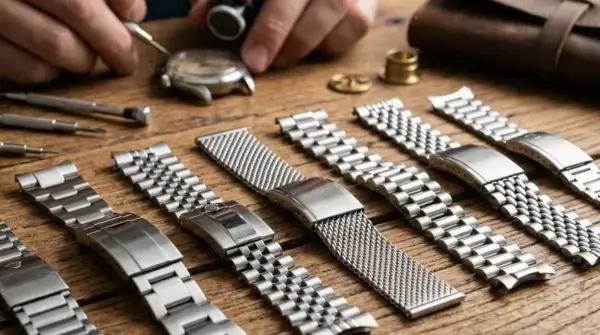
Introduction & What Makes Metal Bracelets Special
Understanding the different types of metal watch bands is essential when choosing a watch. Metal bracelets are fundamentally different from leather, rubber, or fabric straps. While a leather strap is a single piece of material held by a clasp, a metal bracelet is built from dozens of interlocking links, each precisely engineered to articulate smoothly, resist stretching, and last for decades. This complexity is exactly what makes metal bracelets so versatile—and why understanding the different types of metal watch bands matters when you’re buying, wearing, or customizing a watch.
Why choose metal? Metal bracelets offer unmatched durability, adjustability in tiny increments, and an aesthetic range that spans from rugged sports watches to refined dress pieces. They feel substantial on the wrist and develop a beautiful patina over time. Whether you’re diving, attending a formal dinner, or wearing your watch daily, there’s a metal bracelet style designed for that scenario. Plus, metal bracelets are often swappable—meaning you can experiment with different looks on the same watch case.
This guide covers the major metal bracelet styles, the materials that make them durable, the clasp mechanisms that keep them secure, and a practical framework for choosing the right one. Let’s start with the styles you’ll encounter most often.
The Major Metal Bracelet Styles at a Glance
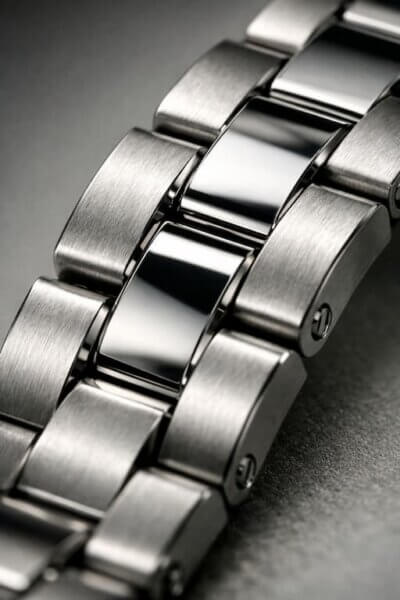
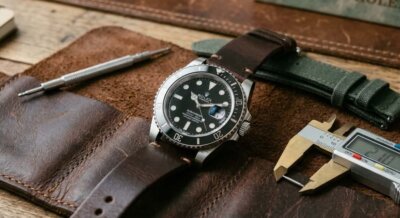
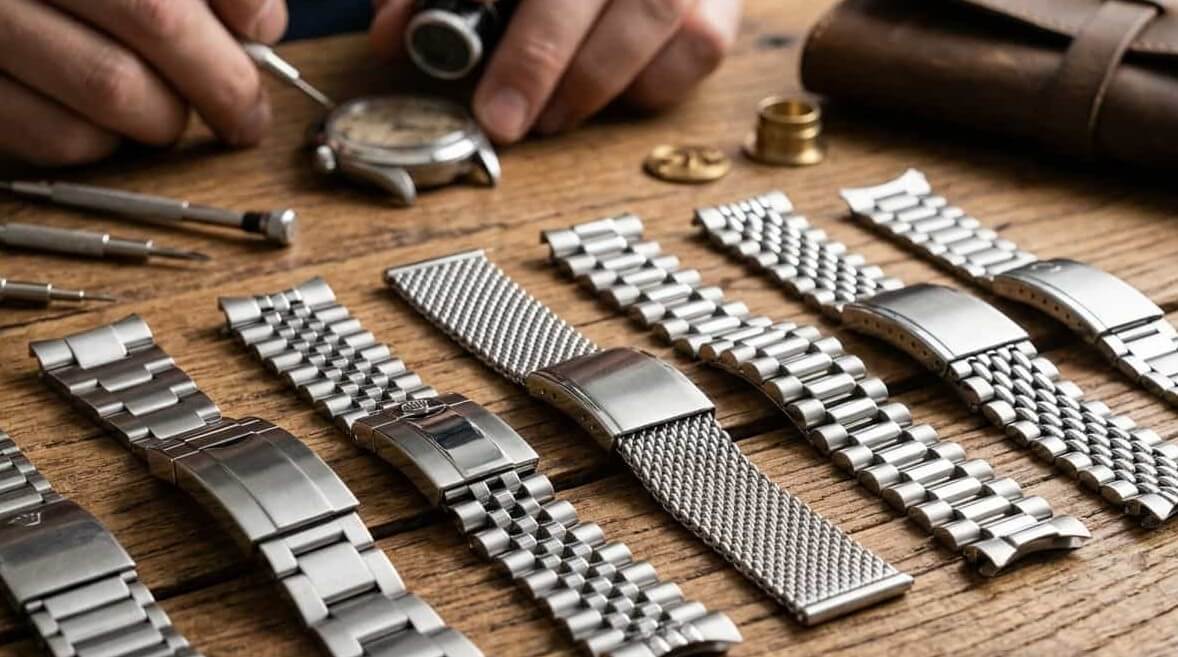
The Oyster bracelet, with its three wide, flat links, is the workhorse of watch design. Built for strength and simplicity, it suits everything from dive watches to modern sports models and remains one of the most recognizable bracelet styles in the world. The Rolex Submariner exemplifies this style, though Oyster bracelets appear across countless watch brands. Many find it straightforward and robust, though some prefer designs with more links for a softer articulation. While the Oyster’s larger links can feel slightly more rigid than smaller-link designs, it still articulates smoothly across many watch categories. The difference is subtle—both are versatile, but the Oyster prioritizes durability and simplicity, while other styles prioritize flexibility and refinement.
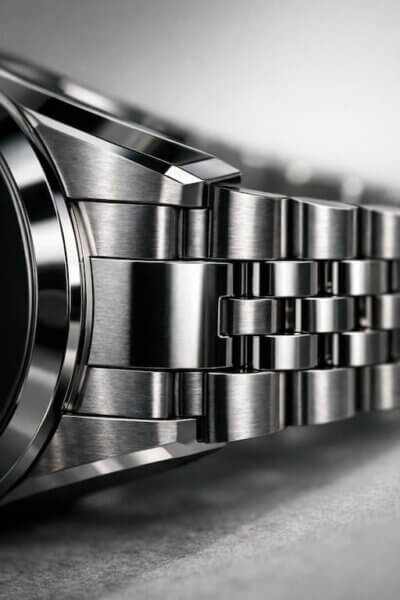
The Jubilee bracelet features five links per repeating unit—three narrow inner links flanked by two larger outer pieces. Introduced in 1945 to celebrate Rolex’s anniversary, it catches light beautifully and feels more refined than the Oyster. It’s popular on dress watches like the Rolex Datejust because it mimics jewelry without sacrificing wearability.
The President bracelet uses semi-circular, three-piece links that are thinner and more delicate than an Oyster. Traditionally crafted in precious metals, it signals prestige and formal elegance. You’ll find it primarily on the Rolex Day-Date, reserved for the most distinguished occasions.
Milanese mesh (or simply mesh) bracelets are made from tightly woven metal strands, creating a sleek, minimalist look that hugs the wrist like a fabric band. Originally designed for durability in harsh conditions, mesh has become beloved for comfort and breathability. The Omega Seamaster Professional showcases this style’s versatility. Mesh works on everything from dress watches to dive models and is exceptionally easy to adjust thanks to a sliding clasp.
Shark Mesh is a robust cousin of Milanese mesh, featuring larger woven links that create visible gaps and a looser, more tactile feel. Milanese mesh is a type of mesh bracelet characterized by tightly woven links, while Shark Mesh features larger links and greater gaps for breathability. Inspired by protective diving suits, it gained popularity as diving watch technology advanced, and offers excellent breathability and flexibility, making it ideal for warm climates or all-day wear.
The Beads of Rice bracelet alternates smaller round or oval links, creating a pattern that resembles grains of rice. This design is lighter and more flexible than three-link styles, popular on vintage dress watches and modern pieces like the DOXA Sub 300 for its refined, vintage appeal.
The H-link bracelet uses H-shaped connector pieces rather than traditional solid links, creating a sporty appearance often found on dive and field watches such as the Seiko Diver. The design balances articulation with durability and suits tool watches well.
Expansion bracelets feature spring-loaded links that stretch to fit your wrist without a clasp. Common on vintage dress watches and some casual modern pieces, they offer pure convenience—just slip your hand through—though they lack the adjustability and security of clasp-based designs.
Integrated bracelets are engineered as one piece with the watch case, creating a seamless, cohesive design. Found on luxury sports watches like the Audemars Piguet Royal Oak, they can’t be swapped, but they offer a distinctive aesthetic and tighter fit.
Beyond these core styles, you’ll encounter specialty hybrids like rally bracelets inspired by racing straps, ladder designs, and custom combinations that blend link styles for personalized fit and appearance. For a quick side-by-side comparison of comfort, durability, and best uses for each style, see the Bracelet Style Comparison table below.
Table 1: Bracelet Style Comparison
| Style | Link Design | Aesthetic | Best For | Comfort | Durability | Maintenance | Material Options |
|---|---|---|---|---|---|---|---|
| Oyster | Three wide, flat solid links | Sporty, robust, tool-watch | Dive watches, sports models, daily wear | Solid feel, slightly angular | Excellent | Simple, easy to clean | Stainless steel, gold, titanium |
| Jubilee | Five smaller links per unit (3 inner, 2 outer) | Refined, elegant, jewelry-like | Dress watches, formal occasions, daily luxury | Very smooth, supple articulation | Very good | Slightly more complex to clean | Stainless steel, gold, platinum |
| President | Semi-circular, three-piece delicate links | Luxurious, formal, prestigious | Formal wear, special occasions | Comfortable, flexible | Good with proper care | Requires gentle maintenance | Gold, platinum |
| Milanese Mesh | Tightly woven metal strands | Minimalist, sleek, modern | Dress watches, versatile daily wear | Very comfortable, breathable | Good | Requires regular deep cleaning | Stainless steel, gold-tone |
| Shark Mesh | Larger woven links with visible gaps | Adventurous, bold, tactical | Dive watches, warm climates, casual wear | Very comfortable, highly breathable | Good | Moderate cleaning effort | Stainless steel, two-tone |
| Beads of Rice | Alternating round or oval small links | Vintage, refined, understated | Dress watches, vintage models | Light, supple, flexible | Good | Moderate | Stainless steel, gold |
| H-Link | H-shaped connector pieces | Sporty, structured, angular | Dive watches, field watches, tool watches | Moderate, slightly structured feel | Excellent | Easy to clean | Stainless steel, two-tone |
| Expansion | Spring-loaded stretching links | Vintage, casual, practical | Vintage dress watches, casual pieces | Very convenient, no clasp adjustment | Fair (springs weaken over time) | Moderate, springs may need service | Stainless steel, gold-filled |
| Integrated | Molded as single piece with case | Distinctive, seamless, modern | Luxury sports watches, flagship models | Tight, cohesive fit | Excellent | Moderate, limited adjustability | Stainless steel, precious metals |
Bracelet Anatomy: How Metal Bracelets Work
Understanding how a metal bracelet is constructed and attached to your watch will help you make smarter purchasing decisions and wear your watch more comfortably. Let’s walk through the key parts and how they work together.
Spring Bars and Lugs: The Connection Point
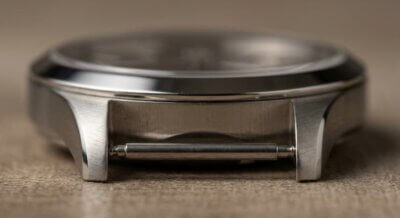
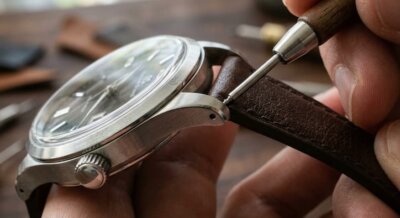
The bracelet connects to your watch case through small metal bars called spring bars. These bars fit into grooves on the watch case lugs—the small metal projections on either side of the case, just below the 12 and 6 o’clock positions. The spring bars rest inside the lugs to hold the bracelet securely in place.
Spring bars come in different widths to fit different watch models. The most common widths are 18mm, 20mm, and 22mm—these measurements indicate the distance between the two lugs on your specific watch. If you ever want to swap bracelets or straps, you need to match the lug width. A bracelet made for an 18mm lug width will not fit a watch with 20mm lugs, so checking this measurement is your first step when shopping for a replacement or upgrade.
The spring bar itself has a small spring mechanism inside it that allows you to compress it slightly so you can slide it out and in. This design lets you remove and attach bracelets without tools—though some people prefer to use a spring bar tool for easier handling and to avoid accidentally dropping the tiny bar.
Links: The Building Blocks of Articulation
A metal bracelet is made up of individual segments called links. These links connect to one another through small pins or bars, creating a chain that wraps around your wrist. The size, shape, and number of links in a bracelet directly affect how the bracelet feels on your wrist—specifically, how smoothly it bends and conforms to your movements.
Here’s a practical example: an Oyster bracelet uses three main link units (plus the clasp), while a Jubilee bracelet uses five smaller link units (plus the clasp). Because the Jubilee has more, smaller links, it articulates more smoothly—it bends more fluidly around your wrist. The Oyster, with fewer but larger links, feels slightly stiffer and more angular, though it still moves comfortably. This is why the Jubilee is often described as “dressier” and more flexible, while the Oyster feels “sportier” and more structured.
When you’re shopping, you’ll also hear the term removable links versus fixed links. Some bracelets are designed with removable links—these links can be taken out to resize the bracelet to fit your wrist. Other bracelets use fixed links that cannot be removed; these are adjusted only at the clasp itself. Not all links on a bracelet are removable, even if some are. The end links (the ones closest to the watch case) are often fixed, while the middle links may be removable. Modern bracelets typically use solid links for durability, though some vintage or budget models may include hollow components, which can show more stretch or wear over time. Always check the specific design of your bracelet to understand which links can be adjusted.
End Links and Case Integration
The end links are the two links on either side of the bracelet that sit closest to the watch case. These pieces connect directly to the spring bars and essentially frame the watch case, creating a smooth transition from case to bracelet.
End links are important for two reasons. First, they must be the correct size to match your watch’s lug width—just like the spring bar itself. Second, they affect how the bracelet looks on your wrist. If the end links are too loose or have too much play, the bracelet can feel sloppy and look unrefined. If they fit snugly, the bracelet feels secure and looks polished. This is why “end link fit” is a common topic among watch enthusiasts; a well-fitted end link is the mark of good bracelet design and manufacturing.
The Clasp: Security and Comfort
The clasp is the locking mechanism on the bracelet that keeps it securely fastened around your wrist. The clasp also has its own spring bar (or attachment points) that connect it to the bracelet itself. Think of the clasp as both a functional safety device and an adjustment tool.
The clasp sits on the underside of your wrist, opposite the dial. When you open the clasp, the two ends of the bracelet separate, allowing you to put the watch on. When you close the clasp, it locks the bracelet together so the watch stays secure during daily wear and activity.
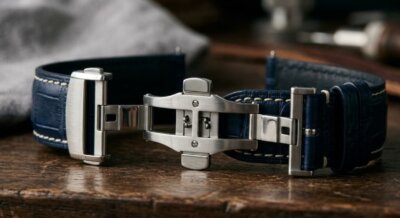
Clasps come in several designs, each with different security levels and ease-of-use profiles. A deployment clasp, for example, uses a push-button mechanism that locks when you fold it closed—it’s very secure but requires two hands to open. A fold-over clasp, by contrast, is simpler and can be opened with one hand, though it may feel less robust. Later sections will dive deeper into clasp types and help you choose one suited to your lifestyle.
Micro-Adjust Holes and Fine-Tuning Fit
Many bracelets include a row of small holes punched into the clasp itself. These are called micro-adjust holes, and they allow you to fine-tune the fit of your bracelet throughout the day without removing any links. If you find that your bracelet is slightly too loose in the morning, you can shift the clasp mechanism to the next hole to tighten it slightly. If your wrist swells a bit in the afternoon, you can loosen it by one hole.
Micro-adjust holes are a convenience feature, not a full sizing solution. They typically provide only 2–3mm of adjustment per hole, so they work best for minor tweaks. If your bracelet is significantly too large or too small, you’ll need to remove or add removable links instead. Still, having micro-adjust flexibility can make a big difference in everyday comfort, especially if your wrist size changes due to temperature, activity, or seasonal variation.
Removable Links and Sizing
To resize a bracelet, most designs use removable links held in place by small screws or pins. If a link is removable, you’ll see a tiny screw on the side or underside of the link. This process requires care to avoid losing the tiny screws or damaging the links. We recommend having your bracelet sized by a jeweler or watchmaker rather than doing it yourself—it’s inexpensive and ensures the job is done safely. If you do choose to resize yourself, use a dedicated link removal tool and proceed carefully.
As noted earlier, not all links are removable, and the pattern varies by design. Before attempting to size your bracelet, check the specific model’s manual or ask a jeweler which links can be adjusted. Some bracelets, particularly integrated designs (where the bracelet is molded as part of the case), cannot be adjusted at all—you must ensure the fit is correct at purchase.
How It All Works Together
Imagine putting on a Rolex Submariner with an Oyster bracelet: you open the clasp, which separates the bracelet’s ends. You slip your hand through, position the watch on your wrist, and close the clasp to secure it. The spring bars hold the bracelet firmly to the lugs through the end links. The links articulate and flex as you move your wrist. The micro-adjust holes let you fine-tune comfort without tools. And if your wrist size changes over months or years, removable links let you adjust the overall length.
Each component serves a practical purpose, and understanding how they interact makes it easier to spot quality construction, anticipate fit issues, and maintain your bracelet over time. With this foundation, you’ll be better equipped to evaluate bracelet options and understand what reviewers mean when they describe feel, security, and adjustability.
Materials & Durability: Stainless Steel Grades and Beyond
Not all metal bracelets are created equal. The material used to construct the bracelet dramatically impacts its durability, resistance to corrosion, and long-term appearance. While stainless steel dominates the watch bracelet market, different grades of stainless steel offer vastly different performance characteristics.
Stainless steel is an alloy of iron, chromium, and nickel (among other elements). The chromium creates a protective oxide layer on the surface, preventing rust and corrosion. Higher chromium content generally means better corrosion resistance. Nickel content affects the steel’s resistance to pitting and its overall hardness. Understanding the grade of stainless steel in your bracelet helps explain why some watches age gracefully while others develop discoloration or pitting over time.
The most common stainless steel grades used in watch bracelets are 304, 316L, and 904L. Each has distinct properties and is suited to different price points and use cases.
Table 2: Stainless Steel Grades Explained
| Grade | Chromium % | Nickel % | Use & Best For | Durability | Cost | Maintenance | Notes |
|---|---|---|---|---|---|---|---|
| 304 | 18% | 8% | Entry-level watches, budget brands, casual pieces | Good; adequate for most daily wear | Low | Regular cleaning; prone to pitting in salt water | Industry standard; sufficient for normal use but less resistant to corrosion than 316L |
| 316L | 16–18% | 10–14% | Mid-range to premium watches, dive watches, professional sports watches | Very good; highly resistant to corrosion and pitting | Moderate | Moderate cleaning; excellent salt-water resistance | Lower carbon content (L = low carbon) reduces sensitization; preferred for watches exposed to saltwater or harsh environments |
| 904L | 20% | 25% | Luxury watches, high-end Rolex models, extreme-condition sports watches | Excellent; superior resistance to corrosion, pitting, and scratching | High | Minimal maintenance; exceptional salt-water and chemical resistance | Higher nickel content (for nickel-sensitive individuals: may cause reactions); significantly higher cost than 316L; offers longest lifespan |
Beyond stainless steel, some premium bracelets use titanium, which is lighter, hypoallergenic, and nearly as durable as steel. Titanium bracelets are popular on dive watches and high-end sport models because they reduce wrist fatigue and resist corrosion even in extreme environments. Gold, white gold, and platinum bracelets are reserved for formal and luxury dress watches; they offer unmatched aesthetics but require more careful handling and regular cleaning to maintain their finish.
Understanding Metal Bracelet Clasps
The clasp is often overlooked, but it’s arguably the most important safety feature on your watch. A well-designed clasp keeps your watch secure during activity, adjusts easily, and will not accidentally open. Understanding the different clasp types helps you choose a bracelet suited to your lifestyle.
How Clasps Work and Why They Matter
Every clasp serves two functions: security and adjustment. The security function is obvious—it keeps your watch on your wrist. The adjustment function is more subtle but equally important. Most modern clasps include a mechanism (either micro-adjust holes or a sliding assembly) that lets you fine-tune the bracelet fit without removing links. This flexibility is invaluable because your wrist size can fluctuate throughout the day due to temperature, activity level, and hydration.
Table 3: Clasp Types and Their Characteristics
| Clasp Type | Mechanism | Security Level | Ease of Use | Best For | Adjustment | Notes |
|---|---|---|---|---|---|---|
| Deployment Clasp | Push-button fold-out mechanism; locks when folded closed | Excellent; very secure | Moderate; requires two hands to open | Dive watches, sports watches, active wear | Micro-adjust holes or ratchet mechanism | Most secure option; slightly more complex to open than fold-over |
| Butterfly Deployment | Spring-loaded fold-out with internal locking bar | Excellent; very secure and reliable | Easy; one or two-handed opening | Luxury sports watches, daily wear | Micro-adjust holes; very user-friendly | Premium option; combines security with ease of use |
| Fold-Over Clasp | Simple pin-and-fold mechanism | Good; adequate for daily wear | Very easy; one-handed operation | Casual watches, dress watches, vintage pieces | Limited (typically none beyond clasp width) | Simple design; lighter feel; less suited for high-impact activities |
| Hook Clasp | Hook-shaped safety mechanism that latches over a bar | Very good; reliable and secure | Moderate; requires care to engage properly | Vintage watches, some modern dress pieces | Typically none | Classic design; often found on vintage bracelets; requires gentle handling |
| Hidden Folding Clasp | Clasp concealed within one end link for seamless aesthetics | Good; integrated for security | Easy; designed for one-handed use | Dress watches, formal occasions, aesthetic-focused designs | Micro-adjust holes if integrated | Premium aesthetic; slightly more complex to service |
When choosing a clasp, consider your primary use case. If you’re wearing your watch during physical activity or diving, a deployment clasp with a secure locking mechanism is essential. If you prioritize ease and comfort for daily casual wear, a simpler fold-over or hidden clasp may suit you better. For luxury dress watches, aesthetic considerations often take precedence, and a seamless hidden clasp may be preferred despite slightly lower security features.
Comfort & Fit Deep-Dive
Comfort is deeply personal, and what feels perfect to one person may feel wrong to another. Several factors influence how comfortable a metal bracelet feels on your wrist: articulation, weight, skin contact, breathability, and fit precision.
Articulation: How the Bracelet Moves
Articulation refers to how smoothly and fluidly the bracelet bends around your wrist. A bracelet with many small links (like a Jubilee with five links per unit) articulates very smoothly—it feels supple and conforms gently to your wrist shape. A bracelet with fewer, larger links (like an Oyster with three links per unit) articulates less smoothly but offers a more structured, angular feel. Neither is objectively better; it depends on your preference. Some people find the fluidity of a Jubilee more comfortable for all-day wear, while others prefer the solid, tool-watch feel of an Oyster. Mesh bracelets, by contrast, articulate extremely smoothly because they’re made of interwoven links rather than rigid link units, making them exceptionally comfortable for extended wear.
Weight and Wrist Fatigue
Metal bracelets are heavier than leather or fabric straps. The weight varies significantly by bracelet style and material. An Engineer bracelet, with its heavy-duty construction, can weigh noticeably more than a lightweight Beads of Rice design. If you’re prone to wrist fatigue or prefer minimal weight, consider lighter styles like Mesh, Beads of Rice, or President bracelets. Titanium bracelets offer a significant advantage here—they provide the durability of steel but with substantially less weight, making them ideal for all-day wear on larger watch cases.
Skin Contact and Hair Pulling
Some bracelet designs are more prone to catching body hair and skin than others. Tight, interconnected mesh designs can occasionally trap fine hairs, while bracelets with large gaps (like Shark Mesh) generally do not. If you have sensitive skin or are prone to irritation from metal contact, consider the gaps between links and the surface finish of the bracelet. Polished finishes tend to feel smoother, while brushed finishes offer more grip but can occasionally feel slightly rougher on skin. For people with nickel sensitivity, titanium or higher-grade stainless steel (316L or 904L) bracelets are better options than standard 304 steel.
Breathability
Breathability matters most if you live in a hot climate or wear your watch during physical activity when your wrist perspires. Mesh bracelets, particularly Shark Mesh with its larger gaps, provide excellent airflow and allow sweat to evaporate freely. Solid-link bracelets like Oyster or President offer less breathability because they sit flush against the wrist. If you prioritize breathability, mesh or Shark Mesh are your best options. Some people rotate between a mesh bracelet for summer and a solid-link bracelet for cooler months to optimize comfort year-round.
Fit Precision and Adjustability
A proper fit is the foundation of comfort. If your bracelet is too loose, it will slide around your wrist, feel sloppy, and may eventually fall off. If it’s too tight, it will restrict blood flow and feel uncomfortable. The ideal fit is snug but not constrictive—the watch should sit on your wrist without gaps, and the clasp should engage securely.
Removable links allow you to achieve a precise fit tailored to your wrist size. Micro-adjust holes provide fine-tuning for daily fluctuations in wrist size. If you have a particularly small or large wrist, inquire about which bracelets offer the most adjustment options. Some brands, like WatchGecko, specialize in bracelets with extensive adjustment ranges to accommodate diverse wrist sizes.
Before buying a bracelet online, check the specification sheet for the bracelet’s available size range and number of removable links. If your wrist measurement falls outside the range, you may need a custom solution or a different bracelet style altogether. If possible, try a bracelet on in person to assess articulation, weight, and skin contact before committing to a purchase.
Special Styles & Integrated Bracelets
Most metal bracelets are interchangeable—you can remove them from one watch case and attach them to another watch with matching lug widths. However, integrated bracelets break this rule, and understanding why helps explain their appeal and limitations.
What Makes Integrated Bracelets Different
An integrated bracelet is engineered as a single, seamless piece with the watch case itself. Rather than connecting through separate spring bars and lugs, the integrated bracelet flows directly from the case, creating a unified, cohesive design. Examples include the Audemars Piguet Royal Oak, Patek Philippe Nautilus, and Girard-Perregaux Laureato. This design approach is painstaking to manufacture but delivers a distinctive aesthetic that cannot be replicated by swapping a standard bracelet onto a case.
Advantages and Limitations
Integrated bracelets offer several advantages. First, they create a distinctive, high-end aesthetic that signals careful engineering and luxury craftsmanship. Second, the seamless integration often allows for sharper case-to-bracelet transitions and more refined proportions. Third, the bracelet fit is often very precise because the bracelet is designed specifically for that case.
The primary limitation is adjustability. Because an integrated bracelet cannot be swapped onto another case, you must ensure the fit is correct at purchase. Additionally, resizing an integrated bracelet is more complex than resizing a standard bracelet and typically requires returning the watch to the manufacturer. This limits the appeal of integrated bracelets for people whose wrist size may change or who prefer maximum flexibility in bracelet selection.
Integrated Bracelet Styles and Their Evolution
Recent integrated bracelet designs have introduced bold geometry, sharp transitions, and retro-futuristic charm. The Christopher Ward The Twelve, Oris ProPilot X, Czapek Antarctique, and Bremont H1 Generation all exemplify modern integrated designs that blend vintage influence with contemporary engineering. These watches appeal to collectors who value distinctive design and are willing to accept the trade-off of limited bracelet swappability.
How to Choose a Metal Bracelet
Selecting the right metal bracelet requires balancing multiple factors: intended use, case style, comfort priorities, aesthetic preferences, potential allergies or sensitivities, budget, adjustment convenience, and wrist size. This section provides a framework to guide your decision.
Decision Framework
Intended Use: Start by defining how you’ll wear the watch. Is it a daily sports watch that may encounter rough conditions? A formal dress piece? A weekend dive watch? A versatile daily beater that serves multiple roles? Sports and dive watches benefit from secure, durable clasps and articulation that resists damage. Dress watches prioritize comfort and refined aesthetics. A versatile watch deserves a flexible bracelet style like Jubilee or Mesh that bridges casual and formal settings.
Case Style and Bracelet Compatibility: Consider the watch case’s design. A chunky tool watch (like a Rolex Submariner) pairs naturally with sporty Oyster or H-link bracelets. A refined dress watch (like a Rolex Datejust) suits the elegance of a Jubilee bracelet. A minimalist watch benefits from a sleek Mesh design. Matching the bracelet style to the case creates a cohesive, intentional aesthetic.
Comfort Priority: If articulation is your top concern, favor Jubilee, Mesh, or Beads of Rice over Oyster or Engineer. If breathability matters (hot climate, active wear), choose Mesh or Shark Mesh. If weight is a concern, prioritize lighter styles or consider titanium. If durability in extreme conditions is paramount, accept a heavier, stiffer design like Engineer.
Aesthetic and Personal Style: Metal bracelets range from tool-watch pragmatism to jewelry-like refinement. Choose a style that resonates with your aesthetic preferences and coordinates with your existing watch collection. A vintage enthusiast might gravitate toward Beads of Rice or Expansion bracelets. A modern minimalist might prefer Mesh. A formal dresser might favor Jubilee or President.
Allergies and Sensitivities: If you have nickel sensitivity, avoid 304 stainless steel and opt for 316L, 904L, or titanium. If you’re sensitive to weight or wrist pressure, choose lighter styles and test fit before purchasing. Some people experience discomfort with bracelets that sit flush (like President) and prefer designs with slight gaps (like Oyster) to allow air circulation.
Budget Constraints: Metal bracelets range from affordable to very expensive. Standard 304 stainless steel bracelets are the most affordable. Bracelets in 316L or titanium cost more. Precious metal bracelets (gold, platinum) are significantly more expensive. Integrated bracelets command premium prices due to their manufacturing complexity. Define your budget and prioritize features (durability, adjustability, aesthetics) within that range.
Adjustment Convenience: Expansion bracelets require no adjustment beyond the initial clasp tension. Standard bracelets with removable links and micro-adjust holes offer flexibility but require a trip to a jeweler to resize. Integrated bracelets offer limited resize options. Consider whether you prefer maximum adjustability or minimal maintenance.
Wrist Size and Link Availability: If you have a very small or very large wrist, verify the bracelet’s adjustment range before purchasing. Some bracelets are available with extended link options to accommodate extreme sizes. Brands specializing in custom and adjustable bracelets are valuable resources for people outside the standard wrist-size range.
Checklist 1: How to Choose a Bracelet
- Define the primary use case (sports, dress, daily versatile wear, diving)
- Measure your wrist and confirm the bracelet’s available size range
- Identify your comfort priority (articulation, weight, breathability, skin sensitivity)
- Review the case design and choose a compatible bracelet style
- Decide on material (stainless steel grade, titanium, precious metal)
- Test fit the bracelet in person if possible before purchasing
- Verify the clasp mechanism suits your lifestyle (secure vs. easy-open)
- Check the bracelet’s adjustment options (removable links, micro-adjust holes, integrated clasp)
- Confirm the lug width matches your watch case
- Research the brand’s reputation for bracelet quality and finish
- Consider the bracelet’s aesthetic and how it complements your watch collection
- Set a budget and prioritize features within that range
Bracelet Care & Maintenance
A well-maintained metal bracelet can outlast the watch it’s attached to. Regular care prevents corrosion, maintains the finish, and extends the life of moving parts.
Essential Maintenance Practices
Metal bracelets accumulate dirt, salt, and oils from daily wear. Regular cleaning is the single most important maintenance task. Rinse your bracelet with fresh water after exposure to saltwater or sweat. Use a soft brush (an old toothbrush works well) and mild soap to scrub between links and around the clasp. Pay special attention to mesh bracelets, which trap dirt more readily than solid-link designs. For stubborn dirt, a jewelry cleaning solution designed for stainless steel is safe and effective.
Avoid harsh chemicals, chlorine, and abrasive cleaners, which can damage the finish and underlying metal. Dry your bracelet thoroughly after cleaning to prevent water spots and corrosion. For mesh bracelets, shake out trapped water after rinsing; residual moisture can lead to discoloration.
Periodically inspect your bracelet for wear. Check that removable links are tight and show no signs of loosening. Inspect the clasp mechanism to ensure it engages securely and releases smoothly. If you notice a clasp becoming difficult to operate or developing play, have it serviced by a jeweler or watchmaker. Check spring bars for wear or corrosion; if they appear damaged or weakened, replacement is inexpensive and prevents accidental loss of your watch.
Store your bracelet away from moisture and corrosive materials. If you plan to store your watch for an extended period, place a silica gel packet nearby to absorb moisture and prevent corrosion. Remove the bracelet from the case if you’re storing the watch for months at a time, as prolonged contact can cause discoloration at the case-bracelet interface.
Checklist 2: Bracelet Care & Maintenance
- Rinse with fresh water regularly, especially after saltwater or sweat exposure
- Clean between links with a soft brush and mild soap weekly or biweekly
- Dry thoroughly after cleaning to prevent water spots and corrosion
- Inspect removable links for tightness and signs of loosening
- Test clasp operation monthly to ensure smooth engagement and release
- Check spring bars annually for corrosion, damage, or wear
- Store away from moisture and use silica gel for long-term storage
- Have the bracelet professionally serviced every 3–5 years or if issues arise
FAQ: Metal Watch Bracelets
Q: What is the difference between a watch strap and a watch bracelet?
A: A strap is typically a single piece of flexible material (leather, rubber, fabric) held by a clasp. A bracelet is made from multiple interlocking links of metal. Bracelets are more durable and adjustable in small increments, while straps offer lighter weight and varied aesthetics. Bracelets are often swappable between watches with matching lug widths, whereas straps are usually proprietary to a specific case.
Q: Which bracelet style is the most comfortable for all-day wear?
A: Comfort is personal, but mesh bracelets (Milanese and Shark Mesh) are widely praised for all-day comfort due to their smooth articulation, breathability, and light weight. Jubilee bracelets are also very comfortable because their five-link design articulates smoothly. For people who prioritize minimal weight and breathability, mesh is the top choice.
Q: Can I swap bracelets between different watches?
A: Yes, if the watches have matching lug widths. Most watches use 18mm, 20mm, or 22mm lugs. Check your watch’s lug width and match it to the bracelet’s specification. Integrated bracelets cannot be swapped because they are molded as part of the case.
Q: What is the most durable bracelet style?
A: The Engineer and Oyster bracelets are both extremely durable due to their robust link construction and high strength-to-weight ratio. Mesh bracelets are also very durable despite their lightweight appearance. Durability depends more on material (304 vs. 316L vs. 904L stainless steel) and manufacturing quality than on style alone.
Q: Is stainless steel bracelet waterproof?
A: Stainless steel bracelets are corrosion-resistant, not waterproof. They can be exposed to water, but freshwater rinses and drying after saltwater exposure are recommended. Higher-grade stainless steel (316L and 904L) resists corrosion better than standard 304 steel and are preferable for dive watches or regular saltwater exposure.
Q: How do I resize a metal bracelet?
A: Most bracelets use removable links secured by screws. A jeweler or watchmaker can remove links to shorten the bracelet to fit your wrist. We recommend professional sizing rather than DIY to avoid losing screws or damaging links. The process is inexpensive and usually takes 24–48 hours.
Q: What is a deployment clasp, and why does it matter?
A: A deployment clasp is a push-button locking mechanism that is very secure because it requires deliberate action to open. They are popular on dive and sports watches where security is paramount. Fold-over clasps are simpler and easier to open but offer less security. Your choice depends on your activity level and preference.
Q: Do metal bracelets require special cleaning?
A: Metal bracelets need regular rinsing and gentle scrubbing with a soft brush and mild soap, especially after saltwater or sweat exposure. Avoid abrasive cleaners and harsh chemicals. Dry thoroughly to prevent corrosion. That’s essentially it—no special treatments are required for routine care.
Q: What does micro-adjust holes mean, and how do I use them?
A: Micro-adjust holes are small holes in the clasp that allow you to shift the clasp attachment point slightly, adjusting the bracelet fit by a few millimeters without removing links. Align the clasp pin with a different hole to tighten or loosen the bracelet. This is useful for daily comfort adjustments but not a replacement for proper link removal sizing.
Q: Are titanium bracelets better than stainless steel?
A: Titanium and high-grade stainless steel (316L, 904L) are comparable in durability and corrosion resistance. Titanium is lighter, hypoallergenic, and slightly more expensive. Choose titanium if weight is a concern or if you have nickel sensitivity. Otherwise, quality stainless steel is excellent and more affordable.
Q: What causes discoloration on a stainless steel bracelet?
A: Discoloration is typically caused by saltwater exposure, sweat, or prolonged moisture contact without drying. It can usually be cleaned away with mild soap and water or a jewelry cleaning solution. Higher-grade stainless steel (316L and 904L) resists discoloration better than standard 304 steel. Regular rinsing and drying prevent most discoloration issues.
Q: Can I wear a metal bracelet if I have nickel sensitivity?
A: Yes, if you choose a nickel-free option. Standard 304 stainless steel contains nickel and may cause reactions. Choose bracelets made from 316L stainless steel, 904L stainless steel, titanium, or precious metals (gold, platinum), which are all nickel-free or contain very low nickel content. Always ask the manufacturer or jeweler about nickel content before purchasing.